Skip to content
Introduction
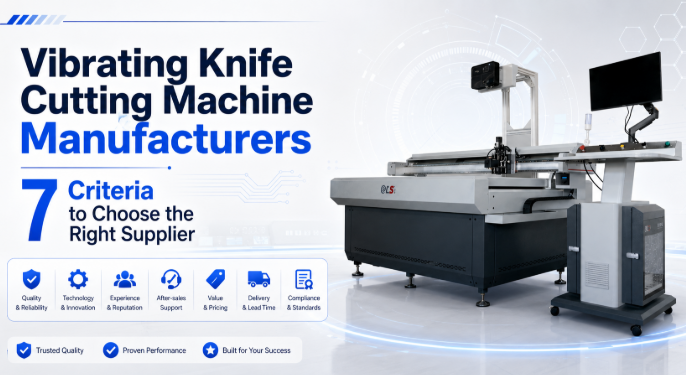
In the domestic flexible material processing industry, vibration knife cutting machines have become an important equipment for many production enterprises to improve production efficiency. Industries such as advertising processing, home textiles and clothing, automotive interiors, and composite material processing all rely on such equipment to complete material cutting operations. The number of manufacturers that can provide such equipment in the market continues to increase, and the quality of equipment products and supporting services varies greatly. When enterprises carry out procurement work, it is difficult for them to make suitable choices. Many procurement personnel consider equipment quotation as the primary reference condition, ignoring the comprehensive strength of the manufacturer itself. As a result, various practical problems such as inadequate cutting accuracy, frequent equipment failures, and lack of technical support services may arise in the subsequent production of the enterprise. The selection of vibration knife cutting machines that are suitable for their own production conditions by enterprises is essentially about choosing industry partners who can cooperate for a long time, rather than completing a simple hardware procurement. This article summarizes the relevant selection ideas from multiple key perspectives, helping procurement enterprises avoid various risks in procurement and find equipment manufacturers that match their own business needs.
Why Choosing the Right Vibrating Knife Cutting Machine Manufacturer Matters
The vibration knife cutting machine is not a fully standardized universal equipment. The hardware processing technology, software underlying logic, and overall assembly level of different manufacturers will directly affect the actual production work of the enterprise. If the enterprise chooses the wrong equipment supplier, the losses incurred by the enterprise are not only the funds invested in equipment procurement. In the actual production process, if there is a deviation in equipment accuracy, the enterprise will scrap a large amount of raw materials, such as flexible fabrics, foam, composite materials, which have high procurement costs. Material loss will continue to compress the enterprise’s operating profits, and frequent equipment shutdowns and failures will disrupt the enterprise’s established production plan. The delivery time of orders will be forced to be delayed, and the trust of the enterprise’s own customers will also be damaged. Some manufacturers can only complete the delivery of basic hardware, and subsequent software updates, tool matching, process debugging and other work of the equipment will not receive corresponding support. Even if the enterprise obtains the equipment, the equipment cannot fully exert its production performance. A strong manufacturer not only delivers a cutting machine to customers, but also a complete service system including process solutions, hardware equipment, and continuous after-sales service. Equipment that is suitable for the production situation of the enterprise can reduce the loss of raw materials, improve the production output of the team, extend the overall service life of the equipment, and lay a stable foundation for the long-term production work of the enterprise. The comprehensive strength of equipment suppliers will affect the actual use experience of the equipment throughout its entire service life. This is also the main reason why the selection of manufacturers cannot be ignored in the selection stage of enterprises.
Check the Manufacturer’s Industry Experience
The relevant experience accumulated in the industry is a competitive advantage that enterprises cannot replicate in a short period of time. Manufacturers with relatively short establishment time and few actual landing projects can only complete the replication work of basic models. Faced with various complex material cutting problems, these manufacturers cannot come up with mature and feasible landing solutions. When evaluating the industry experience of a manufacturer, it is not enough to only refer to the time of registration and establishment of the enterprise. The purchaser needs to focus on confirming the actual time the manufacturer has been engaged in vibration knife cutting related business, distinguishing between enterprises that have transitioned into this field across industries. The purchaser can retrieve the manufacturer’s real project cases, examine the processing industries covered by the cases, and confirm whether the manufacturer has handled material cutting scenarios similar to their own business. Manufacturing enterprises that have been deeply involved in this field for many years will accumulate a large amount of material testing related data. When the enterprise encounters conditions such as irregular cutting, multi-layer stacking cutting, and special composite material processing, the manufacturer can quickly provide debugging plans. Manufacturers lacking practical industry experience may experience a disconnect between drawing design and actual production work. The prototype parameters displayed by the manufacturer perform well, and after the equipment is put into mass production, various hidden problems will be exposed. When the purchaser visits the factory on site, they can request to view customer project files from different industries to identify the authenticity of relevant cases. The manufacturer has sufficient industry practical experience, which is an important prerequisite for stable equipment operation.
Evaluate Machine Technology and Specifications
Cutting system
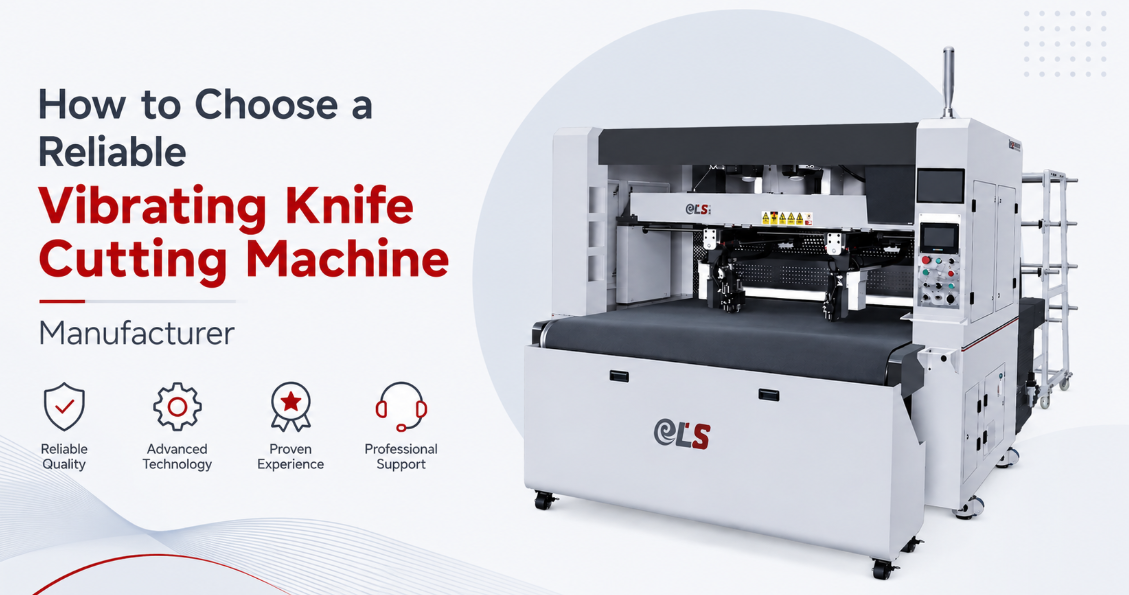
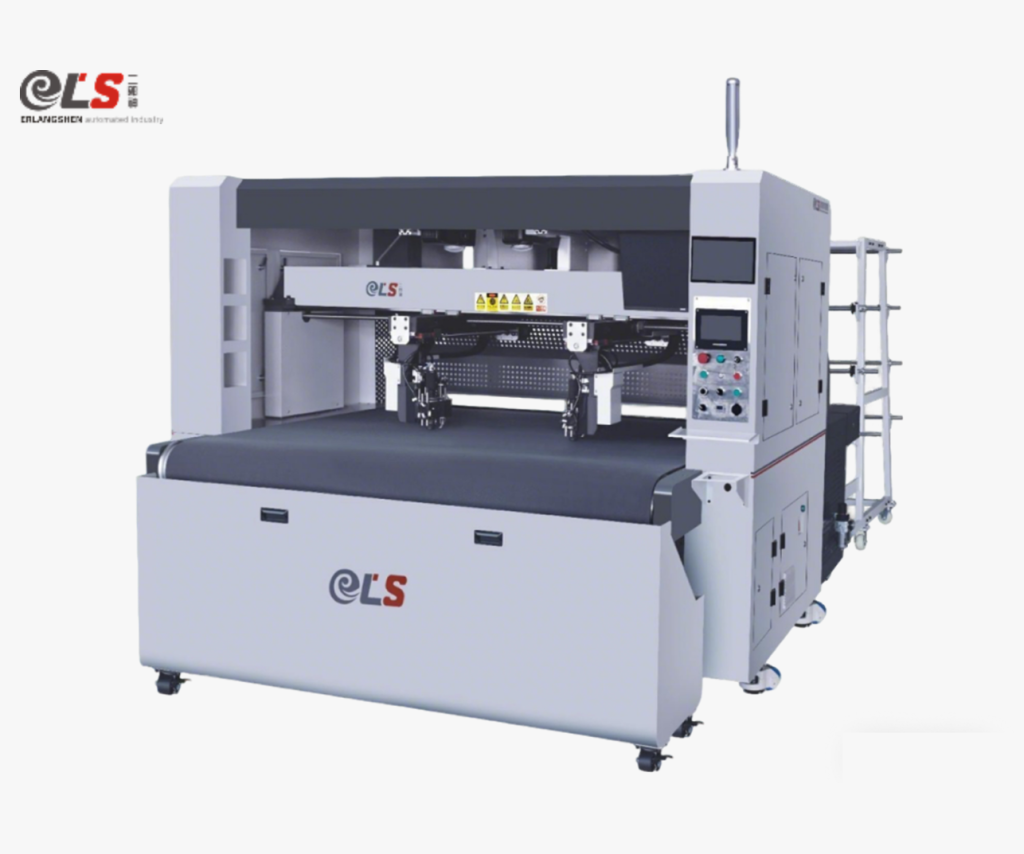
The cutting system is the execution core of the entire equipment, which directly determines the cutting speed and cutting quality of the equipment. There are significant differences in the blade drive schemes selected by different manufacturers. A vibrating blade system with better performance can maintain a stable high-frequency vibration state. When the equipment processes thin fabrics, thick foam, and hard composite materials, it can ensure that the cutting is smooth and there are no processing defects such as wire drawing and burrs. For some equipment models with lower costs, simplified versions of cutting units will be used. When the equipment is in a high load working state, the vibration effect will show significant attenuation. When cutting thick materials, the equipment may not cut through and the incision may be skewed. During high-speed operation of the equipment, the problem of tool head shaking will further increase. When selecting equipment, enterprises need to confirm the vibration frequency range that the tool head can support, the types of tools that the tool head can be compatible with, and the actual cutting parameters corresponding to each material. The purchaser cannot only refer to the theoretical parameters marked on the promotional materials.
Software
The software is responsible for completing tasks such as graphic analysis, path planning, layout calculations, etc. The software is equivalent to the control center of the entire equipment. Many procurement personnel ignore the strength of the software itself and focus all their attention on the mechanical hardware part. The performance of the supporting software for the equipment is insufficient, and even the best mechanical structure cannot perform as expected. Mature supporting software can import various formats of drawing files. The software has built-in intelligent typesetting algorithms that can save raw materials to the maximum extent. The software also automatically optimizes cutting paths to reduce the ineffective idle travel of equipment. Some manufacturers have outdated software versions, closed overall architecture, poor compatibility with drawing files, and simple and rough basic logic of typesetting. When importing files, errors are frequently reported, and the overall production pace of the enterprise will be slowed down. The purchaser also needs to confirm the relevant rules of software iteration updates, whether the software can adapt to new materials, new cutting tools, and how much cost it will cost to upgrade the software for free, in order to avoid the software stopping updating later and unable to match the development and changes of the enterprise’s business.
Machine structure
The mechanical framework of the entire equipment will affect the stability of the equipment during long-term operation. If the frame is only welded with thin materials and the equipment operates at high speed for a long time, the frame will gradually deform, and the accuracy of the equipment will rapidly decrease with the duration of use. Qualified equipment will use thickened steel structure frames, which will undergo aging treatment to eliminate internal stress. The frames can withstand the vibration and deformation caused by long-term high-speed operation of the equipment. Transmission components such as guide rails, racks, and servo motors also need to be closely monitored by the purchaser. Poor quality transmission components have loud noise during operation, fast component wear, and may cause positioning deviation faults when the equipment is put into short-term use. When the purchaser inspects the equipment on site, they can observe the frame welding process, equipment assembly workmanship, and check the brand and specifications of the core transmission components to determine the basic level of the equipment hardware.
Automation
The level of equipment automation directly affects the input of labor costs in factories. Basic models can only complete cutting operations, and feeding and receiving rely entirely on manual labor. Higher configured models can be equipped with functional modules such as automatic feeding, adsorption platform, automatic receiving, and multi station switching. These models can meet the work needs of large-scale continuous production. Enterprise selection work should be based on its actual production scale, and should not blindly pursue overly high automation functions. Enterprise business mainly focuses on small batch and multi category processing. Excessive automation configuration will raise equipment procurement costs, and most functions of the equipment will not be used. Enterprises need to carry out large-scale continuous production. If automation configuration is insufficient, enterprises need to invest more manpower. After the purchaser clarifies their own production capacity requirements, they can evaluate the maturity of the manufacturer’s automation modules, confirm whether the linkage between each module is smooth, and determine the probability of module failure.
Verify Material Cutting Capability Before Buying
The equipment parameters marked in writing may be somewhat confusing. Theoretical parameters cannot be equated with the actual production performance of the equipment. Before making purchasing decisions, conducting material cutting tests is an essential step for enterprises, which is also an important means of screening manufacturers. The purchaser organizes representative materials for daily processing of the enterprise, including conventional processing materials and special substrates with high processing difficulty. The materials are submitted to the manufacturer for sample testing. The staff focuses on observing the cutting status of the materials, checking whether there are burrs, indentations, incomplete cutting, excessive cutting damage to the table, etc. The staff synchronously records the cutting speed, compares the actual processing efficiency of the equipment with the advertised indicators, and some manufacturers’ prototype testing results are ideal. After long-term continuous batch processing of the equipment, the accuracy will quickly decline. If conditions permit, the purchaser can request long-term continuous cutting testing to simulate the real production conditions of the factory. The purchaser should not only check the finished product samples prepared by the manufacturer in advance. Some samples are completed after repeated debugging. The purchaser should prioritize on-site real-time sampling to fully replicate the production conditions inside the enterprise factory. The results obtained from sampling can directly reflect the adaptability of the equipment to the enterprise’s business. The enterprise can avoid the risk of equipment procurement being unable to be put into production after completion.
Compare Manufacturer vs Trading Company
| Comparison Dimension | Manufacturer | Trading Company |
| Manufacturing Capacity | Owns a physical production factory and masters the complete process of equipment design, assembly and testing | Does not conduct inhouse manufacturing; purchases finished equipment externally for resale |
| Customization Capability | Can make customized adjustments to equipment according to customers’ production conditions | Hard to implement indepth customization, subject to upstream factories |
| Core Technical Reserve | Has an inhouse technical team familiar with the fullstructure of equipment; controls the supply chain of core components | Lacks core technical reserves, mainly focuses on business coordination |
| Fault Handling & Response | Technicians can quickly locate root causes of failures; supports hardware modification and process debugging | Has to coordinate with upstream factories layerbylayer; prolonged problemsolving cycle |
| Process Debugging Competence | Strong process debugging capability to solve various materialcutting technical problems | Weak in process debugging |
| Equipment Parameter Risk | Gives genuine equipment parameters | May alter nameplate parameters and falsely label equipment performance, raising procurement risks |
| Suitable Procurement Scenarios | Demanding equipment customization, indepth process debugging, longterm stable technical support | Procurement of standardized universal models with simple business docking |
| Procurement Notes | Verify factory qualifications; tour production workshops to confirm real assembly and production capacity | Recognize technical shortcomings; verify the real production source behind traders; clarify aftersales liabilities to avoid mutual buckpassing |
Evaluate Production Capacity and Quality Control
Even if the equipment design scheme is sufficiently complete, if there are loopholes in production control work, defective equipment will still be produced. When evaluating manufacturers, enterprises need to examine their production capacity and quality control related work. At the production level, the purchaser can observe the assembly capacity of the workshop, the storage conditions of parts, the standardized operation of the assembly line, the stage of order concentration, and sufficient production capacity to ensure the delivery cycle of equipment and avoid infinite delays in delivery time. Quality control work is of higher importance. The complete quality control process covers the inspection of parts entering the warehouse, the inspection of the assembly process, and the testing of the entire equipment before leaving the factory. Before each equipment is shipped, it must undergo a long period of no-load operation, material cutting and verification, and confirm that the equipment accuracy and all functions meet the standards before it can be shipped out. Some small workshops and factories have not established standardized quality inspection processes, and do not conduct screening work on incoming parts. Assembly work relies on the personal experience of workers, and complete testing is not carried out before equipment leaves the factory. Defective equipment will directly flow to the customer’s enterprise. When the purchaser visits the factory on site, they can check the equipment’s factory inspection records to understand the specific details of the quality inspection process. Strict quality control work is the foundation for stable operation of each equipment.
Check Export Experience and After-Sales Support
Targeting overseas markets for procurement, the manufacturer’s export experience is an important bonus. Manufacturers with mature export experience are familiar with the entire business process of overseas customs declaration, packaging, and logistics. The manufacturer understands electrical related standards in different regions and has complete equipment supporting documents. Enterprises can avoid various procedures in the overseas process. The manufacturer has long served overseas customers and can indirectly prove product quality, which has been inspected in multiple regional markets. After sales service is an unavoidable part of the entire service life of the equipment. Vibration knife cutting machines belong to industrial equipment, and various situations such as tool wear, component replacement, software debugging, and troubleshooting may occur in the later stage of the equipment. The purchaser needs to clarify the after-sales policy of the service provider in advance, the response time for faults, the actual level of remote technical support, the relevant conditions for on-site service, the supply cycle of parts, and the quotation standards for parts. The purchaser needs to be wary of suppliers who only focus on signing contracts and have vague descriptions of after-sales terms. Only when the equipment is delivered can the cooperation between the two parties truly begin. The lack of after-sales support will make the equipment purchased at a high price idle. Before signing the procurement contract, the enterprise needs to implement various after-sales rights and responsibilities, write relevant content into written terms, and ensure that when the enterprise encounters production problems, it can obtain corresponding support in a timely manner.
Why Choose Hanhai as Your Vibrating Knife Cutting Machine Partner
Hanhai Enterprise has long been engaged in the research and manufacturing of vibration knife cutting equipment, accumulating a large amount of cross industry project practical experience. The enterprise has a complete self owned production workshop, mechanical structure design, software development, whole machine assembly, factory quality inspection, and the entire work process is independently controlled by the enterprise. Facing multiple industries such as advertising, textiles, automotive interiors, composite materials, etc., enterprises have accumulated a large number of material cutting related databases. Enterprises can provide corresponding equipment selection and process solutions based on the actual processing materials of customers. Enterprises support model customization work, adapt to various differentiated production conditions, and a complete quality control process runs through all production links. Before each equipment leaves the factory, multiple rounds of continuous testing are carried out to strictly control the quality of the equipment leaving the factory. The enterprise has mature experience in delivering overseas projects, is familiar with the entire export process business, and has established a comprehensive technical service system. It can respond to various debugging needs remotely and quickly. The accessory supply system is complete, reducing the pressure on customers’ equipment operation and maintenance in the later stage. From early scheme communication, sample testing, to equipment delivery, and later operation and maintenance, Hanhai can provide full cycle supporting services, providing reliable cutting equipment solutions for flexible material processing enterprises.
FAQs
Q1:How can I verify a cutting machine manufacturer?
A1:Enterprises conduct cross verification work through various channels. Firstly, they verify the enterprise’s business qualifications to confirm its true operating status. The purchaser first visits the production plant to inspect the assembly workshop and quality inspection process, confirming that the other party belongs to a physical production factory. They also retrieve customer cases that have already been implemented in the same industry. The enterprise can proactively contact existing customers to understand feedback on the actual use of the equipment. The enterprise can submit its own materials and request the manufacturer to complete on-site sample testing to inspect the actual cutting performance of the equipment. The purchaser also verifies export qualifications, patent certificates, and other supporting materials to comprehensively judge the manufacturer’s strength. It cannot rely solely on promotional materials to make judgments.
Q2:Should I buy directly from a factory or trading company?
A2:There is a customized demand for enterprise business that requires deep process debugging. We hope to receive long-term and stable technical support, and the source factory will be the preferred choice. The factory has mastered the core technology, customized equipment transformation, and higher response efficiency for fault diagnosis. Trading companies are more suitable for the procurement of standardized and universal models. The business docking process is simple, and the purchaser needs to recognize the shortcomings of the trading company in not mastering the core production links, confirm the real production source behind the trader, clarify the responsibility of after-sales work, and avoid the factory and trading company shifting responsibilities to each other after problems occur. The enterprise should weigh the advantages and disadvantages of the two procurement channels based on its own project actual needs before making a procurement choice.
Q3:What after-sales service should a machine supplier provide?
A3:Remote online fault diagnosis and technical debugging are basic services that suppliers need to provide. Training related to equipment operation and process debugging can help operators quickly get started with the equipment. Fragile parts need to be maintained in a stable supply, and parts quotations should be clear and transparent. Maintenance plans for hardware failures should be provided, and the conditions and cycles for on-site services should be clarified. Software iteration and update services should be provided to adapt to new materials and processing needs. The purchaser should also clarify the warranty period, divide responsibilities within the warranty scope, and write the above content into the procurement contract to ensure the continued production work of the enterprise.
Conclusion
The procurement of vibration knife cutting machines cannot simply rely on price as the sole criterion. Selection is a systematic process, and enterprises need to assess the manufacturer’s industry accumulation, equipment software and hardware technical strength, real cutting performance, production quality control level, and distinguish between factories and trading companies. They should fully evaluate their export supporting capabilities and after-sales guarantee conditions. Only after completing the above evaluation process can enterprises screen reliable suppliers that are suitable for their own business, avoid various procurement risks, and truly serve the production of cutting equipment. Among a large number of industry participants, Hanhai also has good comprehensive competitive strength. The company is deeply rooted in the field of vibration knife cutting equipment manufacturing, has established a mature whole machine research and development production system, and takes into account equipment hardware quality and supporting services. It is also a manufacturing enterprise worth including in the comparison and investigation scope of flexible material cutting equipment procurement process.