Skip to content


If you run a footwear, luggage, garment, or automotive-interior factory, the same question comes up on every new order: should we keep stamping parts with a die, or move to a vibrating knife cutting machine? The answer is rarely about the purchase price of the machine alone. It is about the true cost per cut part — the money you spend on molds, setup time, labor, material waste, and maintenance over the life of the order.
This guide breaks down the real economics of a vibrating knife cutting machine versus die cutting, factor by factor, so you can decide which method lowers your cost for the volumes and materials you actually produce. Hanhai Machinery has been building flexible-material cutting, marking, and sewing equipment since 2010, and this comparison reflects what we see across footwear, bag, and automotive production lines every day.
What Is a Vibrating Knife Cutting Machine?
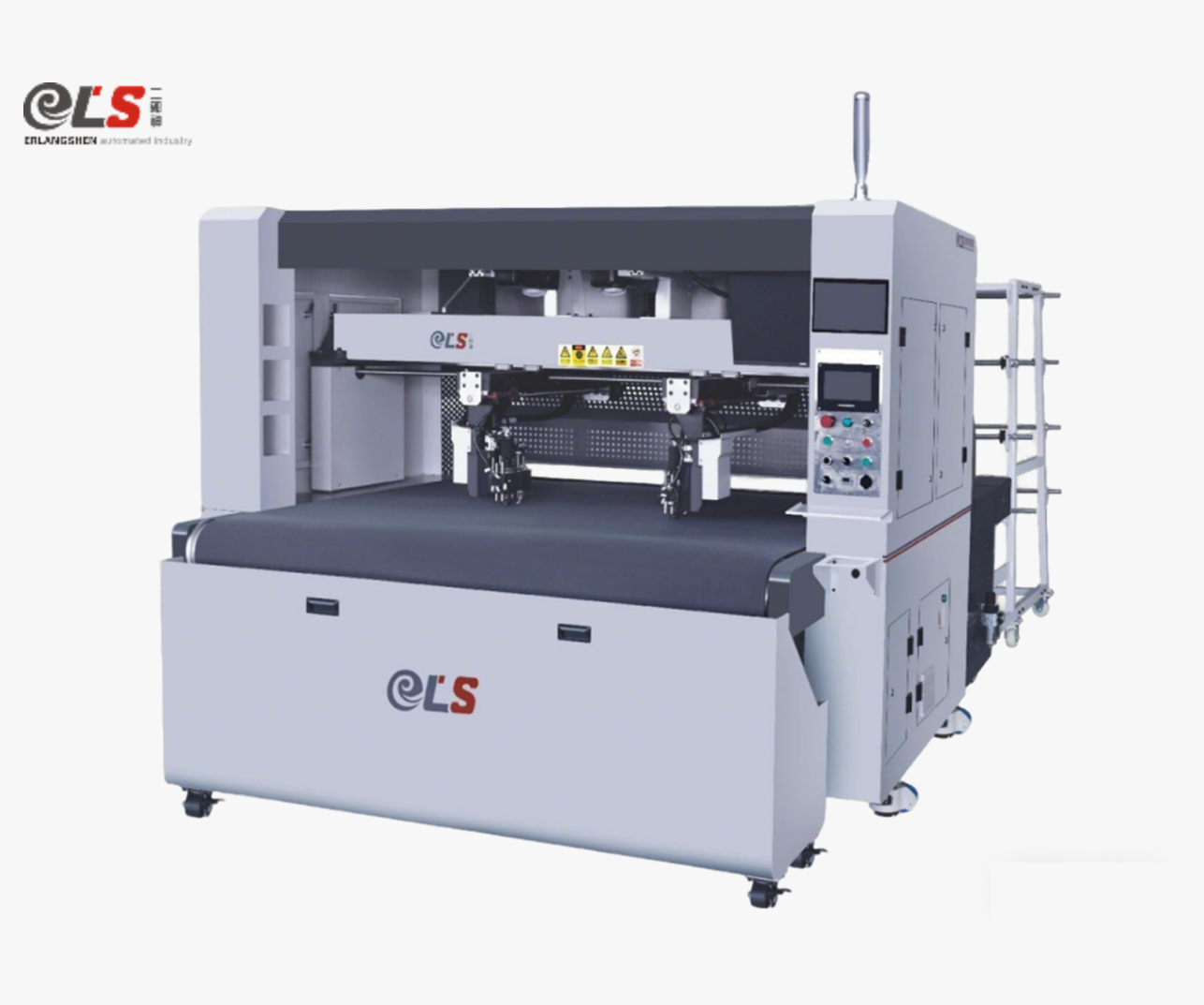
A vibrating knife cutting machine (also called an oscillating knife cutting machine, vibrating knife cutter, or oscillating knife cutter) is a digital cutting machine driven by CNC motion control. Instead of a rotating bit or a heated beam, it uses a blade that oscillates up and down at high frequency — typically tens of thousands of strokes per minute — to slice through flexible materials. Because the blade cuts by reciprocation rather than by force, it can process leather, fabric, foam, EVA, gasket material, and corrugated board without crushing or burning the edges.
The cutting path comes directly from a digital file, so the machine can switch from one pattern to the next with no physical tooling changes. You can explore the full range on our vibrating knife cutting machine product page.
What Is Die Cutting?
Die cutting is a mechanical process that uses a sharpened metal die — a steel-rule blade bent into the shape of the finished part — mounted in a press. The most familiar version is a flatbed die cutting machine, where sheets pass under a platen press; a manual die cutting machine works on the same principle at a smaller scale. The press forces the die through the material, stamping out identical parts with each stroke. Die cutting is fast and highly repeatable once a die exists, which is why it has powered footwear and packaging production for decades.
The catch is that every new pattern needs its own die, and dies are not free. A die must be designed, cut, bent, and mounted, and then stored, maintained, and repaired. Those costs are invisible on a per-stroke basis but enormous when patterns change often — which is exactly the reality in modern, trend-driven production.
Still paying for a new die with every design change?
Send us your material, thickness, and order volume. Our engineers will calculate the most cost-effective cutting setup for your line and reply with a free quote within 24 hours.
Vibrating Knife Cutting Machine vs Die Cutting: Key Cost Factors
Purchase price is only the entry ticket. The method that saves you money is the one with the lowest total cost across tooling, setup, labor, waste, flexibility, and maintenance.
1. Tooling and Mold Costs
Die cutting requires a physical die for every pattern. On a product line with dozens of SKUs and seasonal refreshes, you may commission dozens of dies per year, each with its own fabrication and storage cost. A vibrating knife cutter is dieless: the “tool” is a digital file plus a low-cost blade, so a new pattern costs nothing beyond CAD work. This single difference usually decides the comparison for small and mid-volume producers.
2. Setup Time and Lead Time
With die cutting, a new pattern means designing and manufacturing a die — days or weeks before the first part is stamped — plus press mounting, alignment, and test runs. A vibrating knife machine loads the file and starts cutting in minutes. Shorter setup time means faster response to customer orders and less production time lost to changeovers.
3. Labor and Operating Costs
Die presses demand skilled operators for die mounting and safe operation, and each operator runs one station. CNC knife systems run from a digital workstation, need less skilled labor, and one operator can supervise multiple machines or steps. Over a year, the difference in labor cost per part is often larger than the difference in machine price.
4. Material Waste and Utilization
Because die layouts are fixed, they cannot always nest tightly on irregular hides or nested orders — leaving unusable offcuts. Vibrating knife machines cut from nesting software that arranges parts to use the sheet or hide as fully as possible, and can mirror and rotate parts to fill gaps. On expensive materials such as genuine leather, even a few percentage points of better utilization can pay back the machine over a single season. Compare exact configurations on our vibrating knife genuine leather cutting machine page.
5. Flexibility for Small-Batch and Custom Orders
Die cutting rewards long, repetitive runs and punishes changeovers. Digital knife cutting rewards flexibility: one-off samples, custom sizes, and short runs are economical because there is no die to justify. For factories moving toward make-to-order and small-batch production, the dieless approach removes the biggest barrier to accepting new work. See how one footwear factory planned the switch in our guide on migrating from die cutting to dieless production.
6. Long-Term Maintenance Costs
Dies wear, chip, and eventually need repair or replacement — recurring costs tied to every pattern you own. A vibrating knife machine needs regular blade replacement, which is inexpensive and tool-free, plus routine maintenance of the gantry and vacuum table. Total maintenance spend is usually lower and far more predictable than managing a die inventory.
Here is the same comparison in one view:
| Cost Factor | Die Cutting | Vibrating Knife Cutting |
|---|---|---|
| Tooling / mold cost | A new die per pattern | Dieless — file + blade only |
| Setup / lead time | Days to weeks | Minutes |
| Labor skill | Skilled press operation | Semi-skilled / one-to-many |
| Material utilization | Fixed layout, more offcut | Nesting-optimized |
| Small-batch / custom | Expensive per pattern | Cost-effective |
| Maintenance | Die repair / replacement | Low-cost blades |
Which One Is More Cost-Effective for Your Application?
The honest answer is: it depends on how often your patterns change and how costly your material is.
- Choose a die cutting machine when you produce one or two stable patterns at very high volume, your material is low-cost, and labor is cheap. Here the die cost amortizes to almost nothing and press speed wins.
- Choose a vibrating knife cutting machine when you handle many patterns, frequent design changes, small or mixed batches, expensive leather or technical materials, or you want to cut prototypes and production on the same system.
For most footwear, luggage, and automotive-interior factories today, pattern variety is rising and order sizes are falling. In that environment, the dieless system almost always wins on total cost — and it also upgrades your quality and speed. If you are comparing cutting technologies more broadly, our breakdown of a vibrating knife cutting machine vs a CNC router covers the trade-offs against rotary cutting as well.
Want a real ROI number, not a generic comparison?
Share your current die costs, monthly volume, and material mix. Hanhai will model your payback period and recommend the right model from the ELS-3016S to a full flexible-material cutting line.
Frequently Asked Questions
Is a vibrating knife cutting machine cheaper than die cutting in the long run?
Yes, in most production environments where patterns change and orders are mixed. The machine costs more up front, but it eliminates recurring die fabrication, shortens changeovers, lowers labor, and reduces material waste — so total cost per part usually drops over the first one to two years.
Do vibrating knife cutting machines eliminate the need for molds?
They eliminate the need for cutting dies and molds entirely. The cutting tool is a blade guided by a digital file, so a new pattern requires no physical tooling investment.
Which cutting method is better suited for low-volume production?
Vibrating knife cutting. With no die to justify, low and one-off volumes are economical, and the same machine covers prototyping through production.
What factors affect the ROI of a vibrating knife cutting machine?
Pattern change frequency, material cost and utilization, labor rates, monthly volume, and how many dies you currently buy each year. Higher pattern variety and more expensive material shorten the payback period. For a deeper technical background, start with our complete guide to vibrating knife cutting machines.
Conclusion
Die cutting still has its place for huge, stable runs. But when you add up tooling, setup, labor, waste, flexibility, and maintenance, a vibrating knife cutting machine is the more cost-effective choice for the mixed, fast-changing production that defines most footwear, bag, and interior factories today. The right move is not to guess — it is to calculate, and then choose the configuration that matches your material and volumes.
Hanhai Machinery designs and manufactures flexible-material cutting, marking, and sewing equipment in Wenzhou, China, and has supported footwear, luggage, automotive, and advertising producers worldwide since 2010. Talk to an engineer about your application, or browse the full vibrating knife cutting machine range.