Skip to content

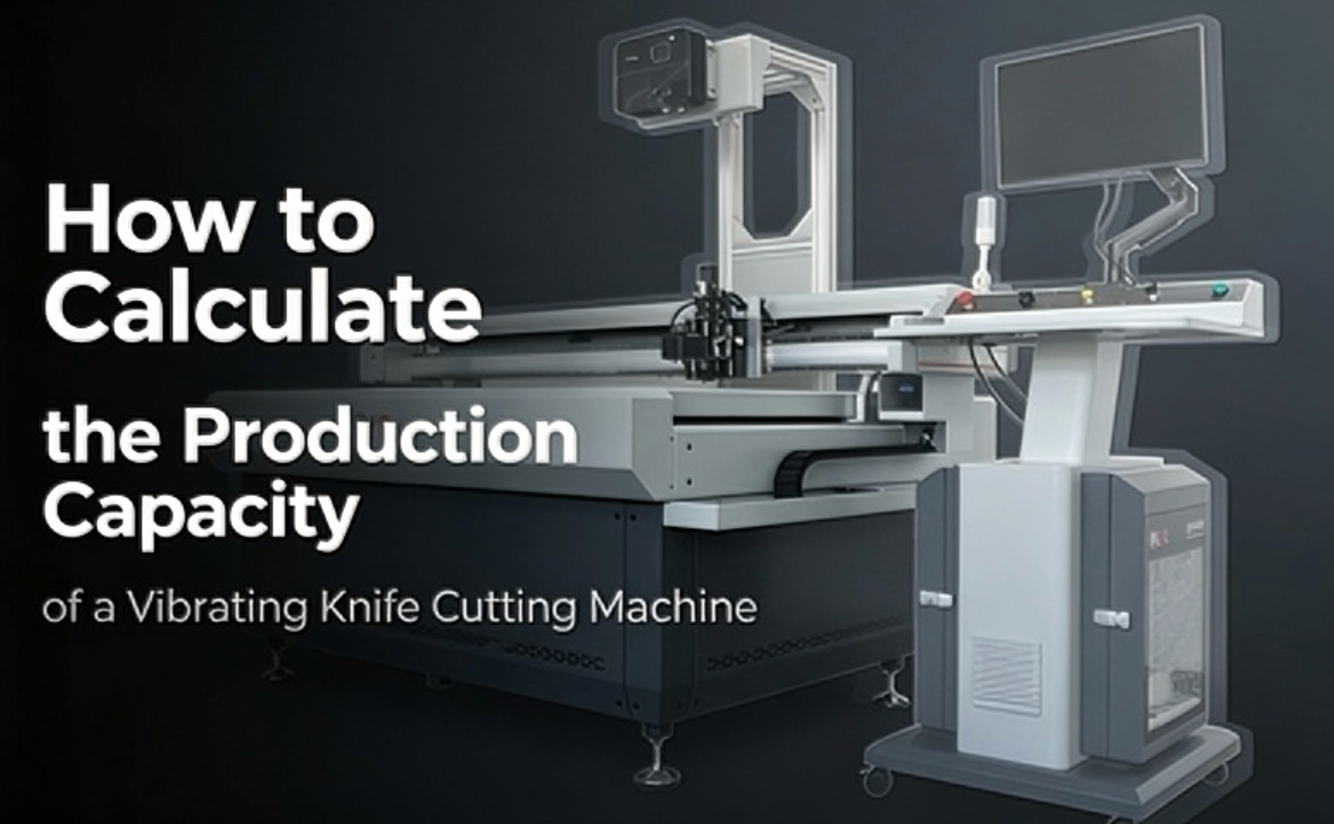
When you evaluate a digital cutting machine — and a vibrating knife model in particular — for purchase or plan a production line, “how fast is it?” is the wrong question. The right question is “how many good parts can it deliver per shift, under my real conditions?” That number — production capacity — is what determines whether a machine pays for itself, whether you can hit delivery dates, and how many units you need.
This guide gives you a practical, step-by-step method to calculate the production capacity of a vibrating knife cutting machine, the factors that move the number, and how to increase output without buying another machine. It reflects the way Hanhai Machinery helps buyers size equipment for footwear, luggage, and interior-trim factories.
What Is Production Capacity and Why It Matters for Buyers
Production capacity is the quantity of quality parts a machine can output in a given period — usually parts per hour or per shift. It is not the same as an industrial cutting machine’s top cutting speed. Capacity is always lower, because real production includes loading, unloading, blade changes, nesting, repositioning, breaks, and small stoppages.
For buyers, capacity matters for three reasons: it sets your cost per part, it defines your delivery commitments, and it tells you whether one machine is enough or whether you need two or a more capable model. Overstating capacity leads to missed deadlines; understating it leads to unnecessary capital spend.

Key Factors That Affect a Vibrating Knife Cutting Machine’s Output
Cutting Speed and Feed Rate
Cutting speed (the speed of the tool along the path) and feed rate directly set cycle time. On a high precision cutting setup, higher speed is not always better: past a point, edges tear and quality drops. The usable speed is the fastest speed that still produces a clean, in-tolerance cut for the material.
Material Type and Thickness
Dense materials cut more slowly than soft ones, and thicker or multi-layer stacks reduce speed further because the blade must clear more material per stroke. A machine that cuts 30 m/min in a single layer of fabric may run far slower in a 10 mm foam stack.
Pattern Complexity and Nesting Efficiency
Complex shapes with many corners and small radii force the tool to slow down, while simple shapes let it run fast. Nesting quality also affects capacity: a denser nest means fewer sheets loaded per part, which shortens total cycle time per part.
Machine Uptime and Changeover Time
Real capacity is planned output minus downtime. Frequent pattern changes, manual blade swaps, and slow loading all reduce the effective hours available. Machines with fast file loading, automatic tool change, and reliable mechanics protect uptime.
Need a capacity number you can trust?
Send us your material, thickness, part mix, and shift pattern. Hanhai will run the calculation with you and recommend a machine configuration that matches your required output.
Step-by-Step Formula to Calculate Production Capacity
Use this five-line method to move from machine specs to a realistic output figure.
Step 1 — Determine Available Machine Hours
Start with scheduled time. A two-shift operation running 8 hours each with a 30-minute break gives 15 available hours per day, or 900 minutes.
Step 2 — Calculate Cycle Time per Unit
Cycle time = total cutting path length / cutting speed, plus a per-sheet allowance for loading, unloading, and positioning. For a part with 1.2 m of cut path at 24 m/min, cutting time is 0.05 min (3 s) per part; add sheet-handling time divided by the number of parts per sheet.
Step 3 — Apply Efficiency and Utilization Rates
Multiply theoretical output by a realistic efficiency factor — the industry-standard OEE-style approach. If availability, performance, and quality combine to about 80%, use 0.80. Never plan at 100%.
Step 4 — Example Calculation
Consider a factory cutting leather parts with an average cut path of 1.2 m, a nest of 40 parts per hide, and 24 m/min cutting speed:
| Parameter | Value |
|---|---|
| Available time | 900 min/day |
| Cut path per part | 1.2 m |
| Cutting speed | 24 m/min |
| Cutting time per part | 0.05 min |
| Efficiency factor | 0.80 |
| Effective minutes | 720 min |
| Theoretical output | ≈ 14,400 parts/day |
Divide 720 effective minutes by 0.05 min per part to get roughly 14,400 parts per day before adding sheet-handling time, then subtract handling to reach the realistic figure. Re-run the same model for each material and pattern — capacity is always material-specific, not a single fixed number. Machine data like that published for the ELS-B6616S flexible leather material cutting machine gives you the cutting-speed starting point.
How to Increase Production Capacity Without Adding Machines
- Improve nesting. More parts per hide means the same machine outputs more parts per shift.
- Reduce changeover time. Standardized files and quick tool change shorten the non-cutting time that kills capacity on an automatic cutting machine.
- Optimize cut order and path. Minimizing rapid moves and tool lifts shortens cycle time without cutting quality.
- Add multi-layer or multi-tool capability. A platform such as the channel-type intelligent cutting machine ELS-B13S cuts more per pass and combines operations — and the same logic applies whether you run one unit or a row of cnc cutting tables.
- Protect uptime. Preventive maintenance prevents the unplanned stops that quietly destroy capacity — see our maintenance tips.
Match the machine to the capacity you actually need.
Tell us your target output per shift and your material. Hanhai will recommend the right model and show you how to hit that number without over-buying.
Frequently Asked Questions
How many units can a vibrating knife cutting machine produce per hour?
It depends entirely on cut path length, cutting speed, material, and handling time. Using the formula above, most leather and textile applications land in the range of several hundred to a few thousand parts per hour, but you should always calculate from your own data rather than a supplier’s single headline number.
What is a realistic OEE for a cutting machine in production?
A well-run factory typically achieves around 75–85% overall equipment effectiveness. Planning at 80% efficiency is a safe, common assumption for capacity planning.
Does material thickness significantly reduce production capacity?
Yes. Thicker and multi-layer stacks lower usable cutting speed and increase the time per part, so capacity must be calculated per material thickness rather than assumed from a single spec.
How can buyers verify a supplier’s stated production capacity claims?
Ask the supplier to cut your actual material and pattern, then time the cycle. A transparent supplier will show you the test conditions and let you convert the result into a per-shift figure yourself.
Conclusion
Production capacity is a calculation, not a spec sheet headline. Start with available hours, derive cycle time from cut path and speed, apply a realistic efficiency factor, and run the model separately for each material and pattern. Done properly, this tells you exactly how much machine you need — and where to gain output without buying more equipment. For guidance on the broader selection process, read how to choose the right vibrating knife cutting machine.