Skip to content

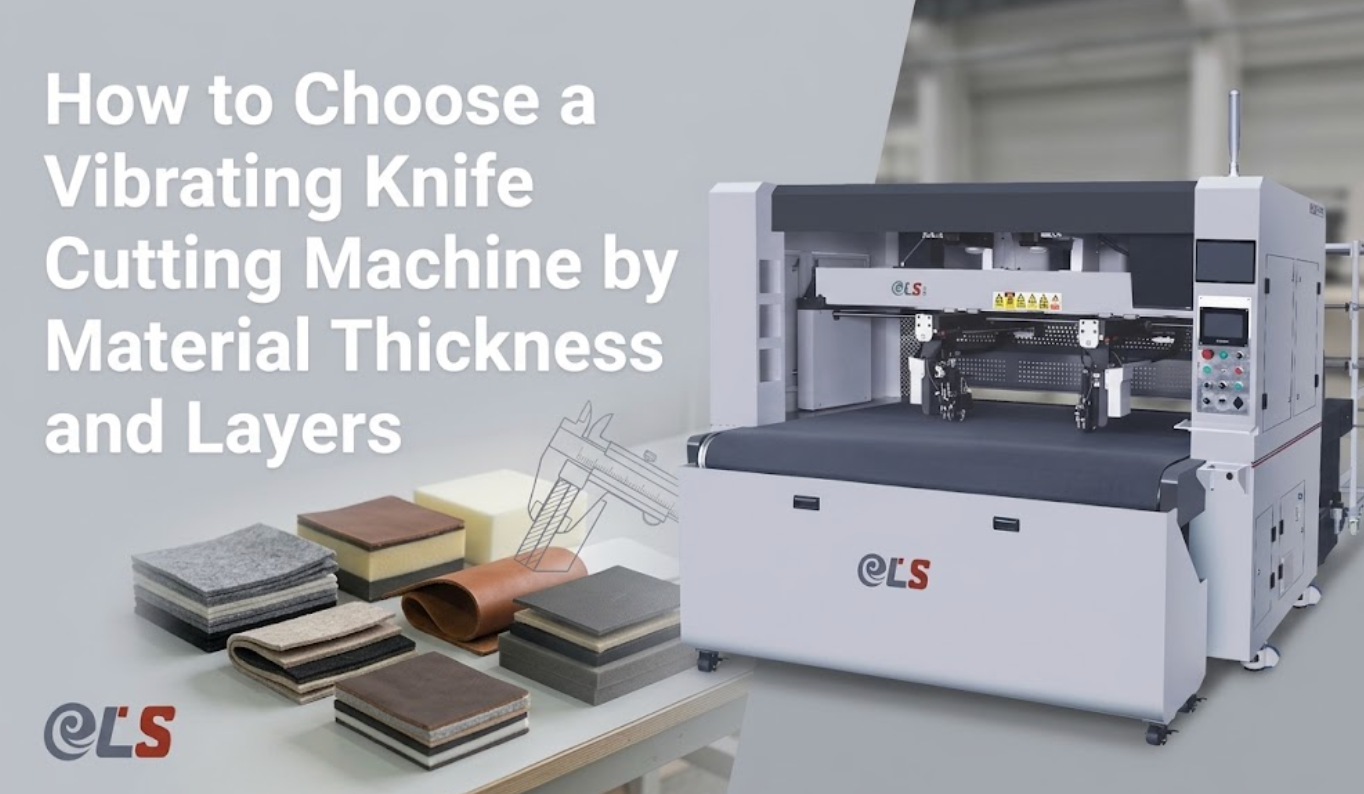
One of the most common and expensive buying mistakes is choosing a material cutting machine, and a vibrating knife model in particular, by price or table size while ignoring material thickness and layer count. A machine that cuts single-layer fabric beautifully may crush, drag, or fail on a thick multi-layer foam stack. The good news: thickness and layers translate into a clear set of machine specifications, and once you know them, selection becomes straightforward.
This guide explains how thickness and layers affect cutting, how to match machine specifications to thin, medium, and thick/multi-layer materials, which machine features matter most, and the mistakes to avoid. It draws on the configuration decisions Hanhai Machinery makes with footwear, luggage, and interior-trim factories.
Why Material Thickness and Layer Count Affect Machine Selection
An oscillating blade must travel through the entire stack on every stroke. The thicker and taller the stack, the longer the blade must be, the more stroke force it needs, and the more precisely the material must be held down so it does not shift or compress. Thin single-layer material demands finesse and a fine blade; thick multi-layer material demands power, rigidity, and stroke length. These are opposite requirements, which is why a single “one-size” machine under-serves both extremes.
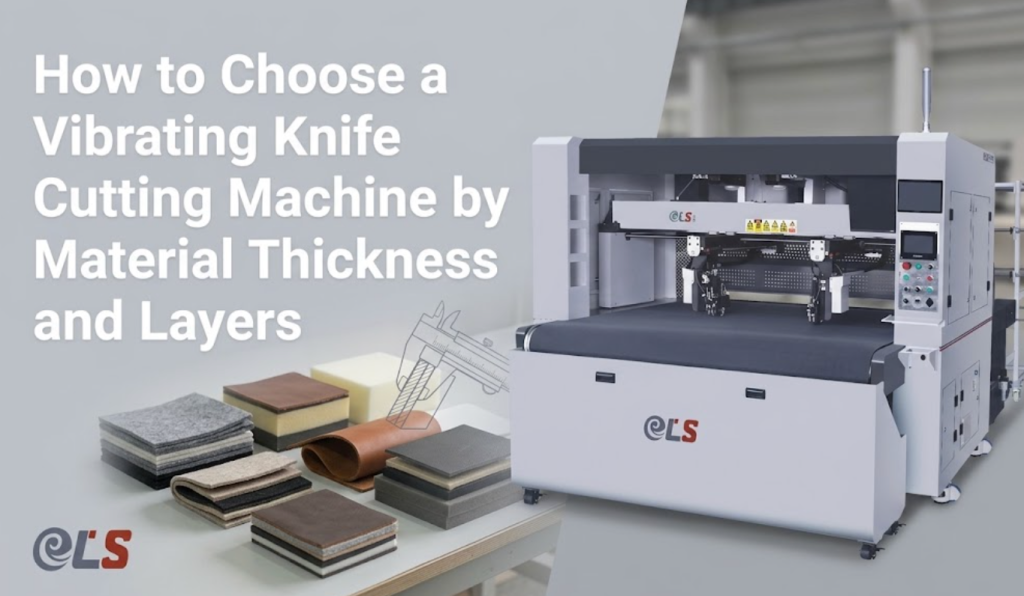
Matching Machine Specifications to Material Thickness
Thin and Single-Layer Materials
Lining, thin textile, transfer film, and light leather under roughly 1–2 mm — the domain of a cloth cutting machine used for detail work. Here you need fine blade control, gentle vacuum hold-down that does not distort the material, and the ability to cut small radii accurately. On a precision cutting machine, speed and precision matter more than raw power.
Medium-Thickness Materials
Standard leather, coated fabric, gasket sheet, and foam in the few-millimeter range. This is the sweet spot for most footwear and bag production, and a fabric cutting machine in this range is the workhorse of the line. A well-configured general-purpose machine with adjustable stroke and a firm vacuum table handles this range comfortably.
Thick and Multi-Layer Materials
Thick foam, EVA, stacked fabric layers, and composite stacks. These demand a long, stiff blade, high stroke frequency with sufficient amplitude, strong hold-down (often a driven or zoned vacuum table), and a gantry rigid enough to resist deflection under load. Purpose-built multi-layer platforms such as the channel-type intelligent cutting machine ELS-B13S and the ELS-B6616S flexible leather material cutting machine are engineered for exactly this class of work.
A simple matching reference:
| Material Class | Examples | Machine Priority |
|---|---|---|
| Thin / single layer | Lining, film, light textile | Fine blade control, gentle vacuum |
| Medium thickness | Leather, coated fabric, thin foam | Adjustable stroke, balanced speed |
| Thick / multi-layer | Thick foam, EVA, stacked fabric | Long stiff blade, strong hold-down, rigid gantry |
Tell us your material — we will match the machine.
Send us your material type, thickness, and how many layers you cut at once. Hanhai will recommend the machine and tooling that fits, and confirm it with a cutting test.
Key Machine Features for Multi-Layer Cutting
Z-Axis Pressure Control
On a high precision cutting system, the Z-axis (vertical) pressure foot presses the material down as the blade cuts. On multi-layer stacks, consistent Z pressure is what stops layers from separating, sliding, or springing back. Adjustable Z pressure lets you tune the machine to soft foam and firm leather alike.
Blade Stroke and Cutting Power
Stroke length and amplitude must exceed the stack height so the blade fully clears the material on each cycle, and the tool must deliver enough force to cut the densest layer without stalling. Undersized stroke is the most common reason a machine “cannot handle” thick material.
Automatic Pressure Compensation
As the blade wears or material density varies, cutting force changes. Automatic pressure compensation keeps the cut consistent, protecting edge quality and extending blade life across long production runs.
Common Mistakes When Selecting a Machine for Thick or Layered Materials
- Choosing by table size instead of cutting capability. A big table with a short stroke still cannot cut a tall stack.
- Underestimating hold-down needs. Weak vacuum on a thick stack causes layer shift and rejects.
- Ignoring blade and tool options. The wrong blade geometry cripples an otherwise capable machine.
- Assuming one machine fits every material. If your product range spans lining to thick foam, confirm the full range or plan two configurations.
- Not testing the actual material. Never buy for thick or layered work without a real cutting test.
For a structured buying process, see our guide to choosing the right vibrating knife cutting machine, and for the questions to raise with any supplier, read questions to ask before buying.
Frequently Asked Questions
How thick a material can a vibrating knife cutting machine cut?
It depends on the machine’s stroke length and blade. Compact machines suit thin to medium materials, while long-stroke models handle thick foam and tall multi-layer stacks. The reliable answer comes from a cutting test on your material.
Can one machine cut both thin fabrics and thick foam?
Some general-purpose machines cover a broad range with adjustable stroke, pressure, and interchangeable blades, but extreme combinations — very thin film and very thick foam — may justify two configurations for best quality and speed.
What happens if the wrong machine is used for multi-layer cutting?
You see layer shifting, fused or ragged edges, blade breakage, and low usable speed. The machine is not “broken” — it is simply undersized for the stack height and hold-down requirement.
Should I choose electric or pneumatic oscillating tools for thick materials?
Both can cut thick materials when correctly specified. The decisive factors are stroke length, amplitude, and hold-down rather than the drive type alone. Confirm with a test on your densest material.
Conclusion
Material thickness and layer count should drive your machine choice, not price or table size. Match blade stroke and stiffness, Z-axis pressure control, hold-down strength, and gantry rigidity to the thickest stack you will actually cut — then verify with a real test. Get this right and the machine serves your full product range for years; get it wrong and you pay twice.
Browse the range on our vibrating knife cutting machine page, or contact Hanhai with your material details.