Skip to content

Introduction
Leather is expensive. A piece of leather can cost anywhere from $30 to $100, and if the layout—that is, how you place patterns on the leather—is even off by a few percent, that money is wasted. Production lines might cut thousands of pieces of leather a year, so even a two percent increase in efficiency can mean six-figure gains. That’s why more and more factories are adding pre-configured CNC leather cutters at the layout stage before cutting.
The leather spreading machine isn’t responsible for cutting. It just spreads out the pattern pieces, projects the cutting lines onto the leather, smooths it out, and secures it before handing it over to the cutter. But the quality of the spreading—how tightly the patterns are laid out and how well defects are avoided—entirely depends on this step. If this step is done well, the whole production line benefits more.
What the CNC Leather Nesting Machine Actually Does

It is the digital layout stage that sits in front of the cutter
In traditional workshops, layout work was all done by hand. Workers would spread the leather on the table, move different parts of the paper patterns into place, and then draw the cutting lines. A skilled layout worker might spend 20 to 40 minutes on each piece of leather, and since one person can only see a limited amount of leather at a time, about 10% to 15% of it would end up being wasted.
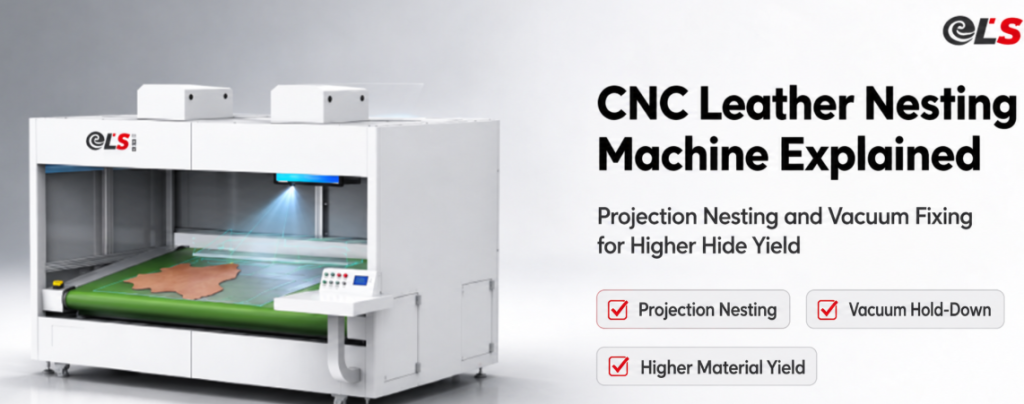
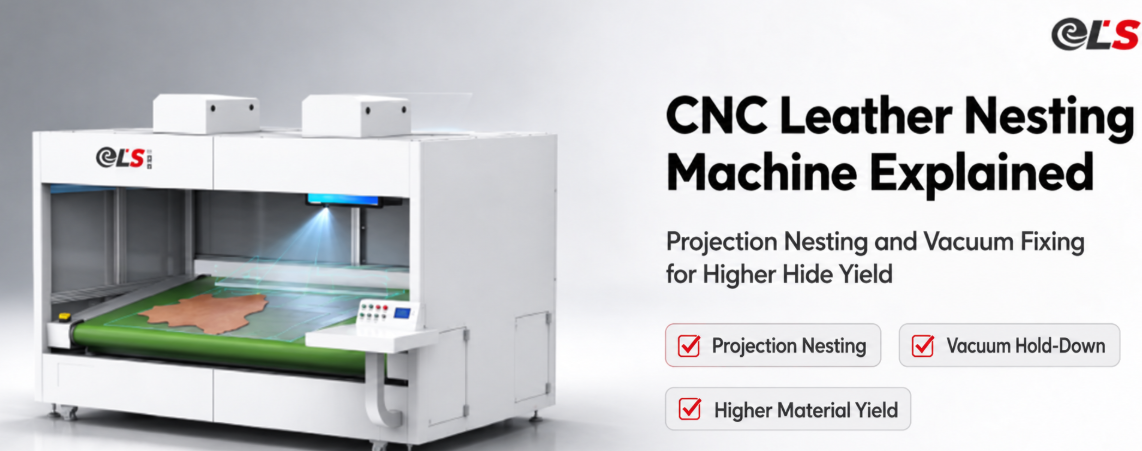
A leather stacking machine replaced that step. The leather is placed on a vacuum bed, a camera scans it and marks any defects, and the software shows a digital layout. Then a projector casts the pattern outline onto the leather. The operator lightly adjusts the leather to avoid defects, fixes the layout, and then the leather is sent to the cutting machine.
Key change: Typesetting is a step separate from cutting. What you’re buying is a layout system, which decides how every square centimeter is handled before the blade even touches it.
Core Technology Behind It

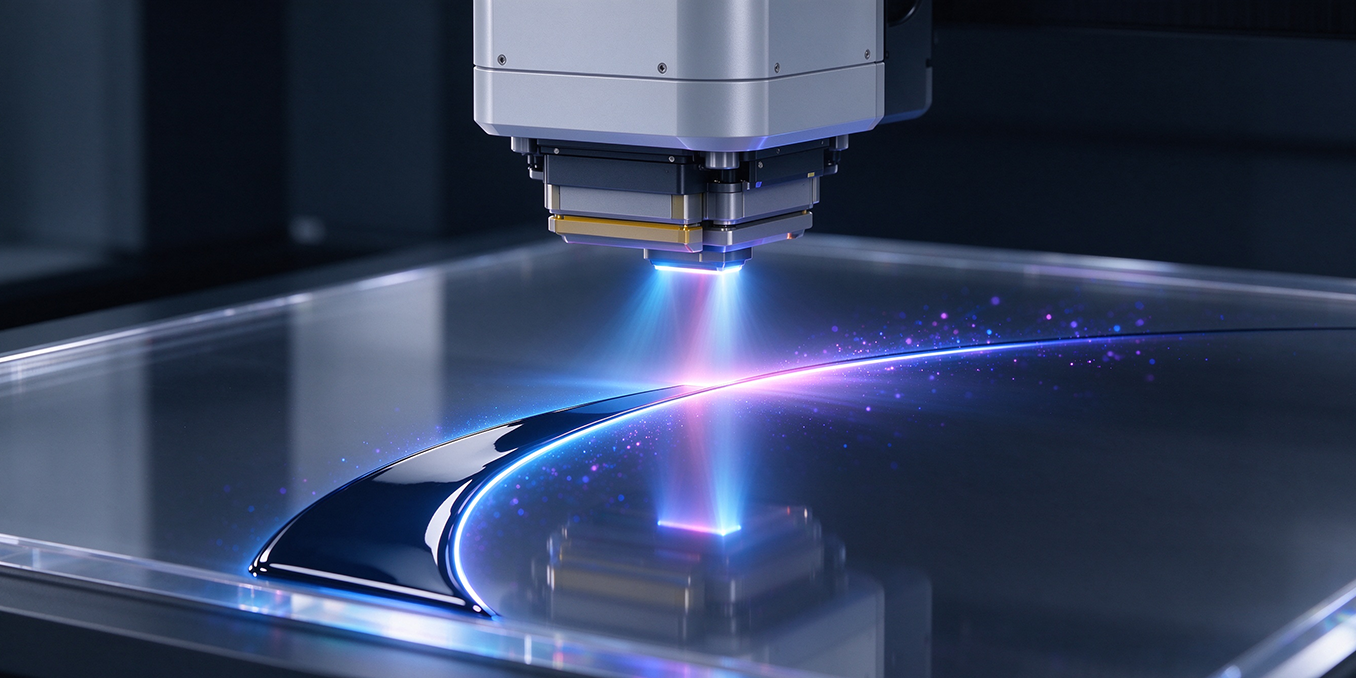
High-quality projector to lay patterns over the hide
The most eye-catching thing is that projector, which can project the outline of each pattern onto the leather with bright, calibrated lines—down to the millimeter. A camera scan maps out scratches, growth marks, and weak spots, and highlights the shadows in the projection. If a piece of leather has a flaw, it shows a red warning; the operator can drag it to a better spot, and the projection updates in real time. A good projector can even keep the lines accurate on uneven leather surfaces.
Barcode recognition to call up the right layout file
Factories handling multiple orders at the same time need to know which layout goes with which piece of leather. Barcode scanning can solve this problem: each piece of leather has a tag, and after the machine scans it, the matching layout file is automatically loaded from the server. There’s no need to check order numbers, worry about loading the wrong layout, or cutting the wrong order, and you won’t have to wait until inspection to find out there’s a problem.
Vacuum adsorption fixes the leather flat (optional configuration)
The edges of leather often curl up, and they might even move when you step on them. You can solve this with a vacuum: a perforated bed connected to a pump can hold the leather flat from edge to edge. On some machines, this is optional, but most factories choose to use it because taping or weighing it down takes longer. Plus, it keeps the leather in place during projection mapping, so the projected lines line up with where the blade needs to go.
Why Factories Add It to the Line

Larger working area, easy to operate
A CNC leather cutting machine with layout capabilities has a huge working area—big enough to fit an entire hide. The console is a touchscreen and super easy to use: lay out the leather, scan the barcode, make adjustments, and confirm. You don’t need to handle any tools or tweak any settings, so the learning curve is just a few days instead of weeks, and you also don’t need specially trained pros for the layout stage.
Pairs with a leather cutting machine for high-efficiency workflow
The feeder is the feeding device of the cutting machine. The ideal setup is a connected production line: feeding on one side, cutting on the other, connected by a conveyor belt in the middle. Without a feeder, the cutting machine just sits idle, and the marker has to sort the leather by hand. With a feeder, while one piece of leather is being sorted, the previous one is already being cut—it’s a continuous process, not batch waiting.
Raises hide utilization and reduces scrap
These are the numbers that bosses care about. Manual layout usually hovers around 75% to 85%, while digital barcode recognition layout systems can usually hit 88% to 92%. On a $50 piece of leather, a 5% improvement can save $250 per piece—if you handle a thousand pieces a month, that adds up to $30,000 in a year. The software can also pack parts tighter than the eye can see, and since the camera has already marked defects, it can accurately avoid them.
Table 1. Manual Nesting vs Projection Nesting
| Aspect | Manual Nesting | Projection Nesting |
| Hide utilization | 75-85% | 88-92% |
| Time per hide | 20-40 minutes by a marker stander | Seconds after layout confirm |
| Defect avoidance | By eye, inconsistent | Camera-mapped, software-guided |
| Consistency | Operator-dependent | File-controlled and repeatable |
How It Fits a Production Line

Pattern design and digital nesting
This production line starts from the design office. Designers save the patterns as digital files, and the layout software automatically arranges them into optimized layouts suitable for common leather, taking potential flaw areas into account. This creates a default layout that operators can tweak in the workshop.
Projection marking over the hide
The operator places the leather on the vacuum table. The camera scans it, the barcode identifies the order, and the projector projects the layout onto the leather. The operator checks for any missed defects, moves the parts, and then confirms. The projected lines will serve as cutting guides.
Hand-off to the CNC knife or laser cutter
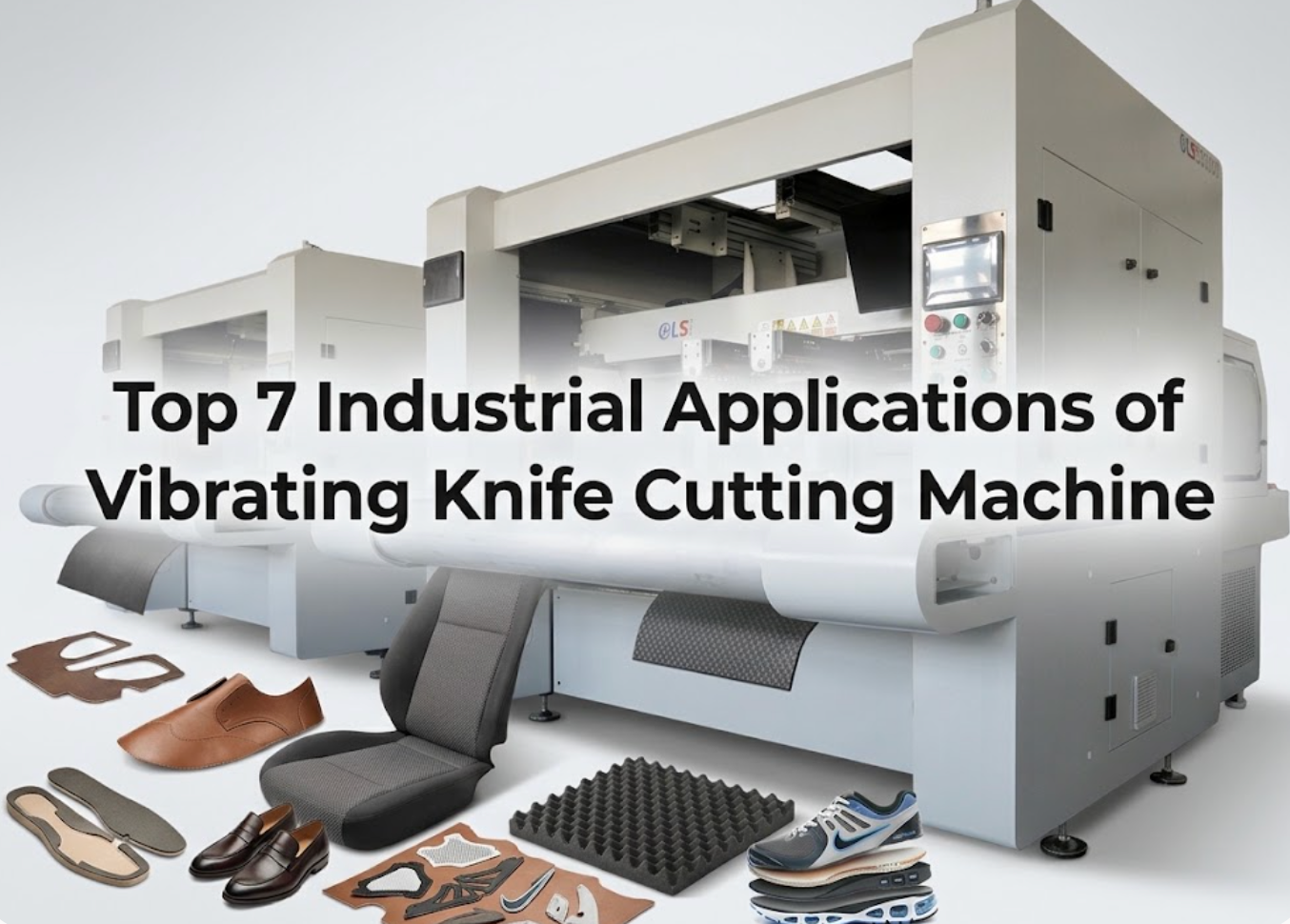
The leather is moved onto the cutting machine. On an integrated production line, the cutting machine reads the same digital file, so it can cut precisely along the projected lines. On a semi-manual production line, workers cut according to the projection. The layout decided during the typesetting is exactly how the final cuts will be.
FAQs
Is this machine the same as a leather cutting machine?
Nope. A CNC leather cutting machine is for cutting, while a leather plotting machine is for arranging parts and projection lines. Some machines can do both, but conceptually, they’re two different stages. Factories that only buy cutting machines will see a drop in efficiency because plotting still has to be done by hand.
How much can projection nesting improve hide yield?
Most factories see a 5% to 10% boost in output after using automated material layout compared to doing it by hand, which means the same piece of leather can produce about 5% to 12% more finished products. For high-value leather, the increase might be even bigger, since the software is more careful when handling flaws.
Can it pair with an existing cutting machine?
Yeah. The projection layout doesn’t limit you to using a specific brand of cutter—the projection lines are just a physical reference. So you can set up your design first, then use your own handheld rotary cutter, laser, or manual press to cut. Fully automated production lines require cutters that can read digital files, but that’s just an integration step, not a must-have.
Conclusion
The CNC leather cutting machine with a projection layout table is one of the few machines that can pay for itself just by saving material, not to mention the labor it saves. It doesn’t show off, it just quietly boosts leather that usually only yields 80% finished product up to 90%.
Hanhai has developed a projection layout system equipped with a high-resolution projector, barcode recognition, and a vacuum bed. It can be used with a vibrating knife and laser cutter. If you’re cutting hundreds of pieces of leather every month, just based on usage frequency, this machine is usually worth the investment. Send us a leather sample and your commonly used patterns, and we’ll run a layout simulation to show you how much extra value you can get from each piece of leather.