Skip to content
Introduction
An oscillating knife cutting machine uses a blade that vibrates thousands of times per minute to cut flexible materials — leather, foam, fabric, rubber, cardboard and composites — with clean, burn-free edges and ±0.1 mm accuracy. For Industrial manufacturers in footwear, luggage, automotive interiors and packaging, it replaces manual cutting and die cutting with a dieless, digital workflow that cuts tooling costs and lead times dramatically.
What Is an Oscillating Knife Cutting Machine?
An oscillating knife cutting machine is a CNC-controlled digital cutter that drives a sharp blade up and down at high frequency — typically 6,000 to 24,000 oscillations per minute — while a gantry system moves the cutting head across the material. Because the blade physically slices rather than burns or presses, it produces smooth, sealed-free edges on flexible and semi-rigid materials without heat damage, odor or hardened edges.
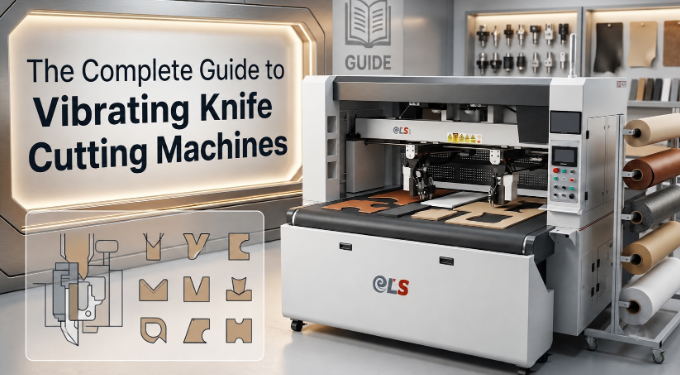
In the industry you will also see it called a vibrating knife cutting machine, CNC knife cutter, or digital flatbed cutter — these terms describe the same core technology. Modern systems such as the Hanhai Tech vibrating knife cutting machine series integrate high-definition projection, vacuum adsorption tables, dual cutting heads and automatic conveyor feeding into a single intelligent cutting workstation.
For Industrial buyers, the key distinction is this: unlike die cutting, an oscillating knife system is dieless. Patterns are imported digitally (DXF, PLT, AI), nested automatically, and cut immediately — no steel-rule dies to order, store or replace. That is why it has become the standard for short-run, high-mix production in footwear, bags, automotive interiors and gasket manufacturing.
How Does an Oscillating Knife Cutter Work?
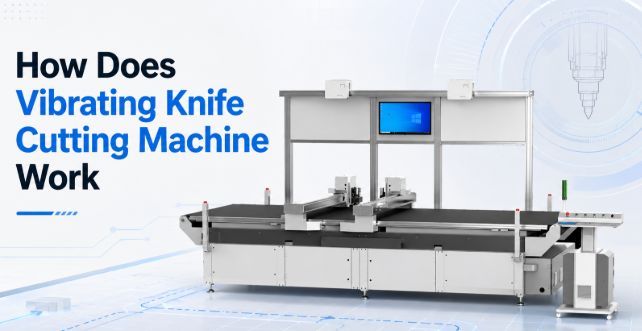
A production cycle on an oscillating knife cutting machine follows five steps:
- Digitize the pattern. Import CAD files (DXF/PLT/AI) or scan physical templates. On leather systems, a high-resolution camera captures the hide outline and surface defects.
- Automatic nesting. Smart nesting software arranges parts on the material to maximize yield — on genuine leather this alone typically improves material utilization by 5–15% compared with manual layout.
- Vacuum fixation. The adsorption table locks the material flat so it cannot shift during cutting, which is critical for ±0.1 mm repeatability on stretchy materials like fabric and foam.
- High-frequency cutting. The blade oscillates vertically while the CNC gantry follows the cut path. Dual-head machines can run two different tools simultaneously — for example a cutting blade on one head and a punching or creasing tool on the other.
- Automatic feeding. Conveyor-type machines feed the next section of the roll while operators collect finished parts, enabling continuous cutting-while-unloading production.
Machines like the channel type intelligent cutting machine ELS-B13S add visual positioning: a 20-megapixel camera photographs material placed anywhere on the table, extracts its outline, and matches the pattern to it automatically — no manual alignment required.
Oscillating Knife vs Laser vs Die Cutting: Which Is Right for You?
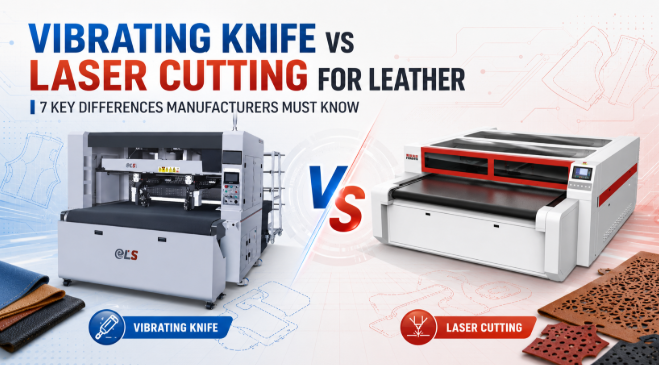
This is the question most Industrial buyers start with. Here is an honest side-by-side comparison:
| Factor | Oscillating Knife | Laser Cutting | Die Cutting |
|---|---|---|---|
| Edge quality | Clean, no burn, no odor | Sealed but charred/yellowed on leather & foam | Clean, may compress edges |
| Tooling cost | None (dieless) | None | $50–$500+ per die, weeks of lead time |
| Genuine leather | Excellent — industry standard | Burnt smell, discolored edges | Workable, poor hide utilization |
| Thick foam (20–50 mm) | Yes, with EOT/pneumatic tools | Limited, melts edges | Limited depth |
| Small-batch / custom orders | Ideal — change files, not tooling | Good | Uneconomical below ~1,000 pcs |
| Running cost | Low (blades only) | Medium (power, lens, gas) | High at low volume (dies) |
| Best for | Leather, foam, fabric, rubber, gaskets, composites | Acrylic, thin metal, engraving | Ultra-high-volume identical parts |
Bottom line: if your production involves natural leather, foams or frequent pattern changes, an oscillating knife system wins on edge quality and total cost. If you cut acrylic signage or need engraving, a laser cutting machine may complement it. Many Hanhai Tech customers run both technologies side by side.
Not sure which cutting technology fits your material?
Send us your material type, thickness and monthly volume — our engineers will recommend a configuration and send cut samples within 24 hours.
Materials & Industries: What Can an Oscillating Knife Cutting Machine Cut?
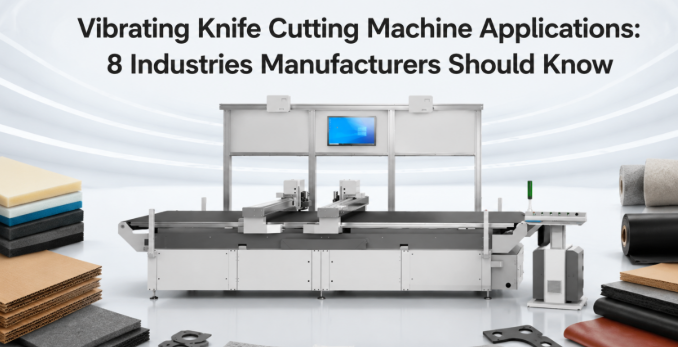
One machine platform serves a remarkably wide range of Industrial applications:
- Footwear: genuine leather uppers, PU/microfiber, EVA midsole sheets, mesh, insole boards. Vision systems detect hide defects and nest around them automatically.
- Bags & luggage: leather panels, nylon, webbing, EVA molded-case blanks, lining fabrics.
- Automotive interiors: seat leather, PVC, carpet, headliner composites, sound-deadening foam, trunk liners.
- Furniture & upholstery: sofa leather and fabric, high-density foam cushions.
- Gaskets & sealing: rubber sheet, cork, non-asbestos jointing, silicone foam — dieless cutting removes die lead time entirely.
- Packaging & advertising: corrugated board, honeycomb board, KT board, grey board, foam inserts, display stands (cut + crease in one pass).
- Composites: carbon fiber and glass fiber prepreg, aramid fabric — no heat-affected zone, no frayed edges.
For hide-based production specifically, a dedicated CNC leather cutting machine adds leather digitization, defect grading and intelligent nesting — see the ELS 3016S vibrating knife genuine leather cutting machine, which manages the full workflow from hide inspection to automatic cutting.
Blade & Tool Selection Chart (Quick Reference)
Choosing the right tool head is the single biggest factor in cut quality. Save this chart — it answers 80% of day-to-day tooling questions:
| Material | Typical Thickness | Recommended Tool | Notes |
|---|---|---|---|
| Genuine leather | 0.8–4 mm | Drag knife / oscillating knife | Add punching head for lace holes |
| PU / synthetic leather | 0.5–3 mm | Drag knife | High speed, multi-layer possible |
| EVA / PE foam | 5–50 mm | Pneumatic / EOT oscillating knife | Long blade, reduce speed on 30 mm+ |
| Fabric / mesh / composites | 0.2–5 mm | Round (rotary) knife | Prevents fraying on woven material |
| Rubber / gasket sheet | 1–10 mm | Oscillating knife (tungsten blade) | Tungsten carbide extends blade life 3–5× |
| Corrugated / grey board | 1–15 mm | Oscillating knife + creasing wheel | Cut and crease in one pass for boxes |
| Carbon fiber prepreg | 0.2–2 mm | Drag knife (carbide) | No heat-affected zone vs laser |
How to Choose the Right Oscillating Knife Cutting Machine: A Industrial Buyer’s Checklist
When comparing suppliers and models, evaluate these seven specifications in order of importance:
- Working area. Match it to your material format: 1600×1000 mm suits sample rooms; 2500×1600 mm and above suits full hides and roll production. Under-sizing the table is the most common (and most expensive) purchasing mistake.
- Single vs dual cutting heads. Dual heads — as on the ELS B6616S CNC flexible leather material cutting machine — let you cut two hides simultaneously or combine cutting + punching, nearly doubling throughput per operator.
- Feeding type. Static table for sheet goods and samples; conveyor (channel) type for roll materials and continuous mass production.
- Vision & projection. A camera system for outline capture and defect marking, plus projection for interactive nesting on natural leather, directly determines material yield.
- Software & file compatibility. Confirm DXF, PLT and AI import, automatic nesting, and MES/ERP connectivity if you are building a smart factory workflow.
- Vacuum zoning. Zoned adsorption saves energy and holds small parts firmly when cutting only part of the table.
- Certification & support. CE certification, international-brand electrical components (servo, guide rails), remote diagnostics, and local or online training. Ask every supplier: “What is your average spare-part delivery time to my country?”
If you produce samples and small batches, a compact intelligent sample cutting machine with a fast punching function may deliver faster payback than a full production system.
Cost & ROI: What Should Industrial Buyers Calculate?
An oscillating knife cutting machine typically ranges from entry-level sample cutters to fully automated dual-head leather production lines, depending on working area, head configuration and vision options. Rather than fixating on the sticker price, calculate payback from four savings streams:
- Labor: one operator on a CNC cutter typically replaces 3–6 manual cutters, and new operators master basic functions within 1–2 hours of training.
- Material yield: automatic nesting saves 5–15% of material. On genuine leather at $2–5 per square foot, this is usually the largest saving — often exceeding the labor saving.
- Tooling elimination: every die you no longer order is $50–$500 saved plus 1–3 weeks of lead time removed from your critical path.
- Rework reduction: ±0.1 mm repeatability means downstream sewing and assembly receive identical parts, cutting rejects and rework hours.
Most Hanhai Tech customers running two shifts report full payback within 12–24 months, driven primarily by leather yield improvement and labor reallocation.
Maintenance & Blade Life: Keeping Uptime High
Oscillating knife systems are mechanically simple compared with laser sources, which is why maintenance costs stay low. A practical schedule:
- Daily: clear cutting debris from the table surface and vacuum filter; check blade tip for chipping.
- Weekly: lubricate guide rails and lead screws; verify blade depth calibration.
- Monthly: inspect belts and vacuum pump; clean camera lens and re-verify vision calibration.
- Blades: standard blades last from several hours to several days depending on material abrasiveness; tungsten carbide blades cost more but last 3–5× longer on rubber and composites. Budget blades as a per-square-meter consumable — it is typically a fraction of laser electricity plus lens replacement costs.
Why Manufacturers Choose Hanhai Tech
Hanhai Tech (Wenzhou Hanhai Electromechanical Technology Co., Ltd., founded 2010) focuses exclusively on automated equipment for flexible materials — intelligent cutting, marking, punching and pattern sewing. That focus shows up in the details Industrial buyers care about:
- Full flexible-material line: cutting, automatic marking machines, CNC punching machines and computerized pattern sewing machines from one supplier — one point of integration, one point of accountability.
- CE-certified machines built with international-brand electrical components and integrated air tanks.
- Designed for ordinary operators: touch-screen interface, one-click pattern drawing, batch processing — no skilled cutter required.
- Proven export experience across Southeast Asia, South Asia and beyond, with exhibition presence at major footwear machinery fairs in China, Vietnam and India.
- Smart factory ready: digital production data flow from hide inspection to cutting, supporting Industry 4.0 upgrades.
FAQs
What materials can an oscillating knife cutting machine cut?
It cuts virtually all flexible and semi-rigid materials: genuine and synthetic leather, fabric, EVA and PU foam, rubber, cork, gasket sheet, corrugated and grey board, KT board, carbon fiber prepreg and aramid fabric. It is not designed for metals or thick rigid plastics such as acrylic.
What is the maximum cutting thickness?
With a standard oscillating head, up to about 25 mm; with pneumatic or EOT (electric oscillating tool) heads and long blades, soft foams up to roughly 50 mm can be cut cleanly. Actual capacity depends on material density — always request a cutting test with your own material before purchase.
Is an oscillating knife better than a laser for leather?
For genuine leather, yes in most cases. A blade leaves natural, uncharred edges with no burnt smell — critical for footwear, bags and automotive interiors where edge appearance and odor matter. Lasers remain better for acrylic, engraving and some synthetic textiles where edge sealing is desirable.
How accurate is CNC knife cutting?
Industrial machines achieve cutting accuracy of ±0.1 mm with repeat positioning around 0.01–0.05 mm, thanks to servo motors, precision linear guides and vacuum material fixation. This is sufficient for pattern-matched sewing and gasket sealing tolerances.
What file formats does the machine accept?
Common formats include DXF, PLT and AI, exported from AutoCAD, footwear/bag CAD systems or Illustrator. Hanhai Tech machines also support one-click pattern drawing on the touch screen and camera-based outline extraction for reverse-engineering physical templates.
How much does an oscillating knife cutting machine cost?
Price depends on working area, single vs dual heads, feeding type and vision options. Entry-level sample cutters cost a fraction of fully automated dual-head leather lines. The smarter question is payback period: most two-shift operations recover the investment in 12–24 months through material savings and labor reduction. Request a configuration-based quotation for accurate budgeting.
How long do blades last and what do consumables cost?
Blade life ranges from hours (abrasive rubber, fiberglass) to several days (leather, fabric) of continuous cutting. Tungsten carbide blades last 3–5× longer than standard steel. Overall consumable cost per square meter is low — typically far below laser operating costs (electricity, lenses, assist gas).
Is the machine difficult to operate? Do we need skilled workers?
No. Modern systems are designed for ordinary operators: automatic visual edge searching, one-click pattern drawing, batch processing and a simple touch-screen menu. New operators typically master basic functions within 1–2 hours of training, and Hanhai Tech provides operator training with every installation.
Can the machine reduce material waste on genuine leather?
Yes — this is often the biggest ROI driver. Vision systems digitize each hide, mark defects, and automatic nesting arranges parts around them at maximum density. Manufacturers commonly report 5–15% material savings versus manual layout, which on leather usually pays for the machine faster than labor savings do.
What after-sales support do overseas Industrial buyers get?
Hanhai Tech supports export customers with pre-shipment cutting tests and videos, installation guidance, online remote diagnostics, operator training, spare-parts supply and English technical documentation. Machines are CE certified and built with international-brand electrical components for easier local servicing.
Ready to Upgrade Your Cutting Room?
Tell us your material, thickness and daily output target. Get a tailored machine configuration, a video cutting test with your material, and an FOB quotation — within 24 hours.
Request a Free Quote & Cutting Test →
CE Certified • 15+ Years of R&D • Exported to 20+ Countries
Related Resources
- How Hanhai Tech Powers the Smart Factories of 2026 — where intelligent cutting fits in an Industry 4.0 production line.
- The Evolution of Hanhai Electromechanical — 15 years of R&D in flexible-material automation.
- Vibrating Knife Cutting Machine Product Line — full specifications of the ELS intelligent cutting series.
- CNC Leather Cutting Machines — dedicated solutions for hide digitization and defect-aware nesting.