Skip to content

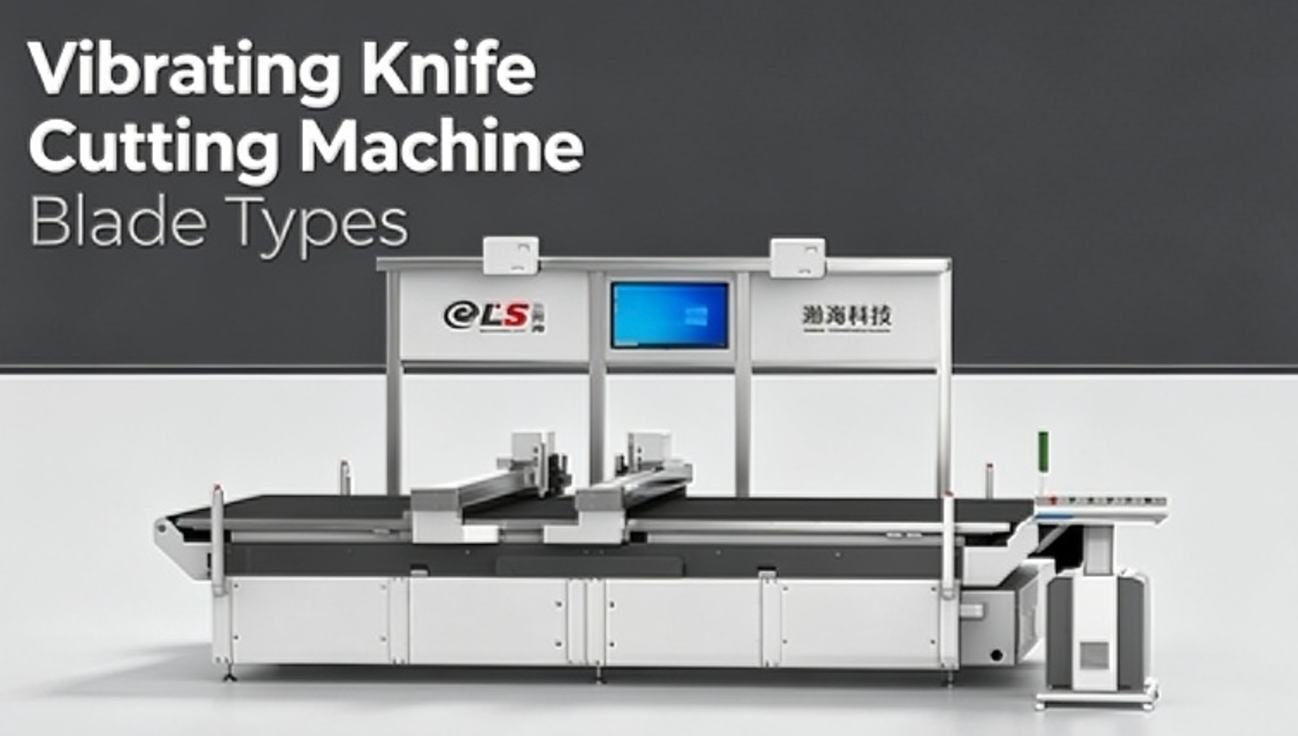
Buyers often treat the blade as an afterthought — “the machine comes with blades, right?” In reality, on any knife cutting machine the vibrating knife blade is where your cut quality, speed, and material yield are won or lost. The same machine will cut leather cleanly with one blade and tear foam with another. Choosing the right blade is a five-minute decision with a season-long impact.
This guide walks through how oscillating blades work, the main blade types used on a cnc oscillating knife cutting machine, and how to match a blade to your material, thickness, and layer count. Hanhai Machinery supplies and supports flexible-material cutting systems and tooling, so these recommendations come from real production use.
How Vibrating Knife Cutting Machine Blades Work
On a digital knife cutting machine, a vibrating knife (oscillating knife) blade is mounted in a tool holder that moves the blade up and down at high frequency while the machine drives it along the cutting path. Because the cutting action is reciprocating rather than a single shearing stroke, the blade slices through the material with very little downward force. That reduces compression of soft materials and keeps edges clean, even on multi-layer stacks. The geometry of the blade tip — straight, hooked, serrated, or angled — determines how it addresses the material.

For a full background on the mechanism, see our article on how a vibrating knife cutting machine works.
Main Types of Vibrating Knife Blades
Straight Blade
The workhorse. A straight blade gives the cleanest, most accurate edges in dense materials such as leather, thick fabric, and gasket sheet. Use it when edge quality and dimensional accuracy matter most — which is why a straight knife cutting machine remains the default for dense leather and gasket work.
Hooked Blade
The hooked (or cranked) tip pulls material into the cut, making it ideal for soft, compressible, or fibrous materials — foam, felt, wadding, and loosely woven textiles — where a straight blade might push the material instead of slicing it.
Serrated Blade
A serrated edge grabs and cuts tough or slippery materials that resist a smooth blade — rubber, EVA, reinforced fabrics, and some composites. The trade-off is a slightly rougher edge, so use it where grip matters more than a razor finish.
V-Cut (Bevel) Blade
A V-shaped bevel blade cuts a chamfered groove, used for creasing, folding lines, and V-cutting foam or board so a thick material can fold cleanly. Common in packaging, signage, and foam conversion.
Kiss-Cut (Half-Cut) Blade
A kiss-cut blade penetrates only the top layer, cutting a liner-backed material — labels, transfer films, and laminated textiles — without slicing through the carrier. It is the go-to tool for sticker, membrane-switch, and self-adhesive work.
Drag Knife
A drag knife is not oscillated; it is dragged along the path, swiveling to follow corners. It is used for thinner, softer materials, films, and delicate papers where a powered blade would be excessive — a light-touch fabric cutting tool for sample and detail work.
At a glance:
| Blade Type | Best For |
|---|---|
| Straight | Leather, thick fabric, gasket sheet |
| Hooked | Foam, felt, wadding, soft textiles |
| Serrated | Rubber, EVA, reinforced fabric, composites |
| V-Cut / Bevel | Creasing, V-grooving foam and board |
| Kiss-Cut | Labels, films, laminated textiles |
| Drag Knife | Thin films, delicate paper, soft sheets |
How to Choose the Right Blade for Your Material
Blade Selection by Material Type
Start with the material family. Dense and rigid-leaning materials (leather, gasket sheet) favor straight blades for edge quality. Soft and compressible materials (foam, felt) favor hooked blades that pull rather than push. Slippery or tough materials (rubber, EVA, reinforced fabric) favor serrated blades. Liner-backed materials need kiss-cut, and thin films need a drag knife.
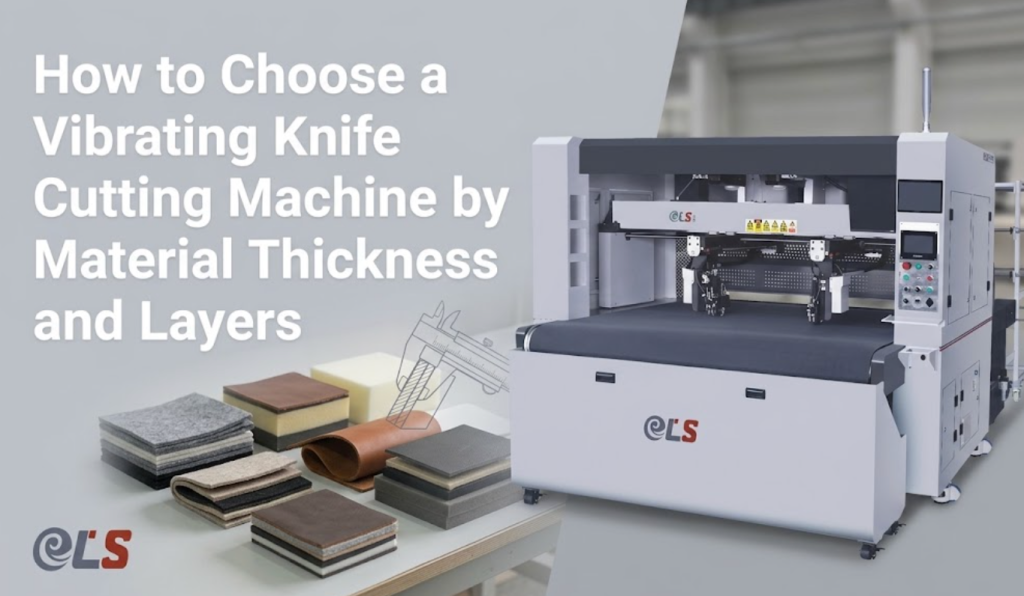
Blade Selection by Thickness and Number of Layers
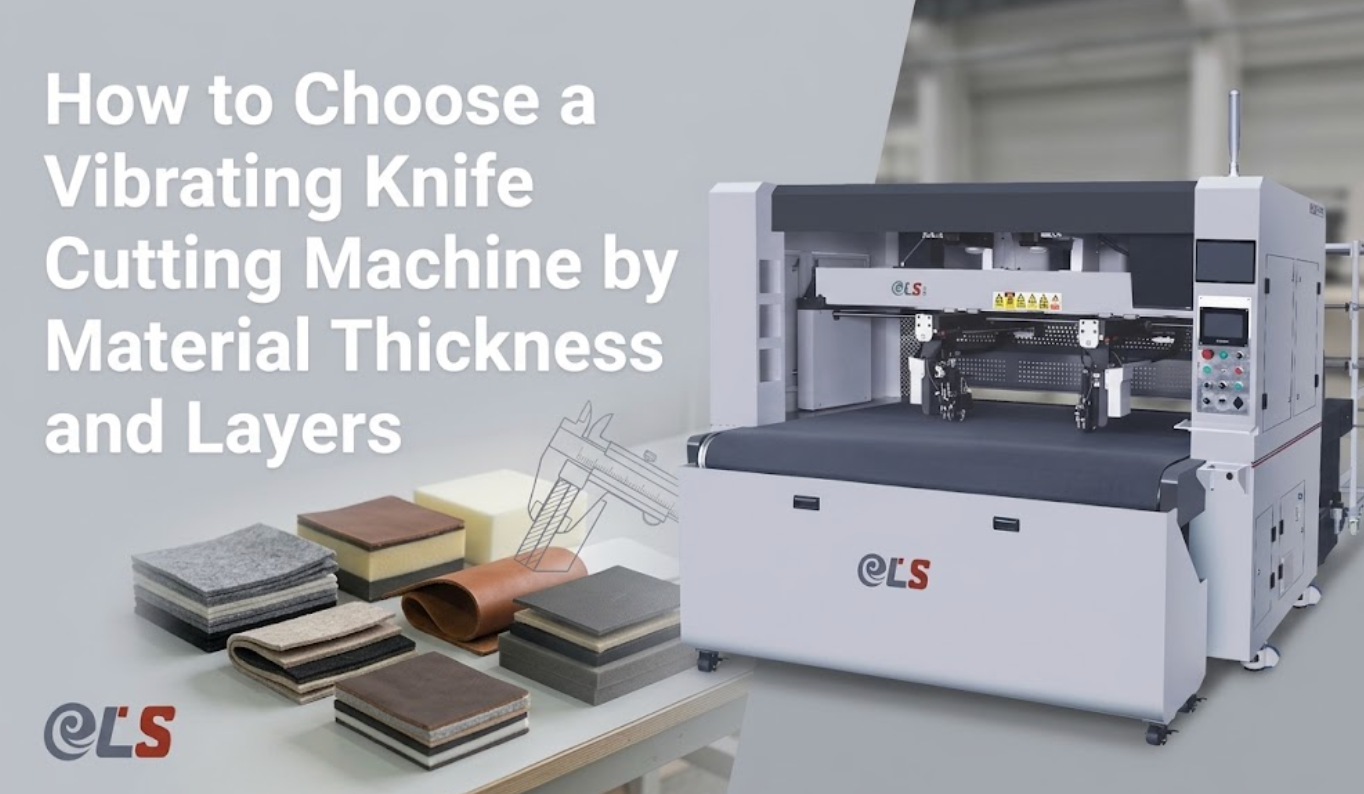
Thicker and multi-layer stacks demand a longer, stronger blade with more stroke and a stiffer shaft, so the blade does not flex or wander at depth. For stacking many layers, blade length and a firm hold-down matter as much as tip geometry. Machine models designed for heavier stacks — such as our channel-type intelligent cutting machine ELS-B13S — give the extra rigidity multi-layer work needs.
Electric vs Pneumatic Oscillating Tools
Oscillating tools are driven either electrically or pneumatically. Electric tools are simpler to install and maintain and suit most leather, textile, and foam applications. Pneumatic tools can deliver very high stroke frequency for certain soft or thick materials and are common where factory air is already available. The best choice depends on the material mix and the machine platform — something to confirm with your supplier against your sample material.
Not sure which blade your material needs?
Send us a sample of your leather, foam, or technical fabric. Hanhai engineers will test it and recommend the exact blade and tool configuration — free of charge.
Tips for Extending Blade Life and Cutting Quality
- Match stroke and speed to the material. Too much speed on a soft material tears it; too little on a dense one dulls the blade faster.
- Keep the vacuum hold-down strong. A shifting sheet causes chatter, which both wrecks edges and chips blades.
- Rotate and replace blades on schedule. A worn blade increases drag and produces fuzzy edges — the classic early sign of common cutting problems.
- Store blades clean and protected. Damp or damaged blades cut poorly and rust.
- Use the right tool for the substrate. Never force a drag knife through thick leather or a straight blade through slippery rubber.
Most of this tooling is available on the machines in our vibrating knife cutting machine range, and the ELS-3016S is a proven platform for leather and mixed flexible materials — see the vibrating knife genuine leather cutting machine.
Frequently Asked Questions
Which blade is best for cutting foam or rubber?
Foam is best cut with a hooked blade that pulls the material into the edge. Rubber and EVA favor a serrated blade that grips a slippery, tough surface.
What is the difference between a kiss-cut blade and a full-cut blade?
A kiss-cut blade penetrates only the top layer, leaving the liner or backing intact. A full-cut blade goes through the entire material stack. Kiss-cut is used for labels and laminated media; full-cut for standard part cutting.
How often should cutting blades be replaced in production?
There is no fixed interval — it depends on material abrasiveness and volume. Replace when edge quality degrades or cutting force rises. In heavy production, many factories change blades on a set schedule and rotate them to extend life.
Can one machine switch between multiple blade types automatically?
With a multi-tool head and an automatic tool changer, yes — the machine can pick different blades or tools for different operations in one program, which is common on advanced vibrating knife systems.
Conclusion
Blades are cheap; bad cuts are not. Matching a straight, hooked, serrated, V-cut, kiss-cut, or drag blade to your material — and pairing it with the right stroke, speed, and hold-down — is one of the simplest ways to protect edge quality, throughput, and material yield. When in doubt, test your actual material rather than guess.
Hanhai Machinery builds and supports oscillating knife cutting systems with a full tooling range. Contact us for a blade recommendation based on your substrate.