Skip to content

Introduction
Choosing the right extra large computerized pattern sewing machine is an important investment decision for manufacturers that process large textile components, complex sewing patterns, or oversized industrial materials. The right equipment can improve stitching consistency, reduce manual operations, support higher production efficiency, and help manufacturers maintain stable product quality.
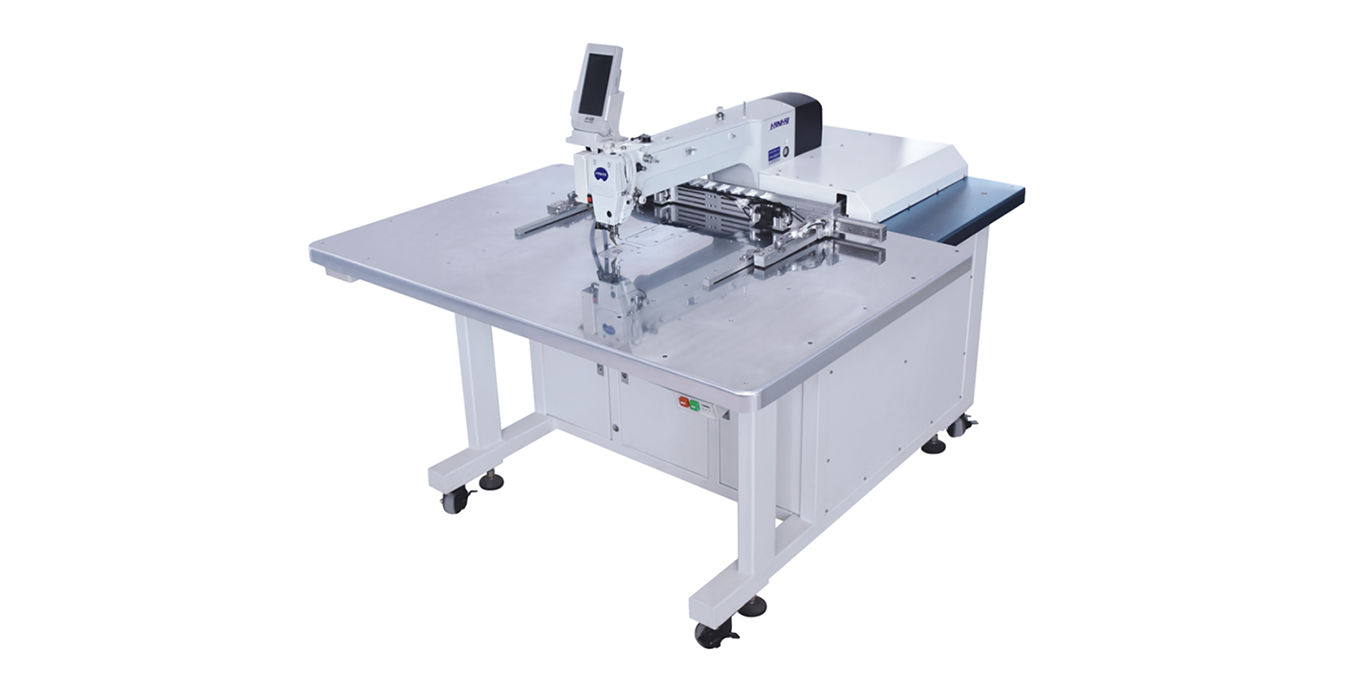
Unlike standard industrial sewing machines, extra large computerized pattern sewing machines are designed to accommodate larger sewing patterns within an expanded working area. They are commonly considered for applications such as automotive interiors, furniture upholstery, luggage manufacturing, outdoor equipment, and industrial textile production.
However, a larger machine is not automatically the best choice for every factory. Working area, material compatibility, sewing accuracy, programming functions, production capacity, and operating costs all influence equipment performance. This guide explains the key factors manufacturers should evaluate when selecting an extra large computerized pattern sewing machine for industrial production.
Determine the Required Sewing Area
The effective sewing area is one of the most important specifications to consider when purchasing an extra large computerized pattern sewing machine. It determines the maximum dimensions of the pattern that the machine can sew within a single programmed cycle.
Manufacturers should begin by measuring the largest workpieces and stitching patterns used in their production processes. The required dimensions may vary significantly depending on whether the factory manufactures automotive interior panels, sofa upholstery, large bags, or technical textile components.
It is also important to distinguish between the machine’s overall table dimensions and its actual sewing area. A large worktable does not necessarily mean that the entire surface is available for programmed stitching.
When comparing machines, review the following specifications:
Effective sewing area and maximum pattern dimensions
Maximum workpiece size and positioning requirements
Available clamping or template configurations
Space required for loading, unloading, and material handling
Selecting a machine with an appropriate working area helps prevent unnecessary equipment costs while ensuring that the intended patterns can be completed efficiently.
Evaluate Material Compatibility
Different industrial sewing applications require different machine configurations. Before selecting a model, manufacturers should identify the materials, thicknesses, and layer combinations used in their products.
For example, furniture manufacturers may work with woven upholstery fabrics, synthetic leather, foam-backed materials, and multilayer assemblies. Automotive suppliers may require consistent stitching on selected interior trim materials, while luggage manufacturers may process reinforced fabrics and heavier textile components.
Material compatibility depends on several factors, including the sewing head, needle system, thread specifications, feed mechanism, and available presser-foot configuration.
When evaluating an extra large computerized pattern sewing machine, consider the following questions:
Can the machine handle the required material thickness and number of layers?
Does the sewing head support the required stitch type and thread?
Can the machine maintain consistent stitching on flexible or reinforced materials?
Are suitable needles, presser feet, and other accessories available?
Whenever possible, request a sample sewing test using the actual production materials. This allows the manufacturer to assess stitch quality, thread tension, material movement, and overall sewing stability before purchasing the equipment.
Check Sewing Accuracy and Repeatability
Sewing accuracy is essential when industrial products require consistent dimensions, precise pattern alignment, or repeatable decorative stitching. Variations in stitching can affect product appearance, assembly compatibility, and downstream manufacturing processes.
An extra large computerized pattern sewing machine uses programmed sewing paths to reduce the need for operators to guide materials manually along every section of a pattern. Once a program has been verified, it can be reused for subsequent production runs.
However, computerized control alone does not guarantee a specific level of accuracy. Actual performance also depends on mechanical rigidity, motion control, clamping stability, material characteristics, and program quality.
Manufacturers should evaluate:
Pattern positioning and stitching repeatability
Stability during changes in direction
Consistency across repeated production cycles
Performance when sewing large or multilayer workpieces
A practical evaluation should include repeated sewing tests using representative workpieces. Inspect the finished samples for pattern alignment, stitch consistency, dimensional accuracy, and other product-specific quality requirements.
Review the Computerized Control and Programming System
The control system determines how sewing patterns are created, stored, selected, and executed. An easy-to-use programming interface can simplify daily operations, reduce setup complexity, and support production changes.
Depending on the model, pattern programs may be created directly through the machine controller, developed using compatible software, or transferred from an external computer.
When comparing programming capabilities, consider whether the system supports the number and complexity of patterns required by your factory. Also review program storage, editing functions, file transfer methods, and software compatibility.
For manufacturers producing multiple product models, convenient program management can reduce changeover time and make it easier to repeat established sewing procedures.
It is equally important to assess operator training requirements. A powerful control system may provide extensive functionality, but the benefits are limited if operators find it difficult to create, modify, or select the correct programs.
Match Machine Performance to Production Capacity
Production capacity should be evaluated using the complete manufacturing cycle rather than maximum sewing speed alone.
An extra large computerized pattern sewing machine may reduce manual guidance during programmed stitching. Nevertheless, the time required to position materials, secure workpieces, load programs, remove finished products, and perform quality checks also affects total output.
Manufacturers should estimate their expected daily or monthly production volume and determine how the machine will fit into the existing workflow.
Important considerations include:
Average sewing cycle time for representative patterns
Material loading and unloading time
Frequency of pattern changes and product changeovers
Operator workload and training requirements
Expected machine availability and maintenance downtime
For high-volume manufacturing, request a production demonstration using a typical workpiece and pattern. A realistic cycle-time evaluation provides more useful information than relying exclusively on the machine’s advertised maximum speed.
Consider Automation and Material Handling
Automation features can improve efficiency when they address specific bottlenecks in the production process. Depending on the machine design, available options may include programmable positioning, automatic thread trimming, automatic presser-foot control, and integrated material-handling functions.
Not every extra large computerized pattern sewing machine includes the same features. Buyers should confirm which functions are standard, which require optional equipment, and which may need customization.
For example, a factory producing similar patterns in large quantities may benefit from automated functions that reduce repetitive operator tasks. A manufacturer handling frequent product changes may place greater importance on flexible programming and fast setup.
Before investing in additional automation, compare its expected productivity benefits with its purchase cost, maintenance requirements, and integration complexity.
The objective is to select a configuration that improves the actual production process rather than paying for functions that the factory rarely uses.
Compare Machine Construction and Durability
Industrial sewing equipment must withstand repeated operation, mechanical movement, and the demands of its intended production environment. For extra large machines, structural stability and motion control are particularly important because the working area and moving mechanisms may be larger than those of standard equipment.
When reviewing machine construction, examine the frame, worktable, drive system, positioning mechanism, sewing head, and accessible maintenance points.
A stable structure helps support consistent movement during programmed sewing. Reliable drive components and properly maintained mechanisms can also contribute to long-term operating performance.
Manufacturers should ask suppliers about expected maintenance intervals, recommended consumables, spare parts availability, and procedures for checking sewing accuracy.
It is also useful to review the manufacturer’s quality control process and request technical documentation for the proposed model. These details help buyers assess whether the equipment is suitable for their expected production intensity.
Evaluate Total Cost of Ownership
The purchase price is only one part of the investment in an extra large computerized pattern sewing machine. Operating expenses, maintenance, training, tooling, and downtime can also affect the total cost of ownership.
A lower-priced machine may be attractive initially, but it may not provide the required sewing area, material compatibility, or programming capabilities. Conversely, a more advanced machine may represent unnecessary expenditure if its additional functions do not improve production.
Before making a decision, consider the following cost factors:
Initial machine price and optional configurations
Installation, commissioning, and operator training
Needles, thread, spare parts, and routine maintenance
Programming software, tooling, and customized fixtures
Energy consumption and expected downtime
Production output and potential reductions in manual work
A practical comparison should focus on the cost of producing acceptable finished products over the expected service life of the equipment. This provides a more meaningful basis for evaluating competing models.
Assess Manufacturer Experience and After-Sales Support
Choosing a reliable extra large computerized pattern sewing machine manufacturer is important for both equipment performance and long-term production stability.
An experienced supplier should be able to explain the machine’s working area, supported materials, programming capabilities, and configuration options. The supplier should also understand the specific challenges associated with the buyer’s products.
Before purchasing, review the manufacturer’s technical experience, quality inspection procedures, customization capabilities, warranty terms, and availability of technical support.
Ask whether the supplier can conduct sample sewing tests, help configure the machine for your materials, and provide training for operators and maintenance personnel.
For overseas buyers, communication efficiency, spare parts delivery, remote troubleshooting, and access to technical documentation can be particularly important.
A supplier that understands your application can help reduce the risk of purchasing a machine that meets general specifications but fails to satisfy actual production requirements.
Request a Sample Test Before Making the Final Decision
A sample sewing test is one of the most effective ways to verify whether an extra large computerized pattern sewing machine meets industrial production requirements.
Prepare a representative workpiece and provide the supplier with the intended stitching pattern, material specifications, thread requirements, and quality standards.
During the test, evaluate whether the machine can complete the entire pattern within its effective sewing area. Check the alignment, stitch consistency, material handling, cycle time, and ease of program adjustment.
If the factory manufactures several product types, test the most demanding or representative applications rather than relying on a single simple pattern.
Manufacturers should also confirm the repeatability of the results across multiple cycles. This helps determine whether the machine can maintain acceptable quality under realistic production conditions.
Documenting the test results makes it easier to compare suppliers objectively and identify any configuration changes required before delivery.
Conclusion
Choosing the right extra large computerized pattern sewing machine requires a careful assessment of working area, material compatibility, sewing accuracy, programming functions, production capacity, automation, durability, and total cost of ownership.
Manufacturers should begin with their actual workpiece dimensions and sewing requirements, then compare machine configurations against the demands of their production process. Evaluating complete cycle time, testing representative materials, and reviewing after-sales support can help reduce purchasing risks.
The most suitable machine is not necessarily the largest or most expensive model. It is the one that handles the required workpieces, delivers consistent sewing quality, fits the factory’s production workflow, and provides reliable long-term value.
By working with an experienced industrial sewing machine manufacturer and verifying performance through sample testing, businesses can make a more informed investment in their sewing operations.
FAQ
1. What should I consider when choosing an extra large computerized pattern sewing machine?
Consider the effective sewing area, material compatibility, sewing accuracy, programming functions, production capacity, automation options, and maintenance requirements. The machine should match your actual workpiece dimensions and production needs rather than simply offer the largest working area.
2. How do I determine the right sewing area for my production needs?
Measure the largest workpiece and its complete stitching pattern. Compare these dimensions with the machine’s effective sewing area, taking into account material positioning, clamping requirements, and the space needed to complete the pattern in one cycle.
3. What materials can an extra large computerized pattern sewing machine handle?
Depending on its configuration, the machine may sew woven fabrics, synthetic textiles, upholstery materials, leather, and multilayer textile components. Always confirm the supported material thickness, needle system, thread specifications, and sewing head configuration with the manufacturer.
4. How accurate are extra large computerized pattern sewing machines?
These machines can provide consistent, repeatable stitching by following programmed sewing paths. Actual accuracy depends on the machine’s mechanical structure, motion control, clamping stability, material characteristics, and program quality. Sample testing helps verify performance for specific applications.
5. Can an extra large computerized pattern sewing machine improve industrial production efficiency?
Yes. It can reduce manual pattern guidance, standardize repetitive sewing operations, and help shorten certain production cycles. Overall efficiency also depends on material preparation, loading and unloading, program changes, operator training, and inspection time.