Skip to content

Introduction
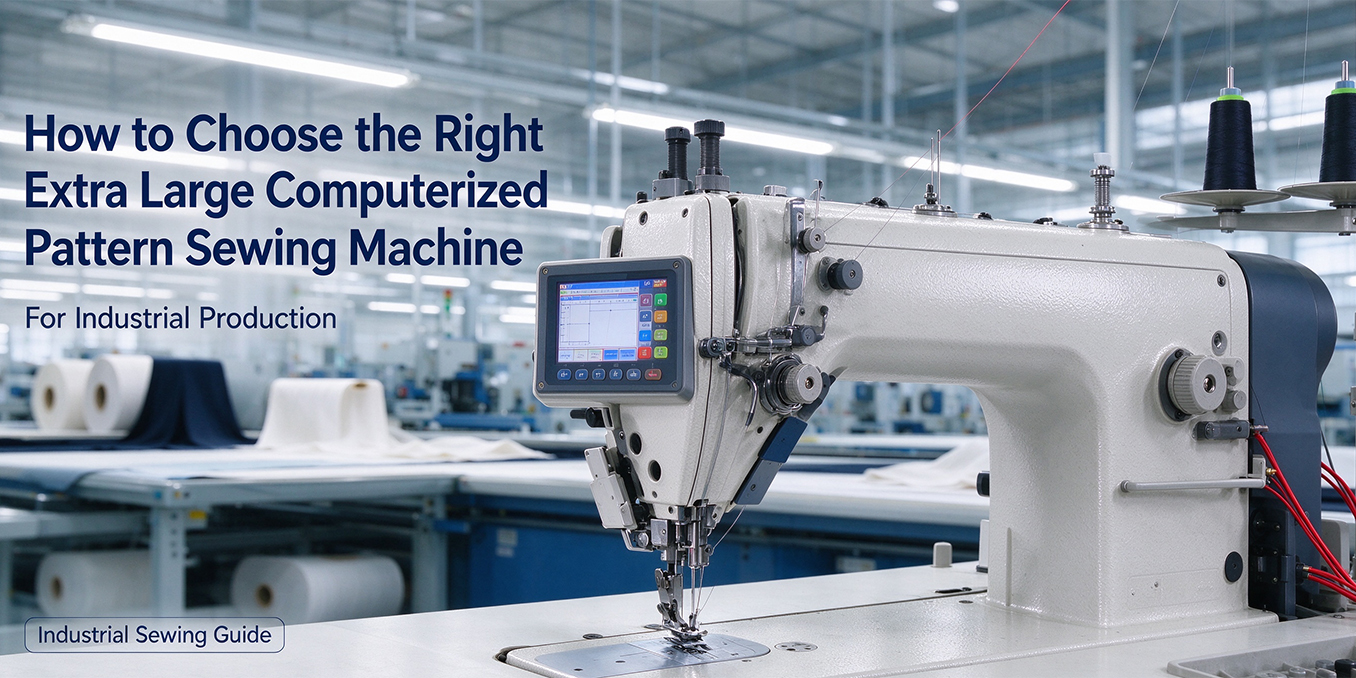
An extra large computerized pattern sewing machine is an industrial sewing machine designed to sew large workpieces and complex patterns with high levels of accuracy and repeatability. Compared with conventional sewing machines and standard pattern sewing equipment, it typically provides a larger working area, programmable stitching paths, and automated sewing operations, making it suitable for manufacturers handling oversized textile components.
In industries such as automotive interiors, furniture upholstery, luggage manufacturing, outdoor equipment, and industrial textiles, sewing large components consistently can be challenging. Manual sewing may require considerable operator skill and repeated adjustments, while limited working space can restrict the size of patterns that a machine can process.
Extra large computerized pattern sewing machines address these challenges by combining programmable control systems with a spacious sewing area and coordinated machine movements. Understanding their structure, working principles, and applications can help manufacturers determine whether this equipment is suitable for their production requirements.
What Is an Extra Large Computerized Pattern Sewing Machine?
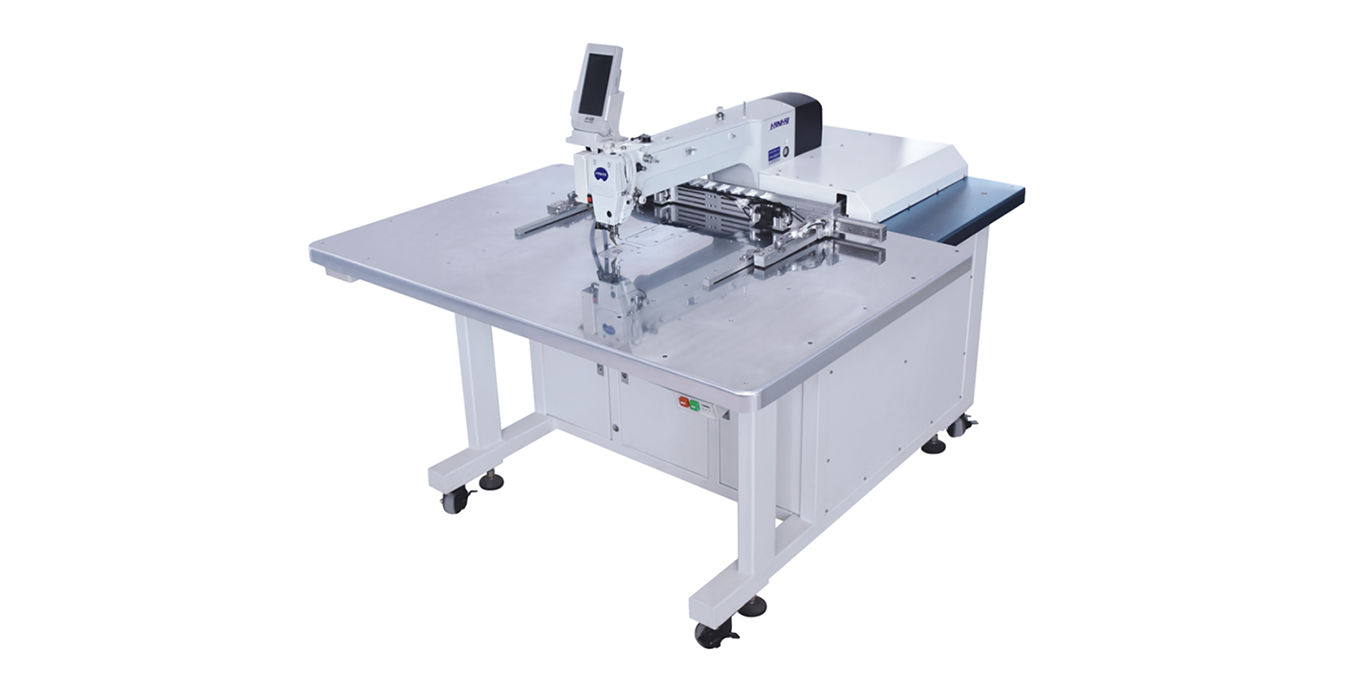
An extra large computerized pattern sewing machine is a programmable industrial sewing system designed to automatically sew predefined patterns across relatively large workpieces. Its main distinguishing feature is an enlarged sewing area that accommodates components that may be difficult to position or sew on standard pattern sewing machines.
The machine typically uses a computerized controller to store and execute sewing programs. After an operator selects the appropriate pattern and positions the material, the system controls the sewing path and coordinates the movement of the material-holding mechanism with the sewing head.
Depending on the machine configuration, features may include a large-format worktable, a programmable control panel, a clamping or work-holding system, an industrial sewing head, and pattern programming software.
The term “extra large” does not refer to one universal machine size. The actual working area, maximum sewing dimensions, supported materials, and automation capabilities vary by manufacturer and model. Buyers should therefore evaluate these specifications against their actual workpiece dimensions rather than relying on the product name alone.
How Does an Extra Large Computerized Pattern Sewing Machine Work?
An extra large computerized pattern sewing machine follows a programmed sewing process. Although operating procedures differ between models, the general workflow involves pattern programming, material positioning, parameter configuration, automatic stitching, and quality inspection.
1. Pattern Programming
The first step is to create or select the required sewing pattern. Depending on the machine’s control system, the pattern may be programmed directly through the controller, created using compatible software, or transferred from an external computer.
The sewing program defines the intended stitching path and may include pattern coordinates, sewing sequences, stitch settings, and other machine parameters. Once the program has been checked and stored, operators can retrieve it for subsequent production runs.
This programming capability is especially useful when manufacturers need to produce complex shapes or repeat the same stitching design across multiple workpieces.
2. Material Positioning and Clamping
Before sewing begins, the operator places the workpiece within the machine’s working area. The material must be correctly aligned with the programmed sewing path to achieve the desired result.
Depending on the design, a clamp, template, frame, or other work-holding mechanism may secure the material during sewing. Proper positioning helps prevent unwanted movement, distortion, and alignment errors.
For large or flexible materials, this stage is particularly important because uneven tension or incorrect placement can affect the final stitching quality.
3. Setting Sewing Parameters
The operator configures the required sewing parameters according to the material, thread, and product specifications. These settings may include sewing speed, stitch length, needle selection, thread tension, and other available controls.
Different materials require different configurations. Lightweight fabrics, synthetic materials, leather, and multilayer upholstery components may respond differently to needle penetration, thread tension, and sewing speed.
Correct parameter selection helps improve stitch consistency and reduce common defects such as skipped stitches, thread breakage, and uneven seams.
4. Automatic Pattern Sewing
After the workpiece is secured and the settings are confirmed, the operator starts the sewing cycle.
The computerized controller executes the selected pattern and coordinates the machine’s movements according to the programmed path. Depending on the machine design, the work-holding frame or material-positioning mechanism moves the workpiece relative to the sewing needle.
The needle and thread form stitches along the intended path, while the control system manages the programmed sequence. Because the sewing path is stored digitally, the machine can reproduce the same pattern across repeated production cycles with less dependence on manual steering.
The available sewing area determines the maximum pattern dimensions that can be completed within a single setup. Oversized components may require a larger working area or a different production arrangement.
5. Inspection and Program Adjustment
Once the sewing cycle is complete, the operator removes the finished component and checks the stitching against the product requirements.
Inspection may cover pattern alignment, stitch consistency, seam appearance, thread security, and dimensional accuracy. If defects occur, the operator may need to adjust the sewing parameters, improve material positioning, or revise the program.
After the process has been validated, the saved program can be reused for future production batches, helping maintain consistent results.
Key Components of an Extra Large Computerized Pattern Sewing Machine
Understanding the main components helps manufacturers evaluate machine capabilities and identify the specifications that matter most for their applications.
Computerized Control System
The control system stores and executes sewing programs, allowing operators to select patterns and manage available sewing parameters. Its interface, programming functions, memory capacity, and compatibility with external software can influence daily operating efficiency.
Large Working Area
The working area is one of the most important features of an extra large computerized pattern sewing machine. It determines the size of the pattern and workpiece that can be handled within a single sewing cycle.
Buyers should confirm the effective sewing dimensions rather than relying solely on the overall table size or machine footprint.
Sewing Head and Stitch Formation Mechanism
The sewing head contains the needle and the mechanisms responsible for forming stitches. Its configuration affects the types of stitching operations the machine can perform and the materials it can process.
Needle system, thread compatibility, stitch type, and material thickness should all be considered when matching the sewing head to a production application.
Material Clamping and Positioning System
The clamping or positioning mechanism holds the workpiece in place and supports accurate movement during sewing. Its design should suit the size, shape, flexibility, and thickness of the material being processed.
For large textile panels or shaped components, stable positioning is essential to help prevent shifting and inconsistent stitching.
Drive and Motion Control System
The drive and motion control system coordinates machine movement during the programmed sewing cycle. Depending on the model, it may use servo-driven mechanisms and other electronic controls to achieve the required positioning accuracy and movement speed.
The quality of motion control can affect pattern execution, production repeatability, and the machine’s ability to handle complex sewing paths.
What Are the Main Advantages of an Extra Large Computerized Pattern Sewing Machine?
For manufacturers processing large or complex textile components, this equipment can offer several production advantages.
1. Handles Larger Workpieces
A larger effective sewing area allows manufacturers to process components that exceed the practical working range of standard pattern sewing machines. This is valuable for large upholstery panels, automotive interior components, luggage parts, and other oversized products.
2. Improves Pattern Repeatability
Once a sewing program has been validated, it can be reused to produce the same pattern across multiple workpieces. This reduces reliance on manual steering and can help minimize variation between production batches.
Actual accuracy depends on machine construction, program quality, material stability, and correct operation.
3. Reduces Manual Sewing Work
Automated pattern execution reduces the need for operators to guide the material continuously along complicated stitching paths. Operators can focus more on material preparation, positioning, machine monitoring, and quality inspection.
The resulting labor savings depend on the application, production volume, and existing manufacturing process.
4. Supports Complex Sewing Patterns
Programmable sewing paths make it possible to reproduce shapes and stitching sequences that may be difficult to execute consistently by hand. This can be beneficial for decorative stitching, reinforcement patterns, shaped seams, and other applications supported by the machine.
5. Supports Standardized Production
Stored programs allow manufacturers to repeat established sewing procedures across production runs. When combined with standardized materials, verified settings, and proper maintenance, this capability can support more consistent manufacturing quality.
Common Applications of Extra Large Computerized Pattern Sewing Machines
Extra large computerized pattern sewing machines are used in industrial applications where workpiece dimensions, stitching complexity, or production consistency create challenges for conventional sewing methods.
Automotive interior manufacturing: The equipment may be used for selected seat-cover components, interior trim, and other automotive textile or upholstery parts. Material compatibility and the required stitching specifications must be verified for each application.
Furniture and upholstery production: Sofa covers, upholstered panels, and other large fabric components may benefit from a wider sewing area and repeatable stitching programs.
Luggage and bag manufacturing: Large bags, travel products, and selected luggage components often require consistent stitching across reinforced areas, shaped panels, or repeated patterns.
Outdoor equipment manufacturing: Tents, awnings, protective covers, and other large textile products may require programmable stitching for supported materials and patterns.
Industrial textile production: Certain technical fabrics, protective textile components, and large sewn assemblies may be suitable when their thickness, flexibility, and construction match the machine’s capabilities.
Not every extra large pattern sewing machine is suitable for all these applications. Buyers should confirm the machine’s sewing dimensions, stitch type, material range, and required tooling before selecting a model.
How to Choose the Right Extra Large Computerized Pattern Sewing Machine
Selecting the right equipment requires more than comparing the working area. Manufacturers should consider the complete production process and the technical requirements of the products they intend to manufacture.
Evaluate the Required Sewing Area
Measure the maximum dimensions of the workpiece and the actual stitching pattern. Choose a machine with an effective sewing area that accommodates the required pattern, including sufficient space for positioning and clamping.
If the product has irregular shapes or multiple stitching zones, review how these features affect the machine setup and production workflow.
Confirm Material Compatibility
Check the material type, thickness, number of layers, and required thread specifications. Ask the manufacturer whether the proposed configuration can sew representative samples of the intended material.
Sample testing is particularly useful for multilayer fabrics, coated textiles, leather, and other materials with specialized sewing requirements.
Review Programming and Control Functions
Evaluate how patterns are created, edited, stored, and transferred to the machine. A straightforward programming interface and suitable program management functions can simplify production changes and reduce operator training requirements.
If the factory uses existing pattern software, confirm compatibility before purchasing.
Compare Production Performance
Consider the required cycle time, sewing speed, changeover frequency, and daily output. Maximum sewing speed alone is not enough to estimate productivity because material loading, unloading, alignment, and inspection also contribute to total production time.
Where possible, request a production demonstration using a representative workpiece.
Consider Support and Maintenance
Reliable technical support, operator training, spare parts availability, and maintenance documentation can influence long-term operating costs. Buyers should also confirm warranty coverage and the manufacturer’s ability to assist with program setup and application-specific adjustments.
Conclusion
An extra large computerized pattern sewing machine combines a spacious sewing area with programmable pattern control to help manufacturers sew large components and repeat complex stitching paths more consistently. Its main benefits include greater workpiece capacity, reduced dependence on manual pattern guidance, and improved repeatability for suitable industrial sewing applications.
However, the right machine depends on the actual pattern dimensions, material characteristics, stitch requirements, production volume, and automation needs. Before purchasing, manufacturers should verify the effective sewing area, test representative materials, and evaluate programming functions and after-sales support.
For businesses planning to upgrade their sewing operations, working with an experienced industrial sewing machine manufacturer can help identify a configuration that matches production requirements and supports long-term manufacturing efficiency.
FAQ
1. What is an extra large computerized pattern sewing machine used for?
An extra large computerized pattern sewing machine is used to sew large workpieces and programmable stitching patterns in industrial manufacturing. Common applications include automotive interiors, furniture upholstery, luggage, outdoor equipment, and selected industrial textile products.
2. How does an extra large computerized pattern sewing machine work?
The machine uses a computerized control system to execute a stored sewing program. After the operator positions and secures the material, the machine coordinates the sewing head and material-positioning mechanism to complete the programmed stitching pattern automatically.
3. What is the difference between an extra large and a standard computerized pattern sewing machine?
The primary difference is the effective sewing area and the size of the patterns each machine can accommodate. Extra large models are designed for larger workpieces, while standard models may be more suitable for smaller components and applications with limited workspace requirements.
4. What materials can an extra large computerized pattern sewing machine sew?
Depending on its configuration, the machine may handle woven fabrics, synthetic textiles, upholstery materials, leather, and multilayer textile components. Material compatibility depends on the sewing head, needle, thread, material thickness, and machine specifications.
5. What are the main benefits of using an extra large computerized pattern sewing machine?
Key benefits include the ability to handle larger workpieces, repeat programmed patterns, reduce manual sewing operations, support complex stitching designs, and improve production consistency. Actual performance depends on the machine configuration and manufacturing process.