Skip to content

Introduction
Leather-cutting capacity depends on the material, tooling, loading sequence and accepted output. Compare manual cutting, die punching and CNC knife cutting against the same production requirements before deciding whether a dual-head configuration would address a specific bottleneck.
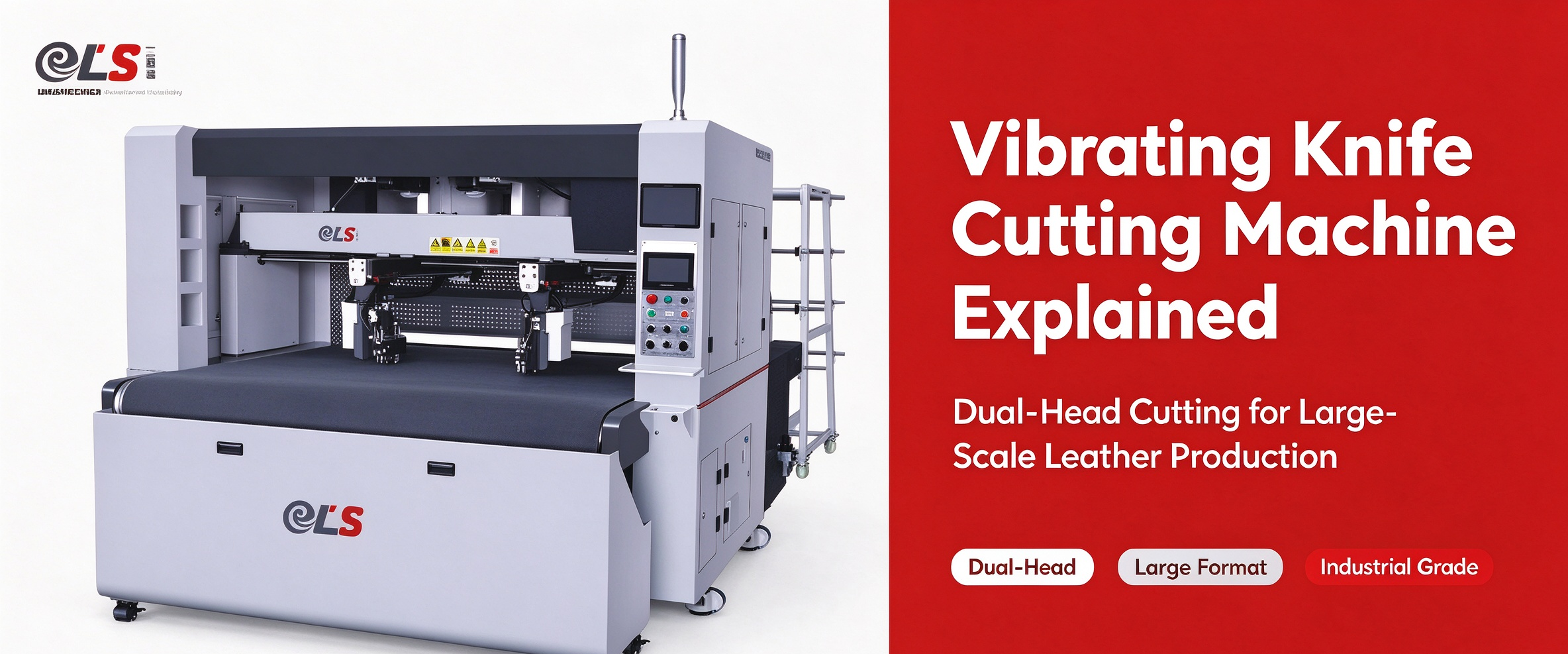
Dual-head cutting may address loading and throughput constraints, but its value depends on the actual machine configuration and a representative production trial. This article reviews the process and the checks to make before selecting equipment; it does not identify a WEHO cutting machine or establish a power-supply match.
What Is a Vibrating Knife Cutting Machine

Assess blade motion, workholding and the programmed cutting path against the intended material before selecting a vibrating-knife system.
A vibrating-knife system uses a mechanically oscillating blade to follow a programmed cutting path. Unlike die punching, a changed outline may be implemented through a revised cutting program rather than a new shaped die, subject to the selected machine’s tooling and setup requirements. Suitability for leather, suede, synthetic leather, fabric or foam must be checked for the actual material, thickness, blade and hold-down arrangement.
Knife cutting does not use a laser heat source, but this alone does not establish edge quality, absence of marking or suitability for thick leather. Check sample cuts, surface condition, dimensional results, tooling, setup and total production cost before claiming a quality or cost benefit.
Dual-Head Cutting: Configuration Checks Before Purchase

Review the actual machine’s head arrangement, permitted tools and workholding system before comparing production capacity.
Compare the following configuration options with the actual specification and representative sample-cut results:
- Projection layout: if offered, check how projected outlines align with the material and how an operator records or avoids defects.
- Vacuum hold-down: confirm the material and table conditions under which the sheet remains stable during cutting.
- Tool interchangeability: record which heads accept each required knife, grooving tool or creasing wheel and which combinations are permitted.
- Loading sequence: verify whether loading and cutting can occur in separate stations under the machine’s approved operating and guarding arrangement.
- Conveyor handling: if required, check how feeding and removal fit the actual material size and production flow.
Check the Fit for Large-Scale Leather Production

Check whether the proposed layout permits loading and cutting in the intended sequence while maintaining guarding, access and material handling.
For large orders or mixed materials, verify whether the heads can operate independently and whether the permitted tools and hold-down settings suit each material. Validate cut-edge quality and downstream handling on representative leather rather than treating cold cutting as a guarantee of surface quality.
A second head does not by itself establish two independent loading stations or an unchanged footprint. Compare the full machine, access and material-handling envelope, and confirm the permitted loading sequence.
| Review point | Evidence to request |
|---|---|
| Working stations | Document the actual station layout and permitted independent operations. |
| Simultaneous cutting | Verify head independence, tool combinations and material compatibility in a representative trial. |
| Floor space | Compare the complete machine, service access and loading envelope. |
| Loading and cutting | Confirm the permitted sequence, guarding and operator access. |
| Production fit | Retain trial results for the intended batch sizes, material mix and accepted output. |
Key Specs to Compare Before You Buy

Base the comparison on documented working area, tool options, material thickness, hold-down and positioning performance under defined conditions.
When choosing a vibrating blade cutting machine, don’t just look at the price—focus on these four key points:
- The workbench size and the maximum leather thickness need to match the largest pieces and thickest leather in your factory.
- Select the knife, creasing or other tool options required for the planned operations, and confirm which heads and combinations the actual machine permits.
- Vacuum suction strength is important—if the suction isn’t strong enough, the edges can drift during long cutting sessions.
- Ask for positioning accuracy, repeatability and cut-quality results under stated conditions; do not treat a generic tolerance as an industry-wide guarantee.
FAQs
Q: Can two blades cut different materials at the same time?
A: Only if the actual machine supports independent head operation and the required tool combinations. Verify the proposed material pair, workholding and operating sequence with representative sample cuts.
Q: How is it different from a genuine leather laser cutting machine?
A: Knife cutting and laser cutting use different material-removal methods. Compare edge finish, marking, fumes, process settings and sample-cut results for the actual material. Knife cutting does not use a laser heat source, but it is not a guarantee of damage-free edges. Do not assume that every synthetic leather is suitable for laser processing; use material-specific instructions and an appropriate safety assessment.
Q: Which industries benefit the most from dual-blade machines?
A: Potential applications include footwear, bags, vehicle interiors and upholstered furniture. Whether dual-head cutting is useful depends on the material mix, batch size, required tools, loading sequence, guarding and demonstrated accepted output for the actual project.
Conclusion
Assess a dual-head configuration against the production mix, tool requirements, loading sequence and documented sample-cut results. Confirm the actual equipment specification, installation responsibilities and service terms with the selected supplier. This process overview is not a Hanhai machine offering or a verified Hanhai power-supply match.