Skip to content

Introduction
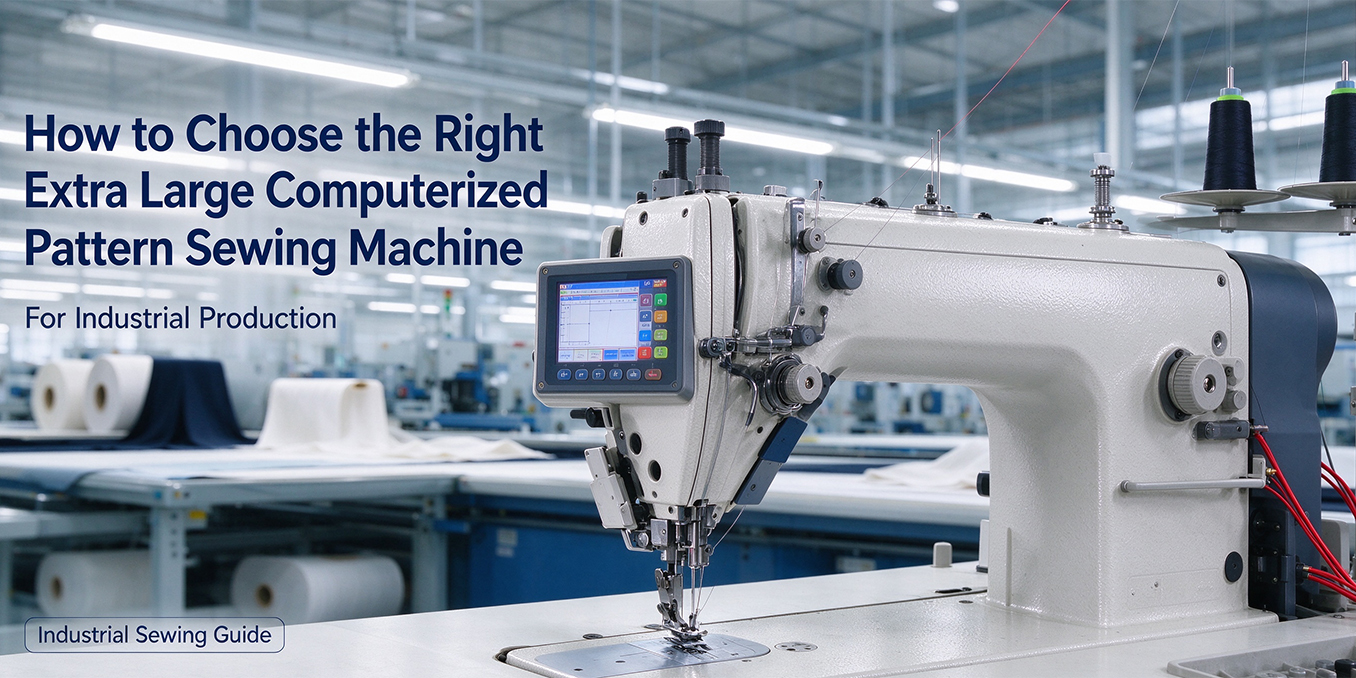
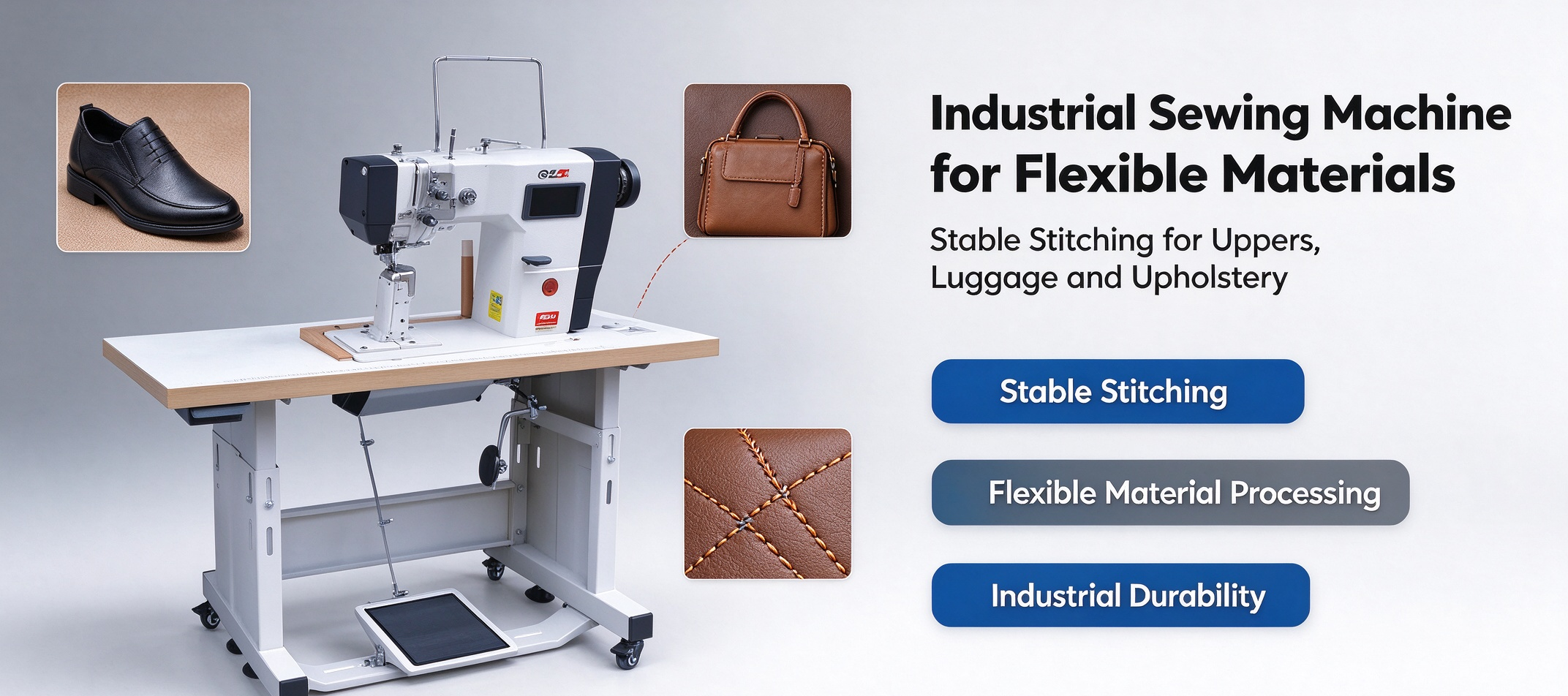
On the surface, sewing machines might all look pretty similar, but they’re a whole different beast from the one sitting in your living room. Even on a good day, a home sewing machine can barely handle stitching up a cotton tote bag. Industrial sewing machines can punch through leather, multiple layers of canvas, vinyl, and webbing, going so fast that a home machine looks like it’s standing still—and they can run eight hours a day, year after year, without ever complaining.
For factories cutting shoe uppers, assembling luggage, or making upholstered furniture, this is the final assembly stage. All the earlier steps come together right here, and if the stitching is uneven or the seams shift, the material has to be redone. Picking the right sewing machine is way more important than most factory owners realize—it’s not just a tool, it’s the gatekeeper of quality.
What to Expect from an Industrial Sewing Machine

Stable stitching performance and high sewing accuracy
On a good leather sewing machine, the first thing you’ll notice is that the stitches just don’t shift. Home machines might wander because their feed mechanisms are weaker, while industrial machines have sturdy frames, heavy-duty needles, and feed systems that grip the material from top to bottom. That way, whether you’re sewing a panel that’s two inches or two feet long, the stitches come out dead straight.
Stability also means the stitch length doesn’t change with the thickness of the material, because the feed speed is tied to the main shaft. For stuff that needs precise stitch length—like car seat covers or leather bags—this consistency is a huge deal. The automatic backstitch function locks down the start and end of every seam without having to tie knots by hand, and every stitch gets locked in exactly the same way.
Fast running speed and uniform, neat, flawless results
Speed is another obvious difference. A home sewing machine can do about 800 stitches per minute, while an industrial machine can hit 3,000 to 5,000 stitches per minute. On long seams—like the sides or top edges of a bag—this can seriously boost your output. Now, speed doesn’t mean much if the quality drops, but a well-adjusted machine can sew just as neatly and evenly at 4,000 stitches per minute as it does at 1,000—no skipped stitches, no puckering, no loose loops. Automatic thread cutters and brushes might add a few extra seconds each time, but when you’re sewing thousands of stitches a day, they keep the production line humming along instead of grinding to a halt.
Excellent compatibility with flexible materials
Factories rarely sew just one type of material. A shoe upper sewing machine might be running mesh in the morning, leather overlays in the afternoon, and some fabric panels in between. As long as the needle, thread, and presser foot match up, a good machine can handle all of these. Compatibility really comes down to the feed system: thin fabrics use standard feed dogs, layered leather uses a walking foot, and super thick stacks use compound feeding. Bottom line, the machine needs to handle your thickest, most layered materials.
What It Sews

Shoe uppers, luggage, handbags and leather goods
Shoes are a classic example. The uppers need stitching that can bend and stretch—different panels, linings, reinforcements, and eyelet strips—without the seams cracking. Luggage and bags carry way heavier loads: shoulder straps, handle attachments, and those corners that take a ton of stress. The machine has to deal with webbing, thick leather, and multiple layers without slowing down. Small items—wallets, belts, notebook covers—need stitching that’s precise and even.
Automotive interior parts, sofa upholstery, garment ornaments and fashion headwear
The standards for a car’s interior are seriously high: the seats, door panels, and headliner all have stitching, and the stitching has to line up perfectly on every single car. The machines have to be super precise, because even a 3mm misalignment on a seat cover will stick out like a sore thumb once it’s stretched over the foam. You need heavy-duty machines for interior and leather coverings; medium machines handle clothing trim fast; and hats need special machines for those curved crown panels.
Home textiles, sports protective gear, plush toys, craft gifts and advertising labels
Tablecloths, pillowcases, and duvet covers; glove panels and helmet liners; toy seams and sleep masks; leather patches and book bindings; woven labels. The range is super wide—buying an industrial sewing machine is rarely just for one product. A versatile heavy-duty flatbed machine can totally pay for itself across multiple production lines.
Customization

Customizable stitching patterns and densities
Modern customizable sewing machines can do a heck of a lot more than just one type of stitch. Most machines come with multiple built-in stitches—straight, zigzag, overlock, blind hem—and you can tweak the stitch length and width right on the panel. Computerized machines can even save stitch programs so operators can just pull them up by number. Stitch density is adjustable too: heavy stitches are denser, while other areas can use lighter, faster stitches. Programmable machines can even switch stitch density automatically—like using one stitch for reinforcing handles and a different density for edge decoration.
Scales to order-driven production
Making products to order means sewing based on actual orders, not forecasts. A brand might order 200 bags this month, 50 next month, and 500 the month after. Heavy-duty industrial sewing machines can scale up production because they work like a platform: as output increases, you just add more machines, and everything each machine produces is identical since they’re all the exact same model. Operators don’t need retraining for new workstations—the controls are exactly the same. This kind of modular setup lets factories handle different production levels without having to redesign the production line every single quarter.
Table 1. Industrial vs Domestic Sewing Machine
| Aspect | Industrial Sewing Machine | Domestic Sewing Machine |
| Speed | 3,000-5,000 stitches per minute | About 800 stitches per minute |
| Body | Cast iron, rigid frame | Cast plastic, light frame |
| Materials | Leather, webbing, layered canvas | Light fabrics only |
| Daily runtime | 8 hours, 5 days a week | Occasional home use |
| Stitch consistency | Uniform at any speed | Drifts on thick or varied material |
FAQs
Can it handle thick leather layers?
Yeah, as long as it’s specifically built for that kind of work. Lightweight sewing machines meant for clothing are gonna struggle big time trying to sew through 6–8mm thick layers of leather. But heavy-duty machines with a walking foot, large needles, and a powerful motor can handle those thicknesses no problem. Just tell your supplier how thick your thickest material is and have them do a test stitch on a stack of it.
How is it different from a domestic sewing machine?
Structurally, home sewing machines are all plastic casings, small motors, and lightweight feed mechanisms. Industrial sewing machines, on the other hand, have cast iron bodies, big servo motors, rotary hooks that can handle more thread, and feed systems that can pull through multiple layers of material. They run faster, are way more durable, and can handle thicker materials—plus, they also need a stand, motor, and foot pedal.
What maintenance keeps stitching consistent?
Three things: cleaning, oiling, and swapping out consumables. Lint builds up under the needle plate and hook—clean that every day. Oil the designated parts daily so the machine runs smoothly. Change the needle every day, or the second it gets dull, and check the thread tension once a week. If the machine is cleaned and oiled properly, it’ll sew steadily for years; but if you neglect the maintenance, you’re gonna get skipped stitches, thread jams, and uneven stitches.
Conclusion
Industrial sewing machines are the main workhorses for turning cut fabric into finished products. They’re not fancy—no touchscreens, no cameras—but this is the stage where quality really matters. Investing in a good industrial sewing machine, along with a factory that can properly install and maintain the equipment based on the materials you use, can guarantee years of stable output. On the flip side, factories that prioritize convenience often end up dealing with rework, and operators are constantly fighting with the machines.
Hanhai’s industrial sewing platform is suitable for shoes, leather goods, luggage, and soft furnishings, with feeding methods ranging from standard feeding for lightweight fabrics to walking foot feeding for thick leather. First, consider your thickest materials and most frequently used threads—these two factors help narrow down choices faster than any spec sheet. Send us samples of the materials you commonly use, and we’ll sew them on the right platform so you can experience the difference in threads firsthand.