Skip to content

Introduction
When you grab a nicely made leather bag, take a good look at the stitching on the handle. You’ll see the stitches are super even, the corners are neat, and the spacing is totally consistent. That’s a dead giveaway it was made with a computerized sewing machine—which has pretty much become the standard gear for making leather goods, shoes, or upholstered furniture these days.
Old-school pattern sewing machines rely on jigs, cams, and mechanical tracers. If you wanna switch up the pattern, you gotta recalibrate the whole machine—which basically means swapping out the cams and tweaking the stop points. Just doing those adjustments alone can eat up half a day.
On the flip side, modern programmable pattern sewing systems just store the sewing paths in memory. You load up the program, lock the fabric in place, hit the pedal, and the machine will crank out everything from the first stitch to the hundred-thousandth stitch—and the pattern comes out exactly the same every single time.
This guide’s gonna break down what a computerized sewing machine actually is, what it can sew, why factories are buying them, and which tech specs you should totally compare before you hit that order button.
What Is a Computerized Pattern Sewing Machine

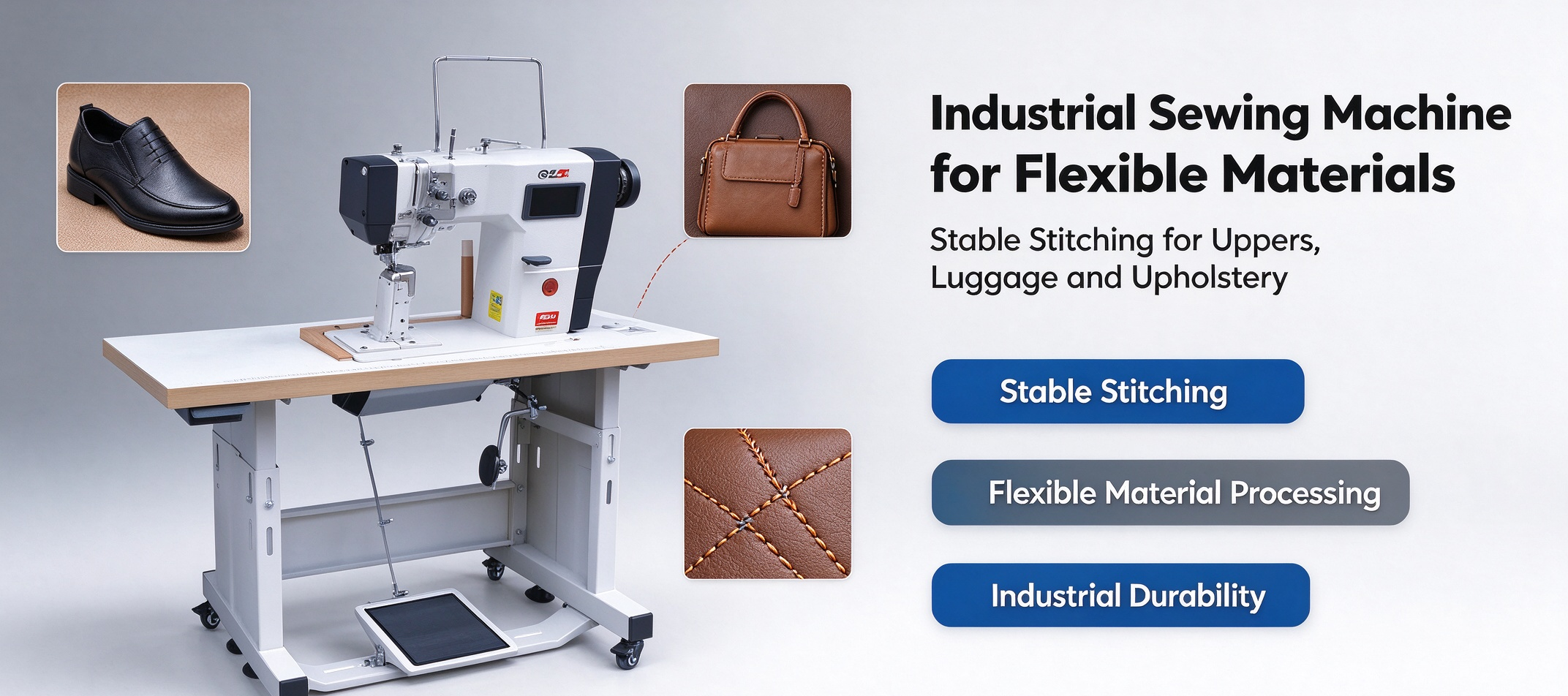
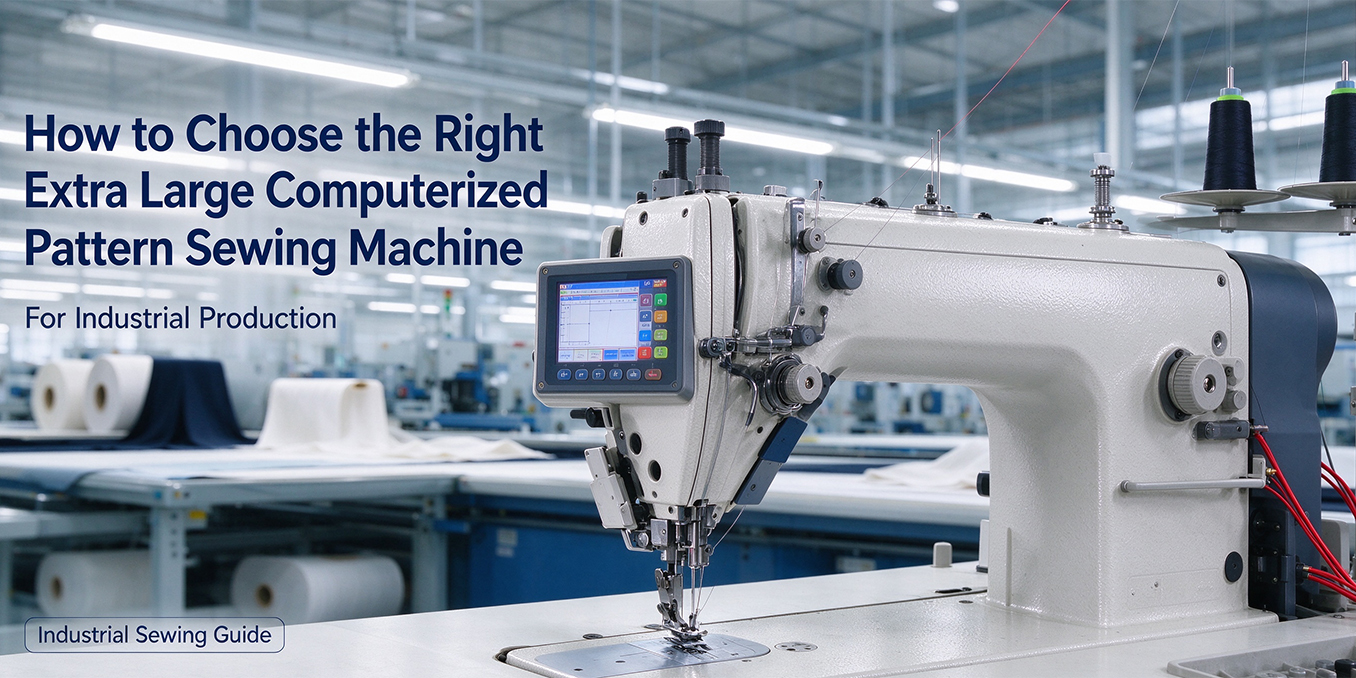
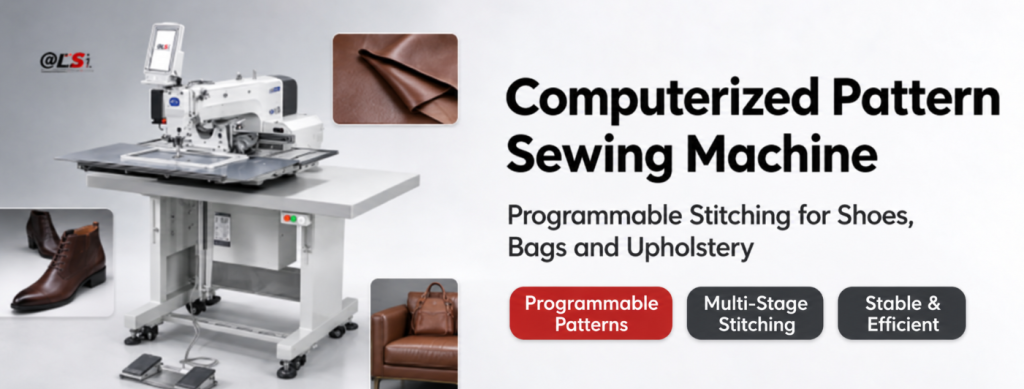
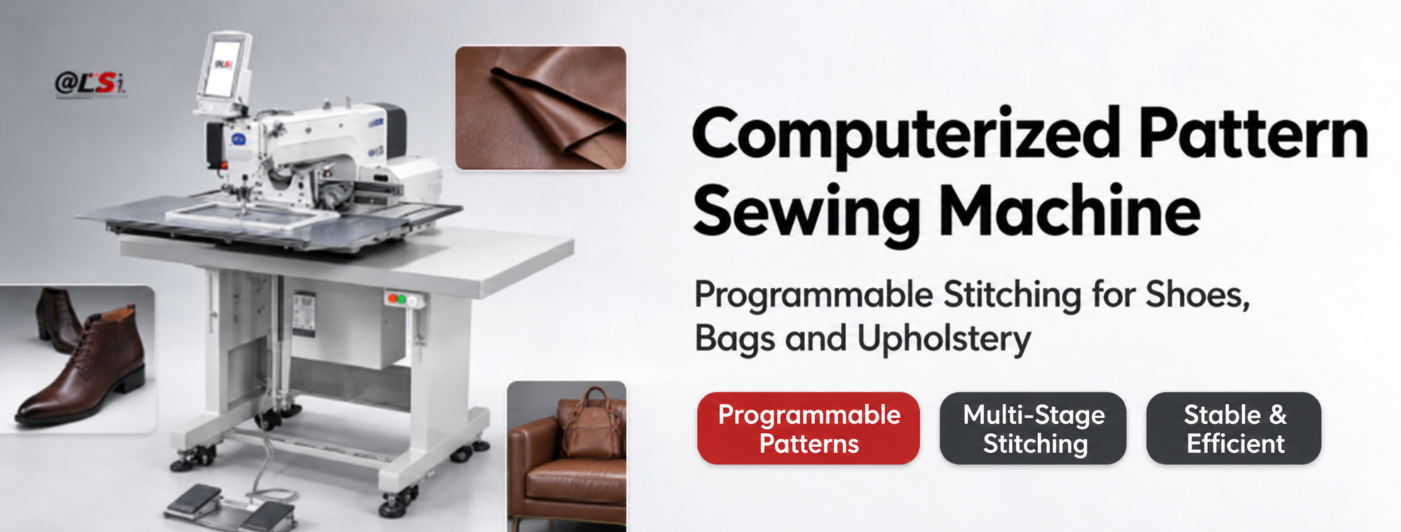
Basically, this is just a sewing machine head made for doing buttonholes, and you can hook it up to a programmable X-Y robotic arm. The arm moves the material under the needle following a digitized sewing path. The operator doesn’t have to guide it by hand at all—the machine just does everything automatically.
Think of it like a sewing plotter. You give it a pattern—like a rectangle, a circle, or some fancy decorative curve—and it moves the hoop along that path at a steady sewing speed. The needle stitches at set intervals, the thread tension is controlled electronically, and once the pattern is done, the machine just cuts the thread automatically.
A typical setup has a flat work table, a hoop, a touchscreen for picking programs, and a foot pedal. The sewing head is usually a heavy-duty open needle, which is perfect for running thick thread. The whole “computerized” thing just means the stitch patterns are saved as digital files, so you can design them in CAD, import them via USB, or even tweak the stitch length and reinforcement settings right on the screen. A total beginner can get the hang of it on day one—no years of experience required.
What It Can Sew

Shoes, bags, leather accessories, garments and upholstery
The daily grind of an industrial decorative sewing machine is basically just doing the same decorative or structural stitching over and over. Shoe toes and heels need reinforced stitching, and bag handles and edges need symmetrical stitches on both sides. Wallets, belts, watch straps, and keychains are pretty much all made with this type of sewing machine, since the patterns are usually small, delicate, and come in all sorts of variations. When it comes to clothing, it’s used for sewing collars and waistbands; and for furniture, it can even add decorative stitching to sofa cushions and pillows.
Automotive interior parts, sports gear, safety protection products
Besides clothing, this machine also pops up in some pretty unexpected places. You’ll find decorative stitching running along the contours of car door panels and seat cushions. Boxing gloves, hockey gear, and ski boots all have reinforced stitching that’s almost impossible to do evenly by hand. And when it comes to safety gear—like fireproof gloves, bulletproof vests, and industrial aprons—the stitching has to meet strict standards. A programmable machine nails it every single time, which is exactly what the inspectors are looking for.
Home textiles, toys and customized craft decorations
Table runners, pillowcases, and bedding all need decorative stitching. Plush toy factories use it to sew the exact same eyes and paw pads on every single product. Custom handmade shops—like the ones making embroidered patches or personalized bindings—use precision sewing machines for each piece. Bottom line, when you buy automatic sewing equipment, you’re usually not just limiting it to one single product line.
Why It Raises Competitiveness for Processing Factories

Outstanding stitching accuracy
No matter how skilled a tailor is, there are just some things machines can do that humans can’t match. After an eight-hour shift, your hands get tired, your stitches might come out a little rounded, and the spacing can get uneven. But a programmable pattern sewing machine never gets tired—whether it’s the first piece of fabric or the last, the result is always spot-on. For protective gloves, that means they can pass the stretch test; for car seats, it means a more premium look; and for shoe uppers, it means zero shaping defects.
Wide compatibility with flexible materials
A good machine doesn’t play favorites with materials: real leather, faux leather, canvas, denim, vinyl, mesh, felt, or neoprene—it handles ’em all. The clamps flatten the material out, so even stretchy fabrics feed through smoothly without wrinkling. The servo fabric feeder can deal with thicker sections, letting you sew a few layers of leather first and then toss in another one without having to mess with the settings.
Reliable, repeatable stitching that holds finished quality steady
You can totally keep taking on more orders. When it comes to sewing machines for leather goods, each one has its own built-in stability. They can help you handle way more orders, but honestly, that has almost nothing to do with how skilled the operator is. Once the operator walks away, the machine doesn’t forget the template—it just keeps on running. New employees only need to load the program, and from day one they’re already cranking out good products. It cuts the training time from months down to just a few days.
What to Evaluate Before Buying

Stitch field size and max material thickness
The first spec you gotta look at is the sewing area—basically the range your machine can move around in. Common sizes go from like 200 × 300 mm for small parts all the way up to 1300 × 900 mm for soft furniture panels. So first, measure the size of your biggest panel and leave a little extra wiggle room for the machine. Max thickness is a big deal too: jackets and bag straps usually mean sewing through multiple layers of 6–8 mm thick material, so definitely check the presser foot height, needle stroke, and motor torque.
Pattern programming and memory capacity
Get a handle on how patterns are imported. A good system can bring in DXF/CAD files, let you edit stuff right on the touchscreen, and store hundreds of patterns in memory. You should check if backups are easy to do and whether you can tweak patterns right there on the shop floor. For factories getting custom orders every week, the difference between import-based programming and manual teaching basically boils down to saving labor and cutting down those production bottlenecks.
Clamping and presser-foot system
A solid, adjustable clamp frame keeps your materials nice and flat, so you don’t get any warping or clamp marks. You can try magnetic clamps, vacuum clamps, or even get custom clamps made for weirdly shaped parts. Using a walking foot or an alternating presser foot helps feed multiple layers of leather evenly so you don’t get skipped stitches. And don’t sleep on thread trimmers and automatic backstitching—those little features save you a few seconds here and there, which really adds up when you’re handling thousands of pieces.
Table 1. Key Buying Criteria for a Computerized Pattern Sewing Machine
| Criterion | What to Check | Why It Matters |
| Stitch field | Largest panel + clamp margin | Avoid buying too small or too large |
| Max thickness | 6-8 mm for layered shoe/bag leather | Prevents skipped stitches on thick stacks |
| Programming | DXF/CAD import vs hand-teach | Determines custom-order turnaround speed |
| Clamp & foot | Rigid frame, walking foot, quick die change | Even material feed, no puckering |
FAQs
How is it different from a standard industrial sewing machine?
A regular sewing machine just needs the operator to feed the fabric, and it’ll sew straight lines at a steady speed, with the whole thing guided by hand. A computerized pattern sewing machine, on the other hand, can stitch fixed patterns and automatically control the sewing path and fabric feed speed. For long straight seams, a regular sewing machine is actually faster, but when it comes to patterns or reinforced outlines, the computerized pattern machine is the way to go, since those are a real pain to do by hand.
Can it handle thick layered leather?
Yeah, as long as it’s specifically built for that kind of work. A lightweight sewing machine is gonna struggle big time trying to sew through 6mm thick garment leather. But a heavy-duty machine—with a large hook, a powerful motor, and a solid presser foot—can handle multiple layers of shoe leather no problem. Just tell your supplier how thick your thickest material is so they can do a test sew for you.
How are new stitch patterns programmed?
Modern machines are all digital these days. You draw up the paths in CAD, set the density, import ’em via USB, and then just add your start, end, and return points right on the touchscreen. The updated system can even scan actual samples and turn them into sewing paths—basically reverse engineering the whole thing.
Conclusion
Computer-controlled sewing machines aren’t meant to replace tailors. They’re built to take over the stuff that really shouldn’t depend on human consistency—like perfectly stitching the exact same seam a hundred thousand times. This way, your best operators can focus on the work that actually needs their judgment.
Hanhai makes programmable pattern sewing systems for everything from small leather goods to big furniture seams. Just start with your largest piece of fabric and your thickest layers—that alone will narrow down your choices way faster than any spec sheet. Send us a sample, and before you make any decisions, we’ll show you exactly how the machine handles your material.