Skip to content

Introduction
Cutting flexible materials has always been a bit of a trade-off. Die cutting is fast for big production runs, but it wastes a ton of material on short runs. Blade cutting is super flexible, but once you mechanize it, the blades get dull fast. Hand cutting is slow and all over the place. Laser cutting dodges all these headaches because its “blade” is literally a beam of light—it never touches the material, never gets dull, and can trace pretty much any shape in no time.
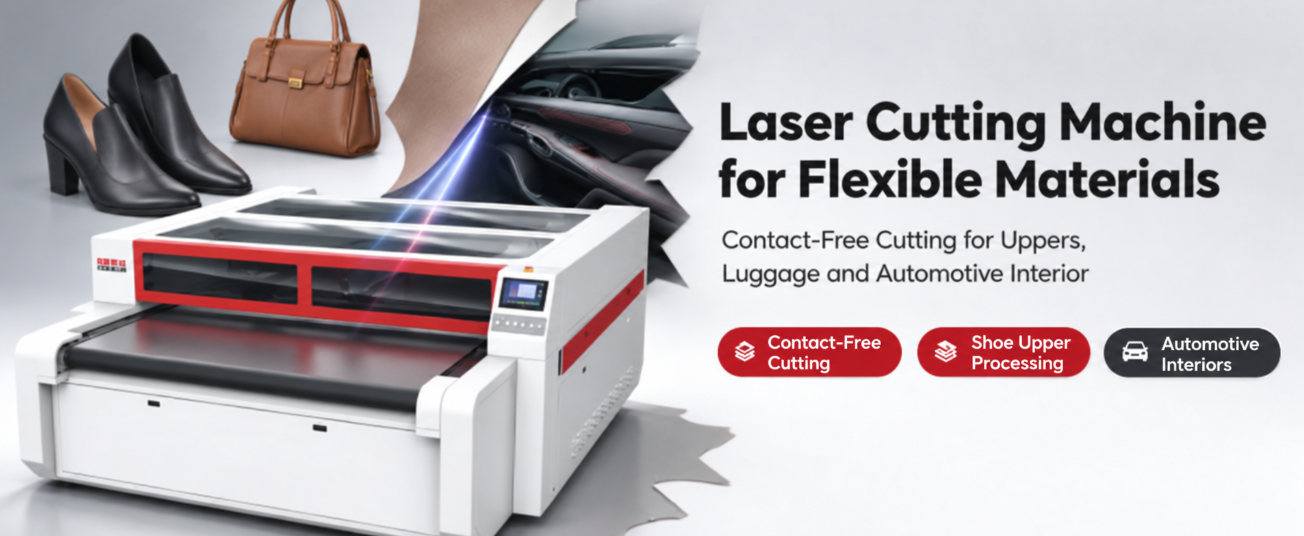
For factories cutting shoe uppers, luggage, car interiors, and soft furnishings, laser cutting has become the go-to choice. It can cut complex patterns, engrave logos, and follow curved outlines without even touching the material. The cuts come out clean and don’t need any post-processing, and the cutting path comes straight from a digital file—so changing the design is as easy as swapping a file, no need to mess with molds.
This guide covers what makes Hanhai laser cutting stand out, the materials it can handle, why manufacturers choose it, and how it stacks up against tool cutters.
What Makes Hanhai Laser Cutting Different

Contact-free cutting with high precision and fast speed
Non-contact is the name of the game. The laser cutter focuses a CO2 beam onto the material, heating it up so the stuff right along the cutting line just vaporizes, while a burst of air helps blow the debris away. No blade ever touches the material, there’s no clamping pressure to cause any deformation, and the machine honestly doesn’t care if the pattern is a dead-straight line or some crazy complex design.
On a decent machine, the precision can hit one-tenth of a millimeter—which is plenty to punch holes in shoe uppers, create lace effects on handbags, or make tiny ventilation holes in car seats, with absolutely zero variation between pieces. Speed depends on the material and thickness, but on thin synthetics, the laser can easily cut several meters per minute. Plus, contact-free laser cutting means no mechanical wear and tear: blades go dull after cutting a few hundred meters, but a laser just needs a quick calibration every now and then.
Zero material damage, smooth and burr-free edges
When a blade cuts through leather or fabric, it slices right through the fibers, leaving you with frayed edges that need trimming. Laser cutting is a whole different ballgame—it vaporizes and seals the edges, so there’s no fraying and no loose fibers. On fabric, the edges get heat-sealed and won’t unravel; on leather, the edges come out clean and can be dyed directly without any thinning.
Now, the whole “zero damage” thing is a bit tricky. A poorly tuned laser can totally burn the material. But a well-tuned laser—as long as the power, speed, and gas assist are dialed in right—can cut cleanly without heating up the surrounding area. The secret sauce is in the motion control, the gas aid design, and RIP software that can tweak power and speed on the fly at the corners.
What It Processes

Shoe uppers, luggage, handbags and leather goods
The biggest use is definitely in footwear. Laser cutting works like a charm on shoe uppers because it can cut complex shapes—toe caps, quarters, eyelets—without needing any molds at all. Plus, it can handle perforations, logo engraving, and stitch guides. On mesh and knitted fabrics, it can even seal the edges to stop them from fraying during shoe production. And for bags, you can use a single file to create complex edges, cutouts, and letter combos.
Automotive interior parts and sofa upholstery
The most important thing in car interiors is consistency, and lasers can totally nail that by using digital files. They can cut vinyl and leather seat covers, engrave stitch guides, and even punch patterns to make the edges more durable. They also use lasers on sofa cushions for those curved backs and grooves—and the heat-sealed edges can seriously last for years.
Garment ornaments and fashion headwear
Clothing factories use lasers to add appliqués, lace, and decorative cuts on jackets and dresses. For hats, lasers punch ventilation holes and etch logos. The cool thing about lasers in clothing is that they’re absolutely perfect for small-batch production—which is exactly what fashion brands are looking for.
Home textiles, sports protective gear, plush toys, craft gifts and advertising labels
The list goes on and on: laser-cut tablecloths and curtains; ventilation patterns on helmet pads and gloves; the shapes of stuffed animals’ eyes and paws; carved wooden and acrylic decorations; custom leather tags. In all these diverse factory workshops, a flexible material laser cutter is hardly ever sitting idle.
Why Manufacturers Choose It

Customizable patterns and sizes
Manufacturing isn’t all about those long, fixed production runs anymore. Brands want to make small batches of products with custom sizes, patterns, and logos—even just a few hundred pieces—and lasers handle that no problem. No need for custom molds or switching setups between different designs. If a brand wants to move a logo over by a centimeter, it only takes like ten seconds to adjust. That’s exactly why laser tech is perfect for on-demand production.
Reduces material waste and stabilizes quality
There are two ways laser cutting cuts down on waste: narrow kerfs mean you can squeeze more parts out of each sheet, and because the cutting is digital, you don’t have to prep leftover material and there’s zero chance of messing up. Die-cutting machines waste material every time you swap a mold, but lasers barely waste a thing. Plus, the stability guarantees consistent quality—the first sheet and the last sheet come out with the exact same dimensions, edges, and engraving depth.
Boosts overall production efficiency
Lasers can totally replace die-cutting setups (no need to stockpile molds or hire mold installers) and manual teams (no more cardboard templates). On a conveyor system, it can even run unattended—one person feeds the material, and another just collects the finished pieces. That means faster production, less manpower per product, and shorter delivery times since you’re not sitting around waiting for molds.
Laser vs Knife Cutter: When Each Wins
Laser shines on delicate details, engraving and thin synthetics
When a job calls for fine details, engraving, or cutting thin composite materials, using a CO2 laser cutter on leather is the way to go. For stuff like lace, perforations, logos, or patterns, a laser is way easier than a knife because the laser beam can reach curves that blades just can’t, and engraving doesn’t need any extra steps. Thin materials—like mesh, vinyl, or films—can also be cut super cleanly, and you can even seal the edges at the same time.
Knife cutter handles thick genuine leather without scorching
The weak spot for lasers is thick leather. The beam doesn’t penetrate all that well and might just scorch or discolor it. Cutting with a knife is cleaner and doesn’t generate any heat. And for materials that give off toxic fumes when laser-cut—like PVC, certain rubbers, and foam—a knife works way better. Quick tip: thin synthetics, fabrics, mesh, and stuff you want to laser-engrave are all fine with a laser, but for thick leather, you’re still better off using a knife.
Table 1. Laser Cutter vs Knife Cutter: When Each Wins
| Aspect | Laser Cutter | Knife Cutter |
| Best materials | Thin synthetics, mesh, fabric, engraving | Thick genuine leather, PVC, heat-sensitive |
| Edge quality | Sealed, burr-free, no fray | Sheared, may need trimming |
| Detail level | Delicate filigree, perforations, engraving | Straight contours on thick material |
| Heat effect | Minimal on a well-tuned machine | None (purely mechanical cut) |
FAQs
Does laser cutting scorch real leather?
Yeah, it can totally happen if the settings aren’t right. On thin or light-colored leather, if the laser’s too strong or moving too slow, it’ll leave you with brown edges. But on most finished textured leathers and dark leathers, a properly dialed-in machine cuts clean, and those darkened edges disappear once you dye or color them. Just test it on some scrap first, then tweak the power/speed ratio.
Can it cut and engrave in one setup?
Yeah, absolutely. Most modern machines let you switch between cutting and engraving right in the software, so you can engrave a logo and cut the outer outline in a single go without even moving the material—saves you setup time and keeps everything perfectly aligned.
Which materials need ventilation the most?
Materials that give off smoke or fumes. PVC releases chlorine, which is toxic and can actually corrode the machine; some synthetics emit gases that are kinda like formaldehyde; and leather just plain stinks. So make sure you set up a proper exhaust system for whatever materials you’re running, and vent all those fumes outside.
Conclusion
When your production involves flexible materials, small batches, fine patterns, or engraving, a laser cutter is a solid choice. That said, it’s not great for super thick leather or materials that can’t take the heat. Most factories end up using lasers for the thin, detailed stuff, knives for thick leather, and a nesting system that can handle both types of materials at the same time.
Hanhai Manufacturing produces CO2 laser cutting systems suitable for shoes, bags, car interiors, and home decorations. They come with conveyor feeding, rotary attachments, and smoke suction devices. If you’re not sure whether to use a laser or a blade, you can send us some of your most commonly used materials. We’ll cut them with both machines and send the samples back to you so you can compare the edge quality yourself.