Skip to content

Introduction
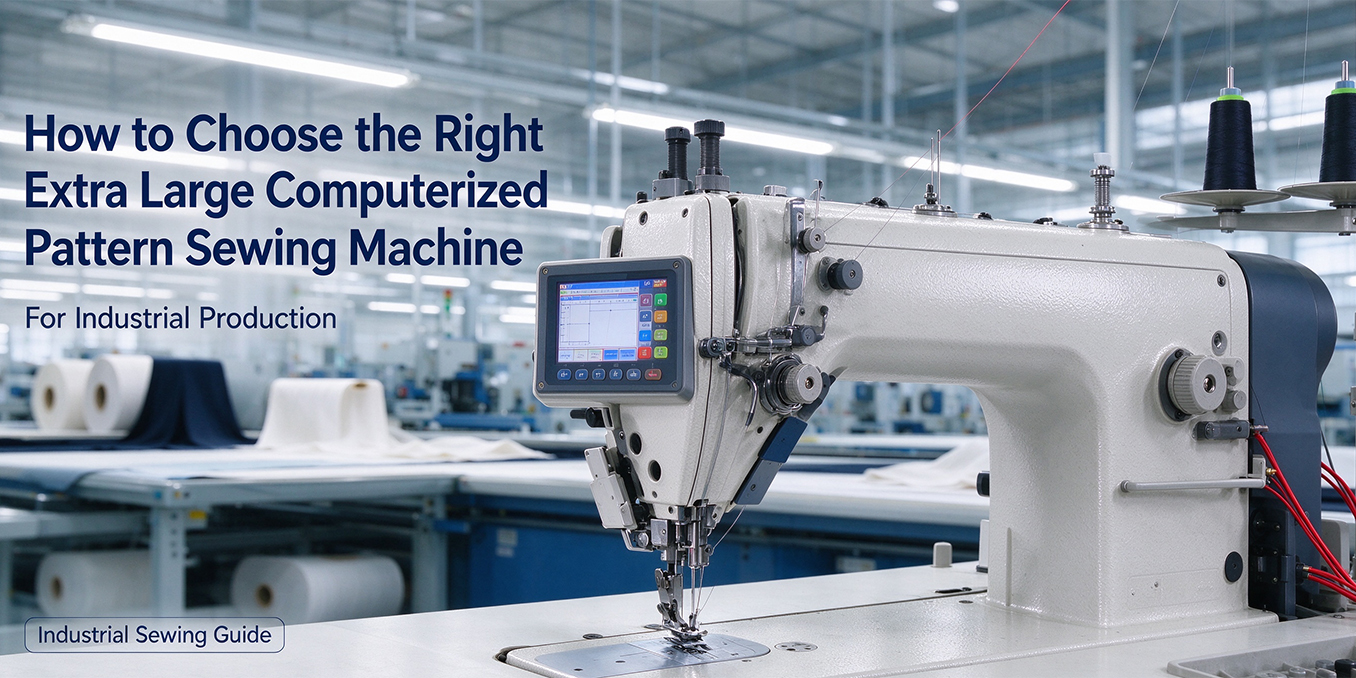
An extra large computerized pattern sewing machine plays an important role in manufacturing large textile components that require precise, repeatable stitching. In automotive and upholstery production, manufacturers often work with oversized fabric panels, shaped covers, reinforced materials, and multilayer assemblies. These products can be difficult to sew consistently using conventional manual methods, particularly when patterns contain multiple curves, corners, or decorative stitching lines.
By combining a large working area with programmable sewing paths, an extra large computerized pattern sewing machine helps manufacturers automate repetitive stitching operations and maintain consistent production quality. Depending on the machine configuration, it can support applications ranging from automotive seat-cover components to sofa upholstery panels and other large sewn assemblies.
Understanding how this equipment is used in automotive and upholstery manufacturing can help production managers, engineers, and purchasing teams identify suitable applications and select the right machine for their requirements.
What Is an Extra Large Computerized Pattern Sewing Machine?
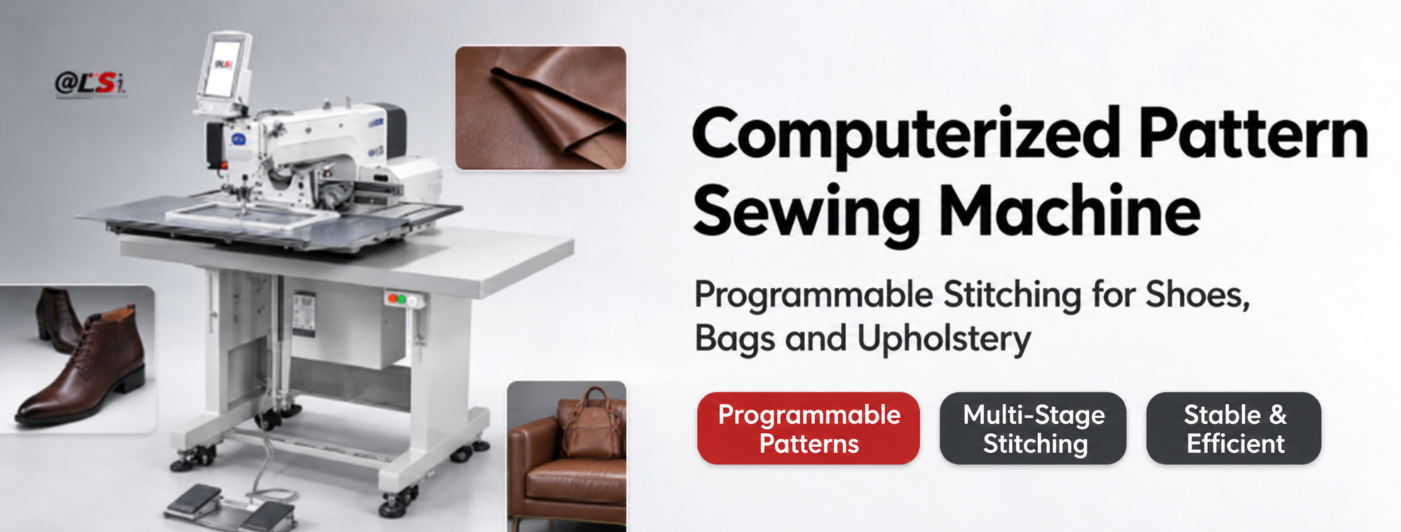
An extra large computerized pattern sewing machine is an industrial sewing system designed to execute predefined stitching patterns across relatively large workpieces. Unlike conventional sewing machines that generally require operators to guide materials continuously, computerized pattern sewing machines follow programmed sewing paths to complete specific stitching operations.
The machine typically consists of a sewing head, computerized control system, enlarged working area, material-clamping mechanism, and coordinated motion system. Operators select or load a sewing program, position the workpiece, and start the programmed cycle. The machine then follows the designated pattern within its operating range.
The main advantage of an extra large model is its ability to accommodate larger patterns and components. This can be particularly useful when manufacturers need to sew broad upholstery panels, large seat-cover sections, or other components that exceed the practical working range of standard pattern sewing equipment.
Actual capabilities vary by model. The effective sewing area, supported materials, stitch types, and automation functions should always be verified against the intended production application.
Applications in Automotive Manufacturing
Automotive manufacturing involves numerous textile and upholstery components that require consistent stitching, accurate positioning, and repeatable quality. Extra large computerized pattern sewing machines can support selected operations where the workpiece dimensions and stitching requirements match the machine’s capabilities.
1. Automotive Seat Covers
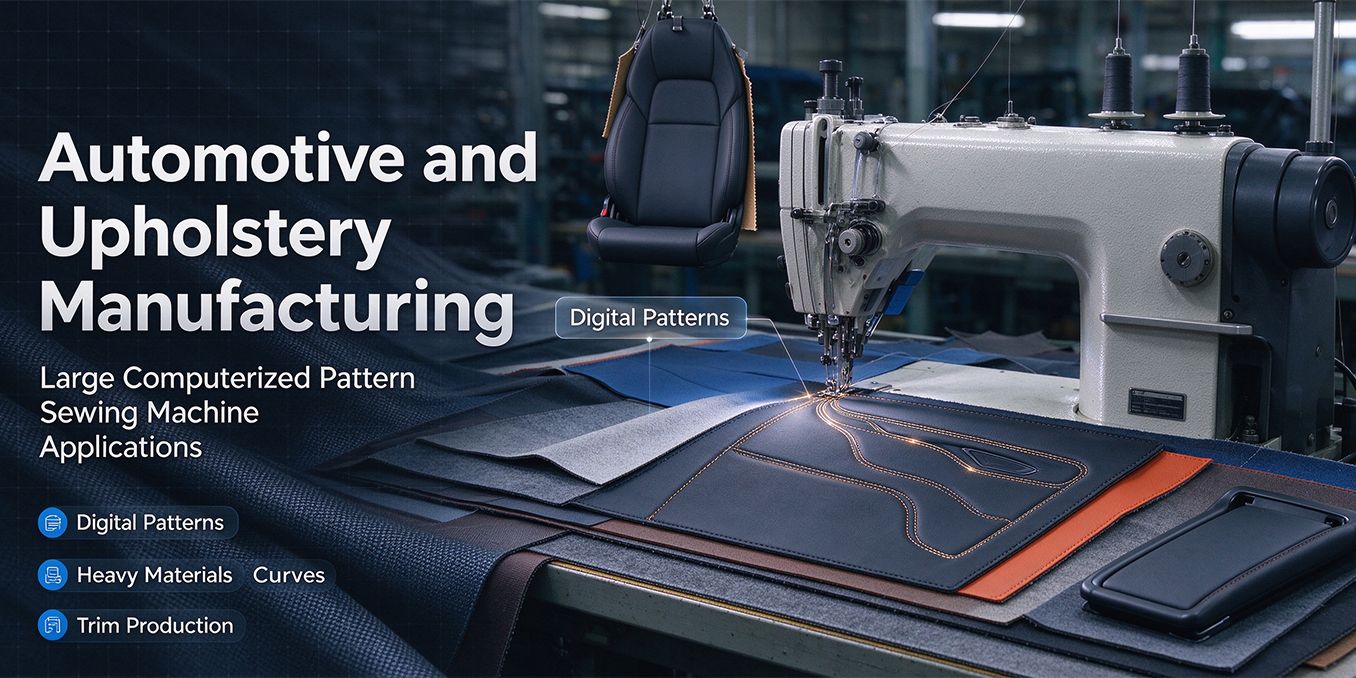
Automotive seat covers are among the most recognizable applications of industrial pattern sewing equipment. Depending on the design, a seat cover may contain multiple fabric or synthetic leather panels, decorative seams, reinforcement sections, and shaped stitching patterns.
An extra large computerized pattern sewing machine can be used to sew selected seat-cover components with predefined stitching paths. The stored program helps reproduce the same pattern across multiple workpieces, reducing reliance on manual steering during repetitive operations.
Consistent pattern execution is particularly important when seat-cover components must align with other panels during subsequent assembly. However, the required working area and sewing-head configuration depend on the size, construction, and material of each component.
2. Automotive Interior Trim Panels
Automotive interior trim may include door inserts, decorative upholstery sections, armrest covers, and other sewn textile or leather components.
Some of these parts feature curved seams, decorative stitching, or repeated geometric patterns. Programmable sewing can help manufacturers maintain consistent stitching paths and improve repeatability between production batches.
For larger trim components, an expanded working area may also simplify material positioning and reduce the need to divide a pattern into separate sewing operations. The actual benefit depends on the component dimensions and whether the entire stitching pattern fits within the machine’s effective sewing area.
3. Automotive Headrest and Armrest Components
Headrests and armrests often use shaped covers made from fabric, synthetic leather, or other upholstery materials. Their stitching requirements may include curved seams, reinforcement patterns, and decorative details.
Computerized pattern sewing machines can execute suitable programmed patterns on flat or appropriately prepared components before final assembly. This helps standardize repetitive stitching operations and can reduce variations caused by manual guidance.
Manufacturers should verify that the machine can accommodate the component’s dimensions and material thickness. Some three-dimensional or fully assembled parts may require specialized equipment rather than a conventional flat-bed pattern sewing configuration.
4. Commercial Vehicle and Specialty Vehicle Upholstery
Commercial vehicles, buses, recreational vehicles, and specialty vehicles may use larger seating and interior upholstery components than those found in some passenger vehicles.
These applications can involve broad fabric panels, reinforced covers, and customized stitching patterns. An extra large computerized pattern sewing machine may help manufacturers process suitable components with greater repeatability, particularly when products are produced in batches.
The machine’s working area, material-handling arrangement, and sewing capacity should be matched to the dimensions and construction of the upholstery components.
Applications in Upholstery Manufacturing
Upholstery production requires manufacturers to sew large, flexible materials while maintaining appearance, seam strength, and dimensional consistency. Extra large computerized pattern sewing machines can support selected upholstery operations by combining programmable stitching with an expanded work area.
1. Sofa and Couch Upholstery
Sofa manufacturing often involves large seat panels, backrest covers, armrest sections, and decorative fabric components. These pieces may require repeated stitching patterns or carefully positioned seams to achieve a consistent appearance.
An extra large computerized pattern sewing machine can be used for suitable panels that benefit from programmable stitching and a larger working area. Once the pattern is established, operators can reuse the program for subsequent components, helping reduce variation across production batches.
For manufacturers producing multiple sofa models, stored programs can also make it easier to switch between different approved stitching patterns. The effectiveness of this approach depends on setup time, material characteristics, and the machine’s available programming functions.
2. Upholstered Chairs and Recliners
Upholstered chairs and recliners often contain shaped panels, reinforced areas, and decorative stitching details. Consistent stitching is important for both the visual quality and assembly of the finished product.
Computerized pattern sewing can help reproduce defined patterns on compatible components, including selected seat panels, backrest sections, and armrest covers.
For recliners and other complex furniture products, manufacturers should evaluate whether the machine can accommodate the required pattern and material layers. Components with unusual shapes or specialized construction may need dedicated fixtures or a different sewing arrangement.
3. Furniture Cushions and Seat Pads
Furniture cushions and seat pads may feature decorative seams, geometric stitching, or repeated reinforcement patterns. Programmable sewing can improve consistency when these designs are repeated across multiple products.
An extra large computerized pattern sewing machine may be suitable for larger flat cushion panels or other components that require a wider sewing area. The ability to store and reuse sewing programs can help manufacturers standardize recurring designs.
When evaluating equipment for cushion production, buyers should consider fabric thickness, foam-backed materials, the number of layers, and the required stitch pattern. Not all completed cushions can be sewn directly on a pattern sewing machine; the machine is generally selected according to the specific component and production stage.
4. Office Furniture and Contract Upholstery
Office chairs, conference seating, hotel furniture, and commercial seating products often require consistent stitching across repeated components. Large production batches may include seat panels, backrest covers, and decorative upholstery sections.
Programmable pattern sewing can support repeatability across these products and help reduce the manual effort required for repetitive stitching tasks.
For contract furniture manufacturers, the main considerations include product variety, production volume, material compatibility, and the time required to change between sewing programs. A suitable machine configuration should support the actual range of products rather than one isolated application.
Key Benefits for Automotive and Upholstery Manufacturers
Although automotive and upholstery products differ in their materials and manufacturing requirements, both industries can benefit from programmable sewing when the equipment is correctly matched to the application.
1. Improved Stitching Consistency
Stored sewing programs allow the machine to follow predefined stitching paths repeatedly. This can reduce variations caused by manual steering and help manufacturers maintain more consistent pattern placement.
Actual results still depend on material positioning, program accuracy, machine condition, and operator procedures.
2. Better Handling of Large Workpieces
An expanded sewing area can accommodate larger components and patterns that may be difficult to manage on standard pattern sewing equipment.
This can simplify the sewing process for certain broad upholstery panels and automotive interior components. Buyers should compare the actual stitching dimensions with the machine’s effective sewing area before purchasing.
3. Reduced Manual Guidance
During a programmed sewing cycle, the machine controls the stitching path rather than relying entirely on the operator to steer the material manually.
This can reduce repetitive manual work and make production procedures easier to standardize. Operators remain responsible for correct material placement, program selection, monitoring, and quality inspection.
4. Support for Complex Stitching Patterns
Programmable sewing paths can help reproduce supported decorative, reinforcement, and geometric patterns. This is useful when products require precise stitching layouts or repeated designs across large batches.
The available pattern complexity depends on the controller, motion system, sewing head, and material-handling configuration.
5. Improved Production Standardization
Once a sewing program has been tested and approved, it can be reused for future production runs. Combined with consistent materials and standardized work instructions, this helps manufacturers establish repeatable sewing procedures.
Program management is especially valuable for factories that produce multiple product models or regularly manufacture the same components in different batches.
How to Choose the Right Machine for Automotive and Upholstery Applications
Selecting the right extra large computerized pattern sewing machine requires a clear understanding of the intended workpieces and the production process.
Evaluate the Effective Sewing Area
Start by measuring the largest stitching pattern rather than relying on the overall dimensions of the worktable. Confirm that the complete pattern fits within the effective sewing area and that the workpiece can be positioned securely.
For automotive seat-cover panels or large sofa upholstery sections, also consider how the component will be loaded, aligned, and removed.
Confirm Material and Layer Compatibility
Automotive and upholstery manufacturing may involve woven fabrics, synthetic leather, leather, coated textiles, reinforced materials, and multilayer assemblies.
Ask the manufacturer to confirm compatibility with the intended materials, including thickness, needle system, thread, and stitch requirements. Testing representative samples is preferable to relying solely on general product descriptions.
Review Pattern Programming Capabilities
Evaluate how sewing patterns are created, stored, edited, and transferred. If the factory produces several automotive or furniture models, convenient program selection and changeover procedures can improve operational flexibility.
Confirm any software requirements and determine whether operators can manage routine program changes without extensive technical assistance.
Assess Production Volume and Cycle Time
Estimate the required output and evaluate the complete sewing cycle, including material placement, clamping, stitching, unloading, and inspection.
A machine with a high maximum sewing speed may not necessarily provide the highest overall output if setup and handling take considerable time. A practical demonstration using representative components can provide a more realistic performance assessment.
Consider Fixtures, Support, and Maintenance
Some workpieces require dedicated clamps, templates, or positioning fixtures to maintain accurate alignment. Confirm which accessories are included and which require customization.
Also review operator training, preventive maintenance requirements, spare parts availability, warranty coverage, and technical support. These factors can influence the machine’s long-term reliability and operating costs.
Common Challenges and Practical Considerations
Despite their advantages, extra large computerized pattern sewing machines are not suitable for every sewing operation. Manufacturers should consider several practical issues before introducing the equipment.
Material movement and distortion: Large, flexible panels may shift or stretch during handling. Suitable clamping, correct material preparation, and appropriate sewing parameters help reduce these risks.
Pattern dimensions: A large worktable does not guarantee that every part of the workpiece can be sewn within a single cycle. The effective sewing area must be checked carefully.
Program setup: Incorrect pattern coordinates or unsuitable parameters can result in misaligned stitching. Programs should be validated before production and reviewed when materials or product designs change.
Product variation: Factories producing many models may need frequent program changes and different fixtures. Equipment selection should account for changeover time and the complexity of managing multiple patterns.
Material-specific requirements: Thick multilayer assemblies, specialized automotive materials, and unusual three-dimensional components may require a different sewing head, dedicated equipment, or a specialized process.
Addressing these issues during equipment evaluation helps manufacturers avoid costly configuration changes after installation.
Conclusion
Extra large computerized pattern sewing machines can support automotive and upholstery manufacturing by providing an expanded working area and programmable stitching for suitable large or complex components. Common applications include selected automotive seat-cover panels, interior trim, sofa upholstery, chair covers, and other large sewn textile assemblies.
Their main advantages include improved pattern repeatability, reduced manual guidance, support for complex stitching designs, and more standardized production procedures. However, performance depends on the machine configuration, workpiece dimensions, material characteristics, and production workflow.
Before investing in an extra large computerized pattern sewing machine, manufacturers should confirm the effective sewing area, test representative materials, evaluate programming functions, and review the supplier’s technical support capabilities. This approach helps ensure that the selected equipment meets actual production requirements and delivers long-term value.
FAQ
1. What is an extra large computerized pattern sewing machine used for in automotive manufacturing?
An extra large computerized pattern sewing machine is used for suitable large automotive textile components, including selected seat-cover panels, interior trim, armrest covers, and decorative upholstery sections. It follows programmed stitching paths to help manufacturers maintain consistent patterns across repeated production runs.
2. How are extra large computerized pattern sewing machines used in upholstery manufacturing?
In upholstery manufacturing, these machines can sew large sofa panels, chair covers, cushion components, and other furniture upholstery parts. Programmable stitching helps reproduce consistent patterns and reduces the need for operators to guide the material manually throughout the sewing process.
3. What are the main benefits of using computerized pattern sewing machines for automotive seat covers?
The main benefits include repeatable stitching patterns, consistent seam placement, reduced manual guidance, and support for standardized production. The actual results depend on material compatibility, machine configuration, program accuracy, and operator procedures.
4. Can an extra large computerized pattern sewing machine sew leather and synthetic leather?
Many industrial configurations can sew certain types of leather and synthetic leather, provided the sewing head, needle, thread, and feeding system are suitable. Manufacturers should confirm material thickness and test representative samples before purchasing.
5. Why is a large sewing area important for automotive and upholstery production?
A larger effective sewing area allows the machine to accommodate bigger stitching patterns and workpieces. This can simplify the processing of broad seat-cover panels and furniture upholstery components, provided their dimensions fit within the machine’s actual sewing range.