Skip to content
Introduction
The shoe-making and leather processing industries have always encountered practical problems with irregular shapes of incoming materials; Natural leather materials themselves have texture differences, there is no unified standard for material appearance, and the distribution of surface defects on the material does not have a fixed pattern. The traditional manual marking operation mode relies heavily on the personal work experience of the workers, the accuracy of the marking work, and the production efficiency, which has always had a difficult upper limit to break through. Flexible manufacturing related solutions are gradually being applied in leather processing workshops, and automatic leather visual marking machines have become important equipment for transforming existing production processes; This device, with the help of machine vision related technology, can replace the original manual line drawing process, and can adapt to the large-scale flexible production needs of shoe factories and leather goods processing factories. When many factories carry out equipment selection work, they only focus on the production speed of the equipment, but do not pay attention to the underlying operational logic of the equipment. After the factory is officially put into operation, various production failures such as pattern matching failure and marker position deviation will occur. Staff need to understand the working principle, hardware composition, and actual production scope of the equipment in order to objectively judge whether this set of equipment can adapt to the actual production situation in our factory workshop; This article takes the automatic leather visual marking machine as the research object, disassembles the complete operation process of the equipment, introduces the hardware composition of the equipment, compares the differences in manual marking operations, summarizes the relevant advantages of factory implementation, and answers practical problems often encountered in the industry.

What Is an Automatic Leather Visual Marking Machine?
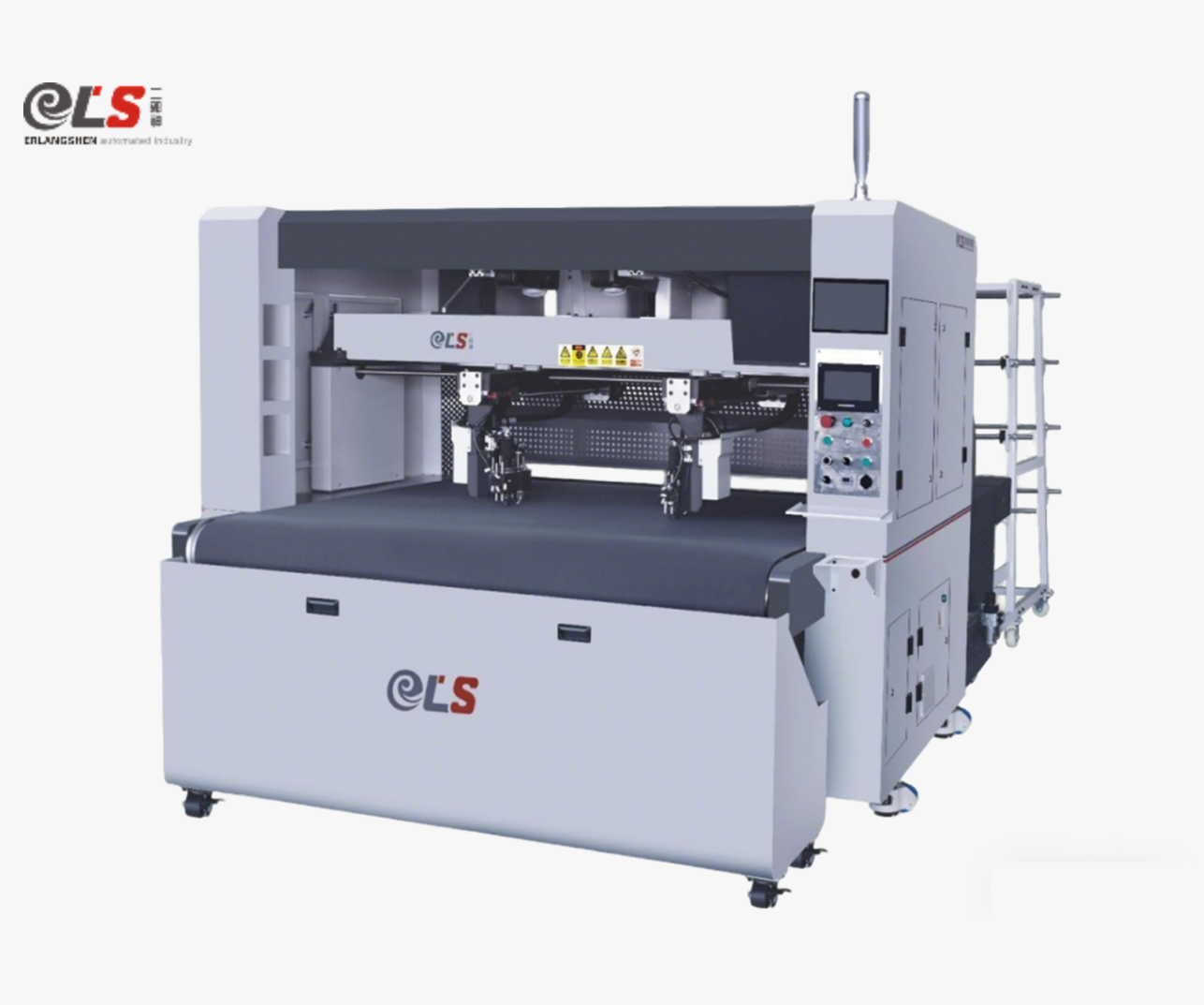
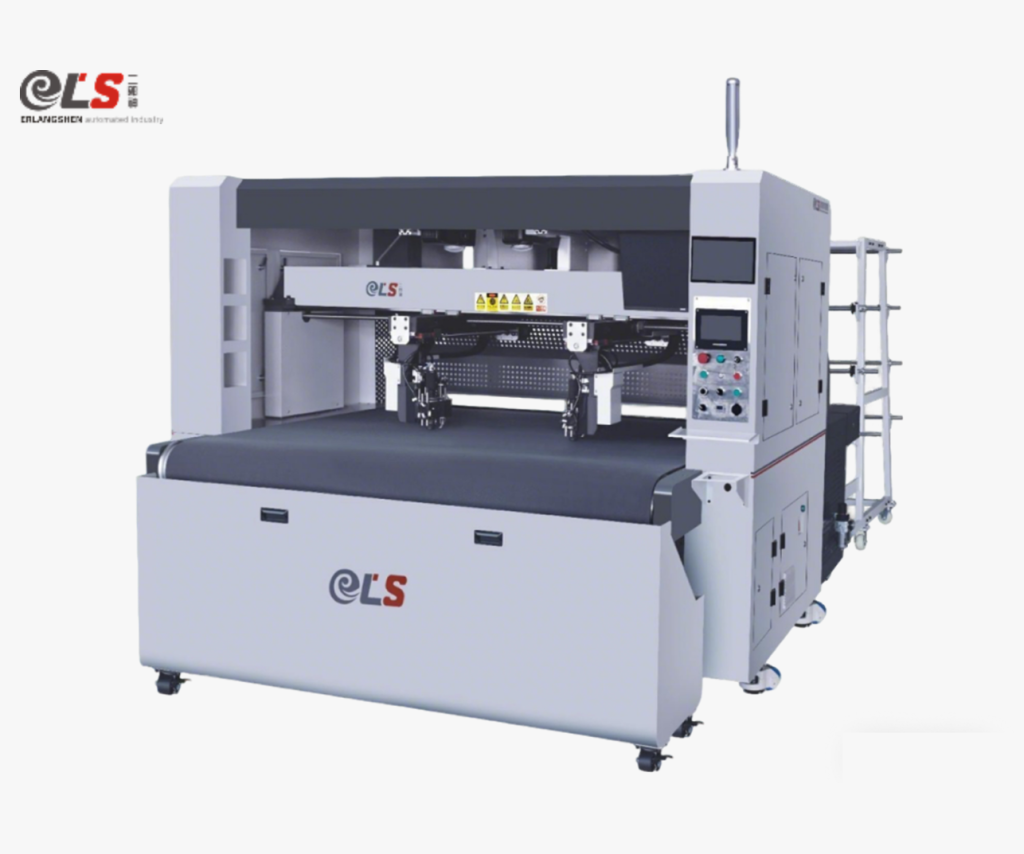
The automatic leather visual marking machine is an intelligent marking device used in leather processing scenarios; It is different from ordinary equipment that relies on fixed templates for marking work, as this equipment does not require leather materials to be placed in fully standardized positions. Every natural leather silhouette will have a certain degree of deviation; Template processing equipment can only handle workpieces with regular shapes and fixed positions. Leather belongs to flexible shaped materials, and template equipment is prone to pattern misalignment when processing such materials. The automatic leather visual marking machine combines machine vision recognition, software algorithm calculation, and servo execution mechanism. The equipment can capture images of leather placed in any position, analyze the true contour of the material, and accurately replicate the pre-set process lines on the surface of the leather material. The equipment can output marking content such as cutting reference lines, alignment marks, and sewing reference marks. The equipment is widely used in the pre processing of shoe uppers, leather bags, and leather accessories; The main function of the equipment is to solve the processing problems caused by irregular leather materials. The machine can complete the marking operation that originally relied on skilled workers’ naked eyes.
How Does an Automatic Leather Visual Marking Machine Work
Load and Position the Leather
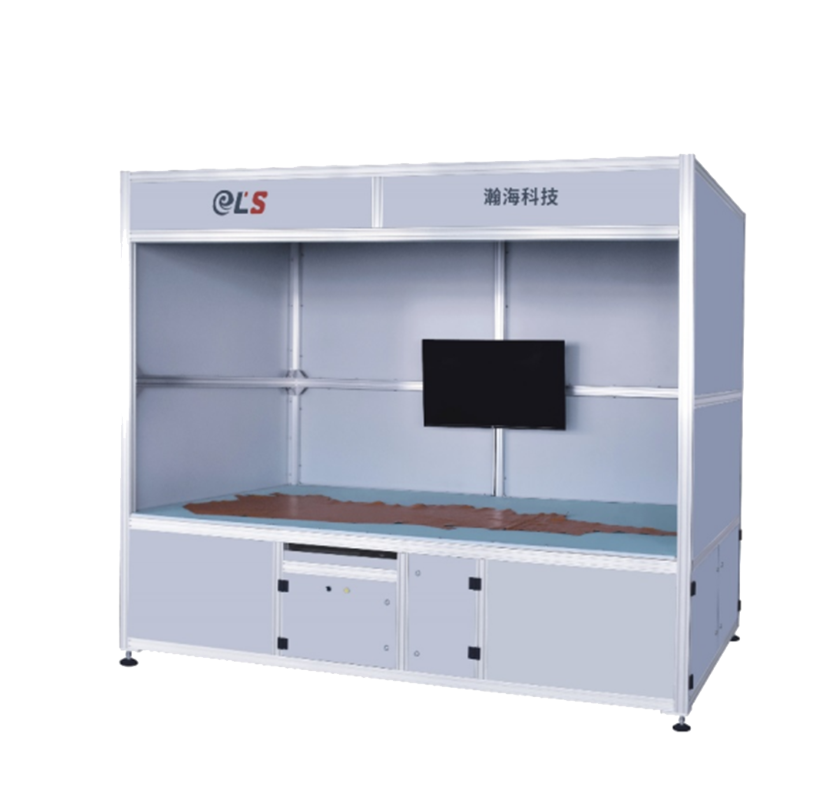
The staff will place the leather material on the surface of the workbench, and when workers carry out this step, they do not need to spend a lot of time aligning the boundaries of the material; Traditional fixtures and jigs will forcibly fix the processed materials, and the positioning work of this equipment will not rely entirely on mechanical limit structures. However, processing materials cannot be stacked arbitrarily, and the basic working condition is to lay the materials flat; During the material placement process, there may be small-scale offset and rotation, which is also the main advantage of this equipment; The workbench or material handling device will receive leather materials, and the device will transport the workpiece to an area where visual recognition can work normally; The mechanical structure completes the basic load-bearing work of the material, and the subsequent precise positioning work of the equipment will be implemented by the visual system.
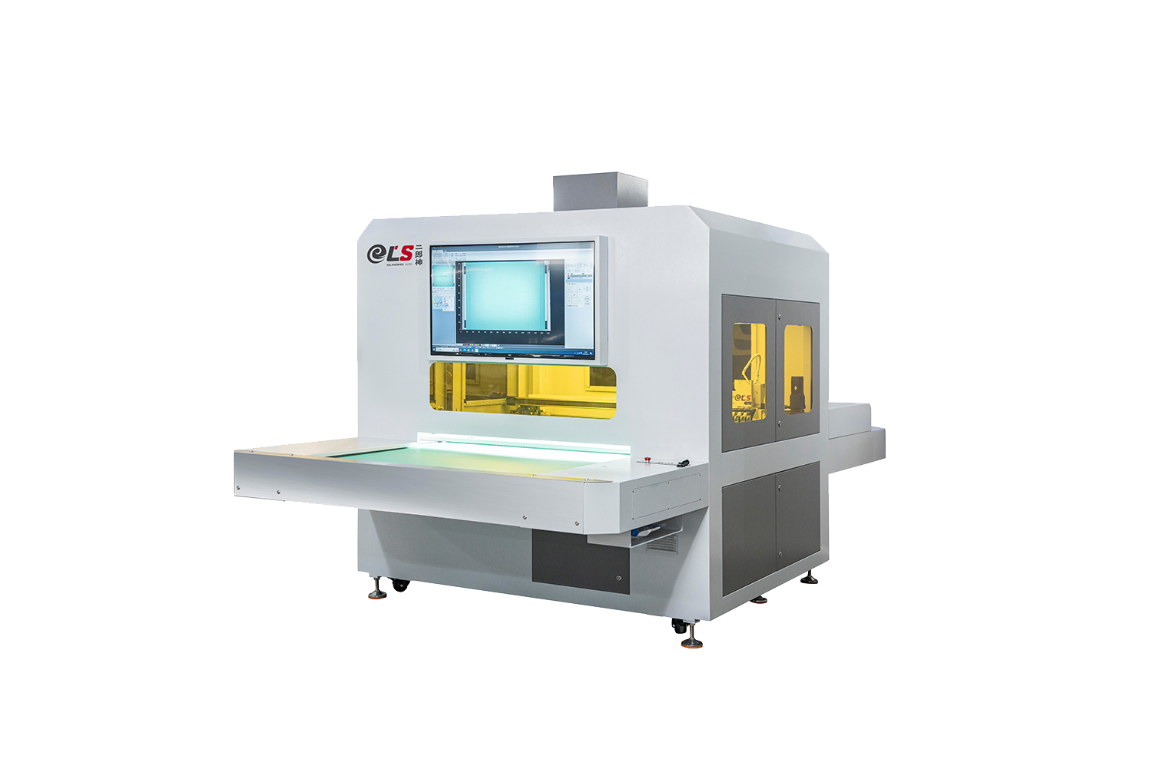
Capture the Material with a Vision System
After the materials arrive at the designated workstation, the visual camera will start image acquisition work; The light source device will cooperate with the camera to complete the imaging operation of the leather surface, and the device will convert the physical leather into a digital image. The quality of image acquisition will directly affect the final result of the entire subsequent process; The wrinkles, reflections, and color differences on the surface of leather can interfere with the camera’s image capture work; The device will isolate the interference caused by external ambient light, and the camera can capture the true outer contour of leather, as well as the physical features such as texture and natural spots on the surface of the material; The image data generated in this step is the raw material for all subsequent algorithm operations; The image data will be transmitted in real-time to the visual matching software, and the software will wait for the next step of parsing and processing.
Identify Leather Pieces and Reference Features
The visual matching software will read the image data returned by the camera, and distinguish between the effective processing area of the leather and the background area of the workbench; The system will extract the outer contour information of leather components, while the device will capture the reference feature points that come with the material. The natural texture of leather, corner gaps, and curvature of material edges can all be used as reference features, and the process markings reserved by humans in the early stage can also serve as reference features; The system will not only read the outline of the material, but also extract multiple sets of unique feature information; Even if they belong to the same batch of leather materials, there will be differences in the characteristics of each piece of material, and the algorithm will rely on these characteristics to distinguish different processed workpieces. The algorithm can eliminate the interference caused by the background and lock the true boundaries of the leather components.
Match the Pieces with Digital Patterns
Factory staff will import process digital patterns in advance, which are the sewing lines and alignment mark files that need to be marked; The digital pattern belongs to the standard process template, while the leather on site in the workshop belongs to the physical workpiece, and there may be some deviation in the form of the two. In the matching process, the algorithm will map the standard digital pattern to the already collected physical leather image; The system will perform alignment calibration based on the feature points extracted in the previous step, and the algorithm will compensate for the positional deviation caused by leather rotation and displacement; The system will not directly overlay the template on the image. The algorithm will complete the deformation adaptation process and adapt to the true contour of the leather. The system can avoid the problem of line misalignment caused by directly applying the template; The success of pattern matching work will directly determine whether the final marking will produce scrapped workpieces.
Calculate Marking Positions
After the pattern matching work is completed, the system will convert each marked line into its corresponding actual coordinates in the physical workbench coordinate system. Digital images belong to virtual planes, while marker heads belong to physical execution mechanisms, and coordinate conversion work needs to be completed between the two; The software will perform computational processing, converting the line points in the image into physical points that the marker head needs to move to reach; The equipment will also actively avoid the defective areas of the leather. Under some production conditions, the system will automatically adjust the point position to avoid the location of damage and scars on the markings; All point data will be sent to the device’s control system, which will prepare the corresponding data for mechanical drawing actions.
Automatically Draw the Required Lines
After receiving coordinate data, the control system will drive the marker head to perform movement operations; The marking head will draw various process lines and marking points on the leather surface according to the motion trajectory generated by the operation. Staff can switch marking media according to process requirements, and ink and marker pens can be used as marking consumables; During the process of drawing assignments, the servo mechanism will continuously provide feedback on position signals, ensuring the accuracy of trajectory tracking; The entire drawing task will run automatically, without the need for workers to hold tools to complete the drawing; When encountering large leather parts, the marking head will complete the drawing operation in sections, ensuring that the lines are coherent and uniform. The drawing effect can meet the requirements of subsequent sewing and cutting processes.
Inspect and Repeat the Process
After the single piece of leather is marked, some models of equipment will call the visual system again to carry out re inspection work; The equipment will compare the actual drawn lines with the deviation between the standard process pattern, and investigate any abnormal situations such as missed drawings or positional deviations. If the workpiece is found to be unqualified, the system can issue an alarm prompt; After all the verification work is completed, the equipment will return to its initial state and wait for the next leather loading operation. The entire process of loading, collecting, identifying, matching, and drawing will be carried out in a loop; In the scenario of large-scale production, this closed-loop process will continue to operate, and the process can maintain the production speed of the workshop.
What Are the Main Components of a Visual Leather Marking Machine?
Vision camera
Visual camera is a sensing component of the entire equipment, responsible for capturing material images; The pixel level, distortion control effect, and imaging frame rate of the camera will directly affect the device’s feature recognition ability; When processing dark and reflective leather, the difference in camera imaging ability becomes more pronounced.
Visual matching software
Visual matching software, belonging to the computing core of the device; The software will perform tasks such as image analysis, feature extraction, pattern matching, and coordinate conversion; The algorithm logic of the software determines the fault tolerance of the device, and the entire ability of the device to handle irregular leather and deformed materials relies on this software implementation.
Control system
Control system, belonging to the motion control center of the whole machine; The control system receives coordinate instructions output by software, controls all mechanical actions, coordinates the timing of marking heads and handling mechanisms, and processes various signals during equipment operation.
Positioning system
Positioning system, including mechanical positioning and visual positioning functions; The mechanical structure completes the basic bearing of materials, and the visual algorithm completes high-precision position compensation. The two functions work together, and the system can reduce the difficulty of workers’ loading operations.
Marking head
The marking head is an execution unit that directly completes the output of the marking line; The marking head can be adapted to different marking consumables, and the marking head will determine the clarity and uniformity of the drawn lines.
Worktable/material handling
Workbench/material handling device, capable of handling leather workpieces, can complete the operation of material entering and leaving the workstation; Some equipment models are equipped with automatic conveying structures, which can be connected to production lines, and the equipment can achieve uninterrupted continuous production. Each module plays an irreplaceable role, and if a single component’s performance is insufficient, the equipment will experience production failures such as recognition lag and marking deviation.
Automatic Visual Marking vs. Manual Leather Marking
| Comparison Dimension | Automatic Visual Marking | Manual Leather Marking |
| Initial Investment | Requires early stage investment in equipment procurement costs | No large scale equipment investment |
| Working Principle | Recognition, matching and tagging tasks are finished automatically by equipment | Rely on skilled workers to compare samples and draw craft lines manually on leather surfaces |
| Marking Quality & Accuracy | Marking accuracy unaffected by working time; high consistency for mass workpieces | Stable quality from skilled workers yet hard to eliminate human caused defects; accuracy drops when workers suffer eye fatigue |
| Labor & Personnel | Frees workers from repetitive line drawing work | Rising labor cost for skilled workers; high workshop staff turnover disrupts production rhythm; new employees need long on boarding and experience accumulation |
| Limitations & Manual Intervention | Needs early stage equipment debugging; staff still perform file import, parameter maintenance and consumables replacement; heavilydeformed leather requires manual adjustment of process parameters | Flexible for small batch sampling switching; not fit for large scale production |
| Applicable Scenarios | Large scale standardized production | Small batch sampling production |
| Relationship Between Two Modes | No absolute substitution; factories make trade offs according to order volume and product types | No absolute substitution; factories make trade offs according to order volume and product types |
What Are the Benefits for Footwear Factories?
The leather processing process in shoe factories is relatively complicated, and the marking of shoe upper cutting pieces is a key process in the early stage. The automatic leather visual marking machine can improve the existing production status of the workshop from multiple aspects. Firstly, the consistency of the marking operation can be improved, and the line positions of the same batch of shoe upper cutting pieces can be kept consistent. The subsequent sewing process will reduce the defective products caused by marking deviation, and the situation of material loss can be reduced; The purchase price of leather raw materials is relatively high, and the amount of scrap materials is reduced. Factories can directly save production costs. Secondly, factories can release some manpower and assign repetitive line drawing tasks to equipment. Skilled workers can be deployed to technical positions such as process debugging and quality control, which can alleviate the pressure of difficulty in recruiting skilled workers in shoe factories. The equipment can operate continuously for a long time, and its capacity limit is higher than that of a manual team; When the peak season for orders arrives, the equipment can quickly undertake large-scale shoe upper processing tasks; The tolerance of material placement is high, and workers do not need to spend a lot of time to complete precise leather alignment. The time spent on the feeding process can be compressed. The digital workflow also facilitates factory production management; Processing files can be saved and archived. When the product needs to be revised, the staff only need to replace the digital process files, and the factory does not need to remake the physical samples. Version management work will become simpler. Of course, in order for the equipment to realize its own value, the factory needs to do a good job in debugging and maintenance; The factory neglects daily maintenance work, and no matter how good the hardware equipment is, it cannot produce stable processed products.
Is an Automatic Leather Visual Marking Machine Right for Your Factory
Not all leather processing factories need to immediately introduce automatic leather visual marking machines. If the factory mainly undertakes large-scale orders for shoes and leather goods, the workload of cutting and marking is large, and the factory encounters high rates of manual marking defects and a shortage of skilled workers for a long time, the adaptability of equipment in such production scenarios will be relatively high. If the factory mainly does small batch customization, has a large number of sample making times, frequent changes in order styles, and limited production capacity, the factory needs to evaluate the return cycle after equipment investment; The equipment requires staff to master basic skills in file import and parameter debugging, and the workshop also needs to have corresponding basic equipment maintenance capabilities. Factories also need to consider the properties of the processed materials, such as the material, color, and surface reflectivity of leather, which can affect the recognition effect; When conducting procurement evaluations in factories, it is best to bring actual incoming materials from the factory and complete on-site sampling and testing. The factory needs to verify the marking effect on site and cannot only refer to the promotional parameters of the equipment; The factory needs to comprehensively judge the equipment compatibility based on the order volume, material type, and personnel capabilities.
FAQs
Q1:How accurate is a leather visual marking machine?
A1:The accuracy of equipment will be affected by multiple factors such as cameras, algorithms, and mechanical structures; Under normal production conditions, the equipment can meet the process requirements for marking shoe uppers; Staff need to distinguish between theoretical accuracy and actual production accuracy; Leather belongs to flexible materials, and the material itself may experience stretching and deformation, which can interfere with the final processing effect. In actual production, it is impossible to achieve the values in the ideal laboratory environment; Before formal production, the factory must use real materials from our factory to complete actual testing and verification.
Q2:Which file formats does a leather marking machine support?
A2:Most devices are compatible with mainstream vector process files in the industry, and some common formats exported from CAD can be imported into the system; Staff need to be aware that after importing some file formats into the system, there may be loss or deformation of lines. Staff need to complete file verification in advance and ensure the integrity of digital patterns to avoid batch marking errors caused by file issues.
Q3:Is a leather visual marking machine hard to operate?
A3:The basic loading and starting processes have a low operating threshold, and ordinary workers can start their work after short-term training; The difficulty of sampling and debugging new products will be higher. When processing special leather materials, workers need to adjust visual parameters and matching logic. This part of the work requires operators to accumulate practical experience.
Q4:How does a visual leather marking machine identify and match leather pieces?
A4:The visual camera will capture physical images, and the software will extract unique features of leather contours and material surfaces. The software will perform algorithm alignment between the physical features and standard digital process templates; The equipment does not simply compare the appearance of materials, multiple sets of feature points will be verified together. The equipment relies on this method to handle the actual production situation of leather rotation and position deviation.
Q5:What materials can an automatic leather marking machine mark?
A5:The equipment mainly processes various types of natural leather, some artificial leather, and flexible composite materials, and can also complete marking operations; Materials with severe reflection, light transmission, and complex surface structure will increase the difficulty of identification, and such materials need to be tested in advance to confirm the feasibility of processing.
Q6:Does an automatic leather marking machine replace manual marking?
A6:In large-scale production scenarios, equipment can replace manual repetitive labeling work in large quantities; However, in the face of small-scale irregular sampling and special and difficult materials, manual operation still has irreplaceable flexibility advantages; Actual production mostly belongs to human-machine collaboration, and equipment cannot completely replace manual labor unconditionally
Conclusion
Automatic leather visual marking machine, relying on machine vision technology, changes the traditional leather marking operation mode; The equipment will sequentially complete the leather loading positioning, image acquisition, feature recognition, pattern matching, coordinate calculation, automatic drawing, and re inspection cycle, and the entire workflow will be interconnected. Visual cameras, matching software, control systems, tagging, and other components together constitute the complete operational capability of the device. Compared with traditional manual marking operations, the equipment has prominent advantages in batch production consistency and capacity output. The equipment can provide a feasible path for intelligent transformation of leather processing workshops in shoe factories; However, when the equipment is put into use, there is also a corresponding scope of application, and not all factories can directly copy this set of equipment. When the factory conducts procurement selection, the staff should make a comprehensive judgment based on their own order size, material characteristics, and the results obtained from actual sampling. In the field of intelligent leather processing equipment, HanHai Enterprise continues to develop and manufacture visual marking related equipment. Combining with the real production pain point polishing equipment solutions in the footwear industry, HanHai Enterprise can provide various leather processing factories with practical automation solutions. Contact Us For More Info.