Skip to content
Introduction
The leather manufacturing industry has always faced the practical problem of raw material loss; Natural leather is a core production material,and there is no unified standard shape for this type of material.The external contour,surface texture,and distribution of scars on each piece of raw leather have significant differences.Factories that produce leather shoes,bags,or home interior products bear a significant amount of hidden production costs every year due to leather material waste.In the long production stages of the past,the work of leather typesetting and cutting mainly relied on the practical operational experience of senior technical workers;Technicians rely on visual judgment to move the pattern back and forth, maximizing the usable area of the leather material.However,human energy and judgment ability have certain limitations.Even if workers have sufficient practical experience,it is difficult to fully explore all the available space of a piece of leather with scattered defects.Many leather materials with decent quality become unusable corner waste simply because of improper layout and placement.The loss of materials does not only indicate the consumption of raw materials;The various costs invested in tanning treatment, water treatment,chemical agent deployment,and multiple production processes in the early stage will also be lost along with them.Under the dual cost pressure,many factories have begun to try to use smart devices to solve existing problems;The intelligent nesting machine does not simply convert manual production processes into machine operations.The device relies on visual acquisition technology and algorithm calculations to participate in the cutting process, effectively changing the way leather raw materials are used.Reducing the waste of leather materials can not only help enterprises control production expenses,but also conform to the current development direction of reducing waste output in the manufacturing industry;This article combines the real production status of the industry to analyze the causes of leather waste, the actual connotation of intelligent nesting machine,on-site practical steps,and high-frequency questions in the industry.

Why Leather Waste Is a Major Challenge in Manufacturing
The inherent material properties of natural leather are the fundamental cause of production losses;Unlike artificial boards with regular and uniform dimensions,the edge contour of the original skin presents an irregular state,with scars,insect spots,and wrinkles randomly distributed on the surface of the skin;Often,a piece of leather surface is intact and usable,but there are damages that cannot be used just a few centimeters apart,which directly limits the placement of the cutting pieces.In the manual typesetting mode,there is a mutually restrictive relationship between production efficiency and raw material utilization;During the stage of order rush, workers prioritize ensuring product delivery speed.When placing paper samples,larger safety margins are reserved,and a large amount of intact leather raw materials are directly converted into waste.If a factory wants to improve the utilization rate of raw materials,workers need to repeatedly move and compare the placement of samples,which will consume a lot of working hours and increase the company’s labor costs.Most factories can only make a trade-off between the two and passively accept higher material loss rates.The procurement process of raw materials will also exacerbate the phenomenon of waste;Leather raw materials can only be purchased in whole pieces, and enterprises cannot purchase corresponding raw materials according to the actual size of the cut pieces.The same product will be matched with cutting pieces of different sizes. When workers carry out manual typesetting operations,they mostly prioritize placing larger sized cutting pieces,and the remaining fragmented space of the leather material will be directly discarded;The phenomenon of using large areas of intact leather materials to cut small auxiliary materials often occurs inside the workshop,and the problem of material mismatch will continue to occur.Most factories only focus on the procurement cost of leather raw materials,which can easily overlook other costs associated with waste materials;The discarded leather has completed the entire tanning process,and the chemicals,water,electricity,and manpower have been invested; The waste disposal work will also incur related costs for garbage removal and compliant disposal. In the industry environment of fluctuating raw material prices and intensified market competition, the continuous increase in material loss will directly compress the operating profits of enterprises, and leather waste has become an unavoidable core problem in the leather production process.
What Is an Intelligent Leather Nesting Machine
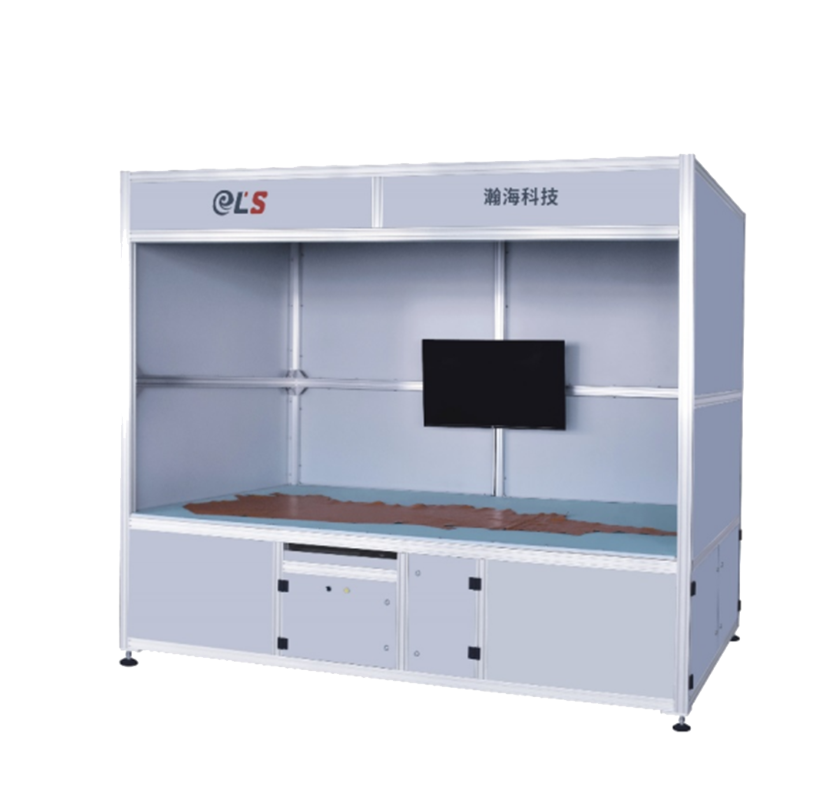
Intelligent leather nesting machine is a leather processing equipment composed of multiple modules.The equipment integrates image scanning,automatic defect recognition,intelligent nesting algorithm,and vibration knife cutting hardware;Many practitioners may equate this equipment with a regular cutting machine, but the cutting work is only the final execution stage of the entire equipment.Image analysis and automatic discharge logic are the true core parts of the equipment.Multiple units will collaborate to complete the operation of the entire equipment; The scanning unit will fully collect the appearance information and surface details of the entire leather;The defect detection module will distinguish between the available area of the leather material and various damage locations;After the sorting algorithm reads the product slices, it will complete the nested arrangement of slices within the irregular leather range;The equipment finally drives the vibrating knife to complete the actual cutting operation.The reserved data docking interface of the equipment can connect to the factory MES and ERP systems,and establish a data transmission link in the production process.There are many universal discharge equipment on the market,which are not suitable for leather production operations;The general algorithm assumes that the board is intact without any damage.When the equipment processes leather with scars and holes,it will directly include the defective areas in the layout range,and ultimately produce semi-finished products with defects.To truly adapt to the leather industry’s typesetting equipment,leather defects need to be included in the calculation criteria,and the equipment needs to avoid the location of scars while excavating the remaining effective usable area of the leather.This equipment will not completely replace workers’ job positions;Repetitive and labor-intensive tasks such as image scanning,massive layout scheme calculation,and high-speed cutting will be completed by machines;The job responsibilities of workers will change. Workers will no longer manually place paper samples repeatedly,but will be more responsible for reviewing recognition results, adjusting layout constraints,and controlling the overall production progress of orders;Hardware devices and algorithm programs need to work together to form an intelligent leather nesting machine that can be put into normal use.
How Intelligent Nesting Actually Reduces Leather Waste
Algorithmic calculations are the most essential means for equipment to reduce material loss; When performing manual typesetting tasks,the number of layout plans that workers can compare in a short period of time is limited.Once a feasible plan is found,it will be put into production. Intelligent algorithms can deduce a large number of layout combinations in a short period of time. The algorithm will avoid surface scratches on the leather material and search for more efficient layout solutions.The defect recognition function can avoid scrap losses caused by subsequent processes; Workers rely on visual inspection of the leather material, and small scratches are prone to leakage. After the cutting process is completed, defects are only discovered during the sewing and finished product production stages, and the entire set of semi-finished products will be directly invalidated, resulting in secondary material waste. Machine scanning can mark all damaged points, and typesetting work will automatically avoid defect areas,reducing rework and scrap situations from the source.Inserting and nesting large and small pieces is an important way to improve the utilization rate of raw materials;The habit of manual typesetting is to prioritize placing large-sized cut pieces,and the edges,corners,and gaps of the leather material will be directly abandoned.The algorithm can fill the gaps and corners of the large piece with small auxiliary material cutting pieces;The scattered areas that were originally planned to be discarded have been utilized,and a single piece of leather can produce more qualified cutting pieces.The equipment can also eliminate utilization fluctuations caused by human factors;There are differences in the work experience of different operators,and the loss rate of the same batch of leather materials will fluctuate significantly during the stages of shift change and new employee on boarding.Intelligent typesetting uses system calculation results as the standard,and each leather material will be processed according to the same set of logic,eliminating material differences caused by human operation.The practical value of data retention cannot be ignored; The system will fully record the usage of each piece of leather material,and corresponding records will be saved for locations with severe losses and types of cut pieces with high material consumption.The factory can adjust the paper pattern design scheme in reverse,optimize the leather procurement specifications,and extend the loss reduction work to before the cutting process,not just to achieve raw material savings in the cutting process.
How to Reduce Leather Waste with Intelligent Nesting Machine
Step 1 Scan leather hides
The operator lays the entire leather flat on the equipment workbench and starts the scanning module of the equipment;The high-definition imaging component fully captures the external contour and all surface details of the leather material;During the process of laying materials,try to smooth out the wrinkles on the leather as much as possible.Wrinkles can cause image deformation and interfere with the accuracy of subsequent recognition;After the scanning work is completed,the system generates a digital copy of the leather material,and the physical leather remains in its original placement position without moving.All subsequent calculations are based on this digital image.
Step 2 Detect defects automatically
The system analyzes and performs calculations on scanned images,automatically identifying various issues such as holes,scars,insect spots,color differences,etc.The system marks defect locations as prohibited areas within the digital model;The operator needs to review the image content and manually correct the points where the machine made misjudgments.When some minor defects can be put into production use,the operator needs to reopen the area;After the marking work is completed,the subsequent discharge will automatically bypass all prohibited areas.
Step 3 Import cutting patterns
The operator imports all the cutting template files corresponding to the order into the system, which include the main components and various small accessories;The system recognizes the shape and size of each cut piece,and some products have strict requirements for the texture direction of leather.Staff can set texture direction constraints in advance,and algorithm layout operations will comply with these process limitations.
Step 4 Generate the optimal nesting layout
The typesetting algorithm carries out multiple rounds of calculations to avoid areas with defects, nesting all the cut pieces within the available range of the leather material,and outputting one or more sets of typesetting alternatives;The operator checks the simulated layout effect,compares the material utilization rate,and selects a suitable solution;When there are special requirements for the order,the operator can also manually adjust the placement of local cutting pieces,confirm completion,and then enter the cutting process.
Step 5 Review and cut with a vibrating knife
The confirmed layout plan is issued to the cutting mechanism,and the vibrating knife completes the cutting operation along the layout trajectory; Before starting the cutting process,the operator checks the cutting trajectory again to confirm that the cut piece does not cover the defect marked area;The equipment automatically completes the cutting process,and after the cutting is completed,the staff separates the finished cut pieces from the scraps;The entire process eliminates the need for workers to hand draw samples on the leather surface.
Step 6 Track material utilization with MES/ERP
The cutting work is completed,and the equipment uploads data such as the original area of the leather material,the actual utilization area,and the proportion of scraps to the MES or ERP system; Management personnel retrieve batch related data and calculate the average material usage of individual leather materials and bulk orders;The staff has been collecting relevant data for a long time,comparing the differences in losses between different leather batches and orders, continuously adjusting production parameters,and further reducing leather waste.
FAQs
Q1:What is an intelligent leather nesting machine used for?
A1:The intelligent leather nesting machine is designed for leather processing scenarios and is mostly used in the production of leather shoes,leather bags,leather home furnishings, and automotive interiors;The core functions of the equipment include leather scanning,defect detection,automatic optimization of material scheduling,precise cutting with vibrating knives, and the collection of production material data;The equipment can adapt to both large-scale orders and flexible production of multiple styles and small batches. While improving cutting efficiency, the equipment reduces the loss of leather raw materials.
Q2:How does intelligent nesting reduce leather waste?
A2:The equipment relies on visual recognition to mark leather defects and avoid the later scrapping of finished products caused by defects; Algorithm deduction of a large number of layout schemes, achieving nested filling of edge and corner gaps with large and small pieces, fully tapping into the available area of the leather material; Eliminate fluctuations in utilization caused by manual operations and stabilize material consumption levels; Retain production material related data to provide reference for process optimization and reduce leather waste from multiple aspects.
Q3:How accurate is a leather nesting cutting machine?
A3:The accuracy of the equipment is determined by the scanning imaging and vibration knife execution unit; Mature models can meet the conventional production tolerances of the shoe and leather goods industries; However, leather itself has a soft texture and is prone to stretching and deformation under external forces. If the leather is not laid flat and fixed in place, it will affect the final cutting effect. It is necessary to do a good job of fixing the leather on the production site to ensure the accuracy of cutting.
Q4:How much leather waste can nesting software save?
A4:There is no fixed value for the savings ratio,and this result will be affected by the quality of the original leather,the complexity of the cutting process,and the level of manual typesetting in the factory;The losses caused by manual typesetting vary greatly among factories;After the launch of intelligent typesetting,the improvement effect on the production line with high losses will be more prominent.The actual cost saving effect needs to be evaluated based on the factory’s own real production data.
Q5:Is a leather nesting machine hard to operate?
A5:The device cannot achieve complete unmanned operation;Basic processes such as scanning leather,importing templates,and generating layout plans can be mastered by operators after training;The difficulties in practical operation focus on familiarizing oneself with leather craftsmanship,understanding how to review defect markings,and setting layout process constraints;Only by mastering the relevant knowledge of leather production can operators fully utilize the equipment’s ability to reduce losses.
Conclusion
The material waste in the leather manufacturing industry is a problem caused by multiple practical factors such as raw material properties and traditional operating modes;Natural leather has irregular shapes and randomly distributed defects.Traditional manual typesetting is difficult to balance production efficiency and material utilization,and waste brings multiple costs of raw materials, labor, and environmental treatment,continuously compressing the operating profits of enterprises.The intelligent leather nesting machine relies on visual scanning, defect recognition,intelligent nesting algorithms, vibration knife cutting, and MES/ERP digital systems to complete data tracking,forming a complete cutting solution; From leather scanning, defect marking, importing cutting samples,generating layout plans, executing cutting, to tracking material data, the entire process is gradually implemented to explore the hidden value of leather materials; This device does not simply replace worker positions, but reconstructs production division of labor, and complex scheme deduction is completed by machines, with more personnel responsible for audit and control work.But the equipment itself cannot completely solve the problem of waste;In order for enterprises to achieve tangible cost reduction results, factories need to implement personnel training,combine the various functions of equipment used in their own product processes,and ensure that hardware equipment is compatible with the actual production in the workshop,in order to continuously control leather loss. HanHai has long been deeply involved in the field of intelligent leather processing equipment.The intelligent leather nesting machine launched by the company faces the real pain points of the leather processing industry,helping manufacturing enterprises achieve material consumption reduction and green production.